

When demands exceed your time or energy, a longer task list may add pressure. Feeling overwhelmed can be a sign that the load needs to change. You do not have to become endlessly productive to deserve rest or help.
Start by identifying what needs attention now, what can wait and what you cannot reasonably carry alone. The aim is to make the next part of the day more manageable.
On this page
1. Put the demands into perspective
Write down the main pressures in plain words: a deadline, caring responsibilities, an unresolved decision, a household task or a worry about money. Keep practical tasks separate from predictions such as “Everything will fall apart.”
Look at the time, energy and resources actually available. A plan that depends on skipping sleep or having no interruptions may need to change. Some demands are unreasonable even when you are doing your best.
2. Pay attention to stress and basic needs
Notice whether you need food, water, a quieter place, a short pause or contact with someone supportive. Choose what is available and safe for you. You do not need to force yourself into calm before you can take a useful step.
Stress can affect sleep, concentration and decision-making. If you are struggling to cope or self-help is not helping, consider speaking with a health professional. The NHS guide to stress explains common signs and support options.

3. Sort tasks into a workable list
Use three headings and put only a few items under each:
- Do soon: something with a real, near deadline or a consequence that needs attention.
- Ask for help: a task someone else can share, explain or take on.
- Delay or reduce: something that can wait, be simplified or be dropped.
If everything seems urgent, ask the person setting the deadlines to help prioritise. For example: “I can finish this report or prepare the presentation today. Which comes first?” Where help is limited, reducing the task may be more realistic than delegating it.
4. Choose one manageable next action
Make the action concrete: open the form, find the phone number, wash the items you need for dinner or write the first sentence. Set a stopping point that fits your energy. You can reassess after that step instead of committing to finishing the entire project.
If a task feels too big, ask what information or support would make it clearer. Delay is not always a discipline problem; unclear instructions, pain, fatigue or competing needs can make starting difficult.
5. Protect care and review the load
Include rest and ordinary needs in the plan. If appropriate, tell someone what would help: “Could you collect the groceries?” or “Can we move this deadline?” You do not have to explain every private detail to ask for a practical adjustment.
At the end of the day, notice what changed and what still needs help. An unfinished list is information about the load, not a verdict on your character. If overwhelm keeps returning, consider what ongoing support or change in expectations is possible.
Read the infographic in text
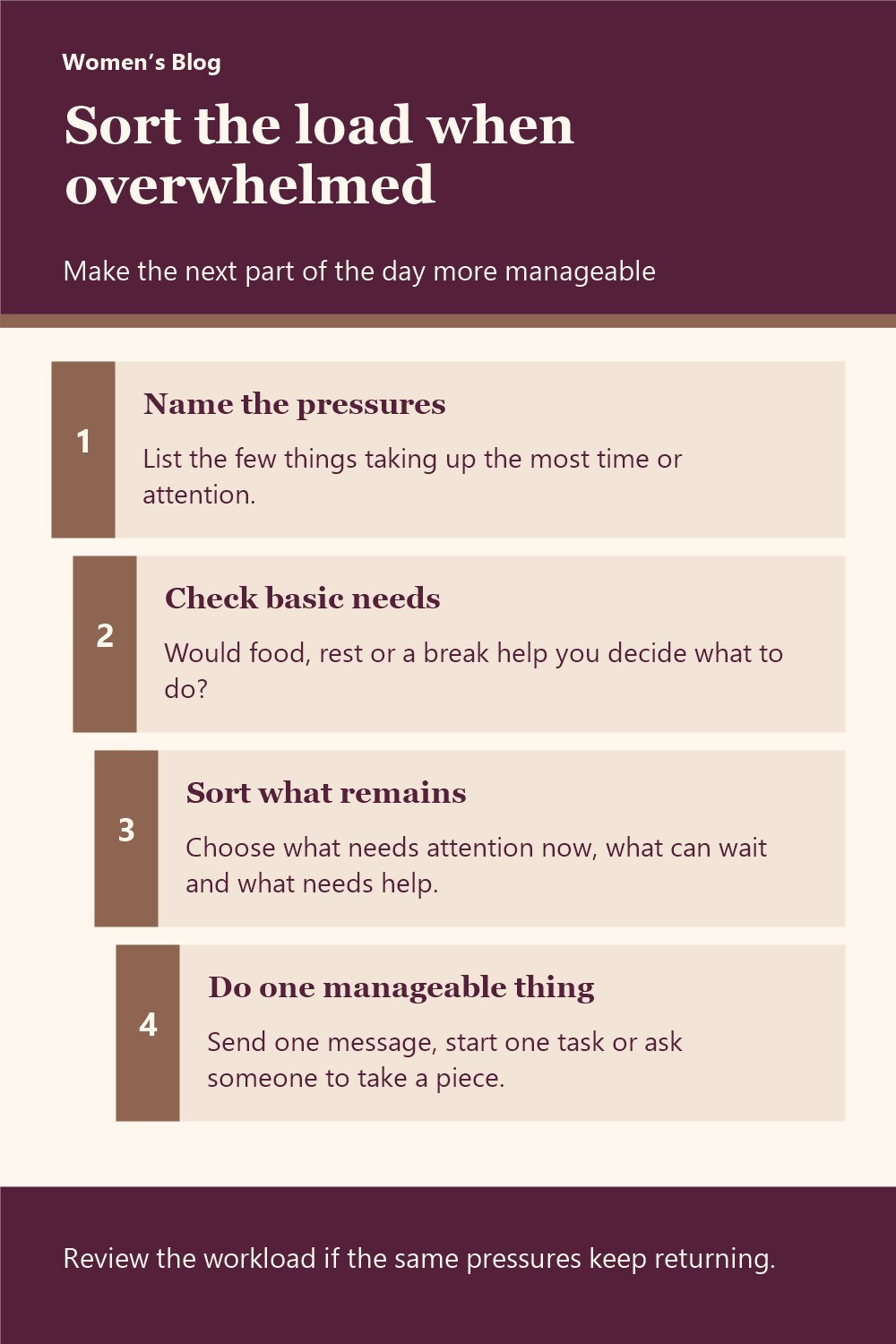
Sort the load when overwhelmed
- Name the pressures List the few things taking up the most time or attention.
- Check basic needs Would food, rest or a break help you decide what to do?
- Sort what remains Choose what needs attention now, what can wait and what needs help.
- Do one manageable thing Send one message, start one task or ask someone to take a piece.
Review the workload if the same pressures keep returning.