

A caring friendship can offer company, support and a place to share ordinary life. It also involves two people with different needs, responsibilities and ways of communicating. One missed message or an awkward conversation does not define the whole relationship.
Look at the pattern: how you treat each other, whether there is room for both people’s needs and what happens when something goes wrong. Those details are more useful than testing whether someone is a “real” friend.
On this page
1. Look for respect across time
Consider whether you can express a preference, decline a plan or raise a concern without repeated ridicule or pressure. A friendship can have a difficult period and still include willingness to listen and repair.
Being yourself: notice whether there is room for your interests, values and ordinary imperfections. That does not require a friend to accept behaviour that hurts them, just as you can set limits on how you are treated.
Repeated threats, humiliation or violations of privacy deserve attention. You can reduce contact or seek support without first deciding what label fits the other person.
2. Recognise different ways of showing care
A friend might remember an important date, share something that interests you or help with a practical task. Noticing a haircut or offering compliments can be pleasant, but neither is a required proof of friendship.
Showing up: ask for the support you need rather than expecting the other person to guess. “Could you call after the appointment?” gives them a chance to say what they can offer.
Checking in: some people send frequent messages; others prefer a longer conversation less often. Talk about what works for both of you. A difference in style need not mean a lack of care.

3. Make reliability realistic
Dependability means taking commitments seriously and communicating when plans need to change. It does not mean being available at every important moment regardless of work, health, distance or caring responsibilities.
Promises: if someone cannot follow through, notice whether they acknowledge it and offer a realistic alternative. Repeated apologies without change may mean you need different expectations or firmer limits.
Making time: choose a form of contact you can both sustain. A short call or an occasional walk may fit better than ambitious plans that keep falling through. Neither person should have to organise everything indefinitely.
4. Allow support and honest disagreement
Support can mean listening, offering practical help or asking a useful question. It does not require approving every choice. A friend can care about you and express concern respectfully.
Celebrating: sharing good news can be part of connection. Someone may also be having a difficult time of their own. Look at how they respond over time rather than requiring an enthusiastic reaction on demand.
Understanding: give each other a chance to explain a misunderstanding. You can acknowledge context and still say that something hurt or needs to change.
Honesty: a specific, considerate observation is different from a cutting remark presented as truth. You can ask for directness without accepting contempt.
5. Keep privacy, limits and other connections
Friends can need each other and still have limits. Ask whether someone has time for a difficult conversation, accept when they cannot help and look for more than one source of support. Dependence during a hard period does not make someone unworthy of friendship.
Private information: say what you want kept confidential and respect the same request from others. Do not pressure someone to keep a secret about an immediate safety concern; seek appropriate help when someone may be in danger.
How you feel together: enjoyment matters, but even a good conversation can be tiring or emotional. A friend does not have to make you happy or whole every time you meet.
Keep room for other friendships, family relationships and interests, including when you have a partner. A sustainable friendship leaves space for both connection and the rest of life.
Read the infographic in text
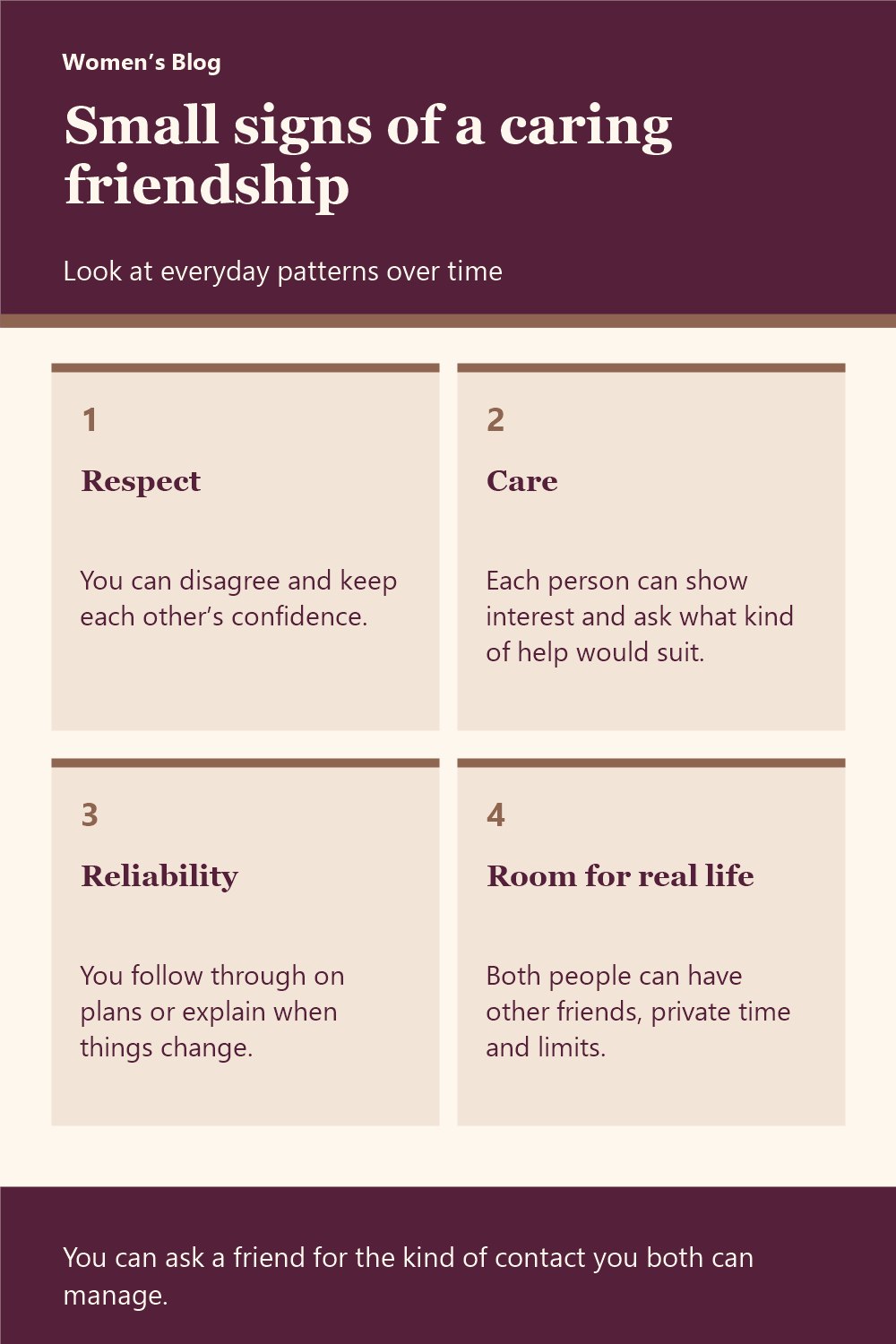
Small signs of a caring friendship
- Respect You can disagree and keep each other’s confidence.
- Care Each person can show interest and ask what kind of help would suit.
- Reliability You follow through on plans or explain when things change.
- Room for real life Both people can have other friends, private time and limits.
You can ask a friend for the kind of contact you both can manage.