

Meditation can offer a pause in the day: a chance to notice a sensation, a sound or what is happening around you. Some people find it helpful, while others prefer a different way to rest or gather their thoughts.
You do not have to clear your mind, feel happy or meditate in the morning. Start with an optional, brief practice that fits your life, and judge it by your own experience rather than a promise of transformation.
On this page
Set realistic expectations
Meditation covers different practices. A simple example is noticing an ordinary sensation and returning to it when your attention wanders. Having thoughts during the practice does not mean you are doing it badly.
If finding time or sitting still is difficult, begin with less. You might try a short pause after an everyday task instead of adding an early alarm. Morning is one possible time, not a requirement for getting something useful from the experience.
You may also understand meditation spiritually. That meaning can sit alongside practical observation: what felt manageable, what became uncomfortable and whether you want to try again.
Try a short, comfortable practice
- Choose a place where you can pause safely without needing to watch traffic, supervise a child or operate equipment.
- Sit or stand in a comfortable position. Keep your eyes open if you prefer.
- Notice one ordinary sensation, such as your feet meeting the floor or a nearby sound.
- When attention wanders, gently return to that point if you want to.
- Finish when you choose and check how you feel before continuing your day.
The purpose of this example is to offer a point of attention, not to remove every thought or solve a problem. A guided recording is another option if you like spoken prompts. Preview it and choose something you can pause easily.
Meditation is not a test of whether you can overcome sadness through positivity. If you are struggling with depression, discuss appropriate support with a qualified professional rather than relying on a routine alone.
The NCCIH guide to meditation and mindfulness describes possible benefits, limits in the evidence and unwanted effects. It advises against replacing conventional care or postponing medical assessment. A short exercise cannot promise a particular change in blood pressure, sleep or mood.
Choose another point of attention
Movement may suit you better than sitting. Use a familiar, comfortable movement you already know; an article cannot assess which yoga poses suit your health or mobility. Ask a suitably trained instructor for guidance if you want to learn a new practice.
On a safe, familiar walk or roll, you could briefly notice the ground, the light or a sound nearby while staying aware of your surroundings. You can also notice an object from a seated position.
An everyday pause does not need an elaborate setting. Looking at a plant or listening to a familiar piece of music may feel more comfortable than concentrating inward. Choose an approach that leaves you able to attend to safety and responsibilities.
Adapt or stop when needed
If you notice your breathing, let it remain natural. There is no need to force deep breaths or hold them. Stop the exercise if you feel dizzy, increasingly anxious or otherwise unwell.
If repeating a word is meaningful or comfortable for you, that is another possible focus. You do not need to chant for as long as possible. A neutral phrase, an outside sound or ending the practice are all available choices.
If meditation repeatedly brings distressing experiences, seek advice from a qualified professional. You do not need to persist to prove your commitment.
Make room for support beyond meditation
After trying a pause, ask whether it helped you settle, made no noticeable difference or felt unpleasant. You can shorten it, change it or choose another activity. Missing a day does not create a debt to make up.
Consider what else needs attention, including rest, connection or a practical demand that could be shared. Persistent difficulties with mood, anxiety, fatigue or sleep deserve appropriate assessment even if you also enjoy meditation.
Read the infographic in text
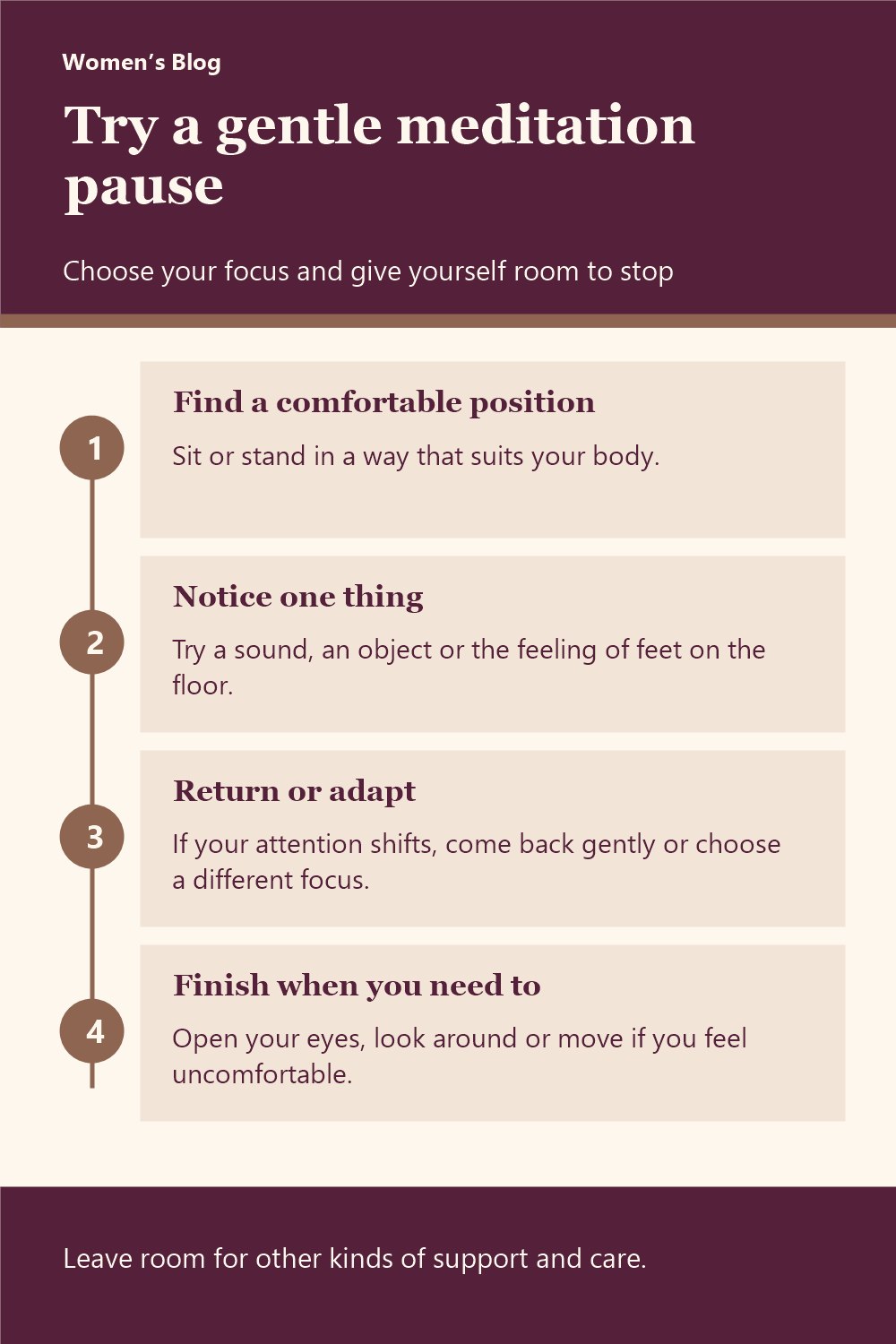
Try a gentle meditation pause
- Find a comfortable position Sit or stand in a way that suits your body.
- Notice one thing Try a sound, an object or the feeling of feet on the floor.
- Return or adapt If your attention shifts, come back gently or choose a different focus.
- Finish when you need to Open your eyes, look around or move if you feel uncomfortable.
Leave room for other kinds of support and care.