

Regret can be a response to something you did, something you did not do or a future you hoped would happen. You do not have to eliminate it before living a worthwhile life. A more useful starting point is to ask what the feeling is about, what was within your control and whether there is anything you want to do now. Some regrets invite repair; others involve a loss that cannot be neatly fixed.
In this article
Name the specific regret
Try describing the situation without turning it into a judgment about your whole life. “I wish I had spoken up in that conversation” gives you something more specific to consider than “I ruin everything.” You can acknowledge the feeling without accepting every conclusion it brings.
Ask what you are missing or wishing to change. Are you regretting a decision, the way you made it, an opportunity you did not have or an outcome you could not control? These can feel similar, but they call for different responses.
Writing a few lines may help you keep the question focused. You might note what happened, what you knew at the time and what you wish had been different. Stop if the exercise becomes another way to repeatedly punish yourself rather than understand the situation.
Separate responsibility from hindsight
Knowing the outcome now can make a past decision look more obvious than it was. Consider the information, options, support and constraints you had then. You may still wish you had chosen differently without pretending that you knew everything you know today.
If you harmed someone, take responsibility for your part. That can mean acknowledging the action, listening to its effect and changing how you behave. It does not require taking responsibility for another person’s choices or accepting blame for harm done to you.
The NHS guide to reframing unhelpful thoughts suggests checking the evidence behind a thought and considering other explanations. You might question “Everything was my fault” without replacing it with “I did nothing wrong.” A more accurate account can leave room for both responsibility and context.
Consider repair and realistic options
Ask whether there is a practical action you want to take. You might correct inaccurate information, return something, acknowledge a missed commitment or make a different plan next time. Choose an action that addresses the situation rather than one designed only to make the feeling disappear.
An apology does not create a right to forgiveness or renewed contact. If someone has asked for distance, respect that. Where a direct approach would be unsafe or unwelcome, consider other ways to change your behaviour without using repair as a reason to cross a boundary.
If the regret concerns work, education or another major choice, begin by finding out what options are actually available. Time, cost, caring responsibilities and access matter. You do not need to quit a job, enrol in a course or make a large purchase to prove that you are moving forward.
Some things cannot be restored. Acknowledging that can involve sadness as well as a decision about what comes next. You are not required to find a valuable lesson in every loss.
Seek perspective while keeping your own judgment
Talk with someone who can listen to the particular situation without turning it into a lecture about what you should have done. Ask for the kind of help you want: company, a different perspective or help comparing current options.
Experience can be useful, but age, closeness or confidence does not make someone else’s advice automatically right for you. Consider what they know about your circumstances and whether their suggestion fits the life you have now.
If you keep returning to the same question without finding new information, notice what another round of thinking would achieve. You might write down one unresolved question, arrange a time to discuss it or pause and return to an ordinary activity. A pause does not mean that the situation no longer matters.
Choose a present step without demanding closure
Pick one action small enough to carry out or review. That might be gathering information, having a respectful conversation or changing one habit connected with the regret. You can make a plan while still having mixed feelings about the past.
Notice whether your response is helping you participate in your life or leaving you trapped in repeated self-criticism. If regret is persistently disrupting sleep, everyday responsibilities or relationships, consider speaking with a qualified mental health professional for support.
A worthwhile life can include decisions you would now make differently. You can keep what you have learned, take responsibility where it belongs and make room for experiences that are still available. You do not have to call the past good or stop caring about it before choosing your next step.
Read the infographic in text
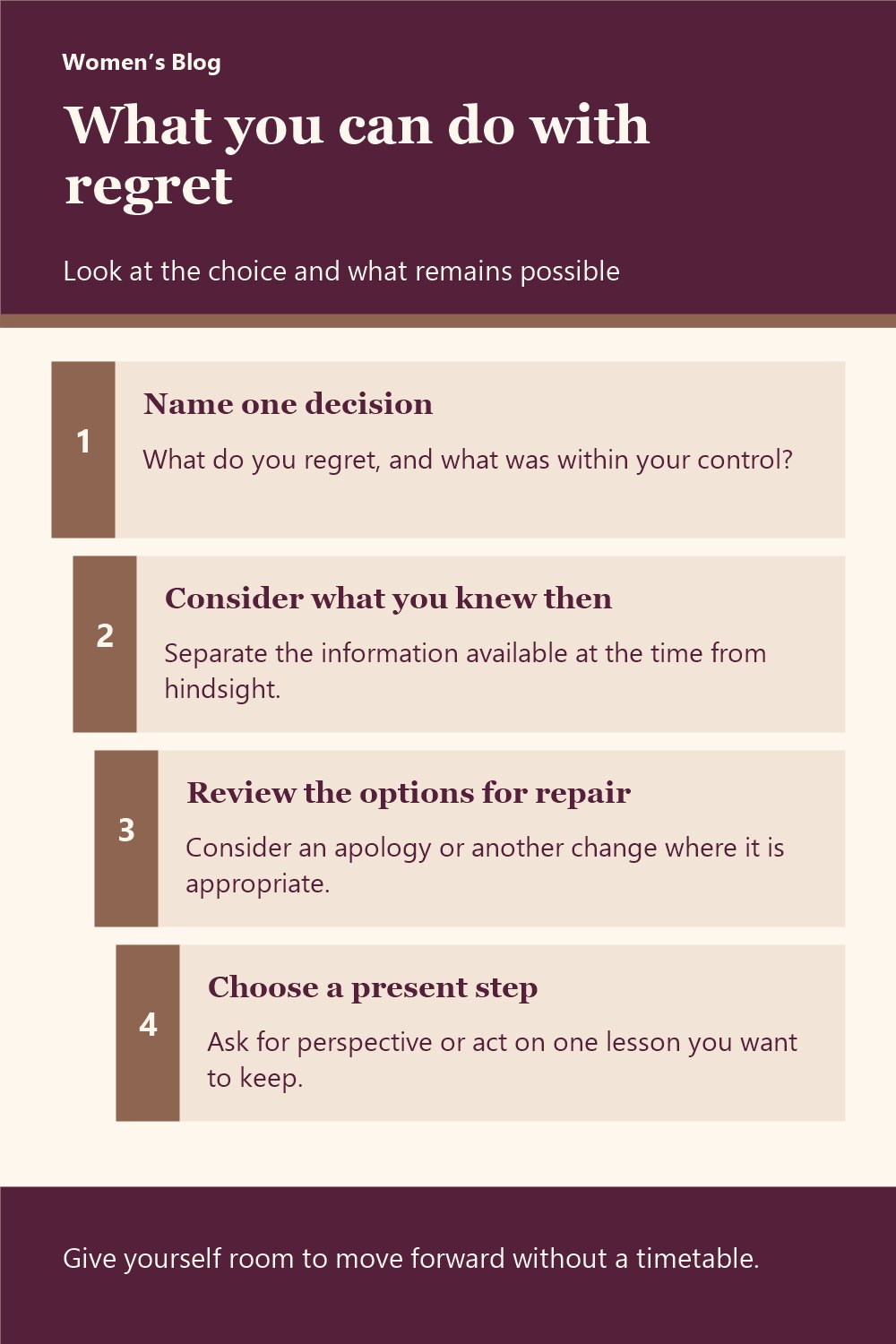
What you can do with regret
- Name one decision What do you regret, and what was within your control?
- Consider what you knew then Separate the information available at the time from hindsight.
- Review the options for repair Consider an apology or another change where it is appropriate.
- Choose a present step Ask for perspective or act on one lesson you want to keep.
Give yourself room to move forward without a timetable.