

A difficult period can make ordinary tasks feel heavier. Relationship problems, work pressure, loss or money worries may leave you unsure where to start. Getting back up can begin with meeting an immediate need, reducing a demand or letting someone help.
You do not have to turn the day into a demonstration of strength. Choose a next step that fits the energy, time and support you actually have.
On this page
Name what needs your attention today
Start with the part of life that feels hardest right now. “Everything is wrong” can be an honest description of how you feel, but a more specific concern gives you something to work with: an unanswered message, a bill, an argument or a day with too much to do.
If writing helps, make a short note under three headings:
- Needs attention today: an immediate care need or a time-sensitive task.
- Can wait: something you can postpone, simplify or leave unfinished for now.
- Needs help: a task or problem that would be easier with another person involved.
A few words are enough. You can speak a voice note or talk it through with someone instead. If reflective writing makes you more upset or keeps you circling the same thoughts, stop and try a different form of support.
You are identifying what needs care, not creating a test you have to pass. It is reasonable for the list to change as you learn more or as your circumstances shift.
Reduce the size of the next task
Choose one action with a clear stopping point. Instead of “sort out the house,” you might clear enough space to prepare a meal. Instead of “catch up with everyone,” you might reply to one message that needs an answer.
Make the task smaller again if it still feels too much. You could find the document before filling it in, write the first question before making a call or ask someone to sit with you while you open a difficult letter.
Housework and projects can offer a sense of order, but they do not establish your value. A clean room is not a requirement for deserving care, and a difficult day does not become a failure because chores remain undone.
Consider what you can stop doing, too. A reduced plan may leave out a non-essential errand, a demanding social commitment or a task that someone else can reasonably share.
Make everyday care easier
Think about what would make the next few hours more manageable. That might be an accessible meal or snack, time to rest, clean clothes or help with a care responsibility. Pick what is most relevant to you.
Food does not need to be a cooking project. A familiar meal, something ready to eat or help from someone else can be enough for the moment. Trying a new recipe is an option for a day when it interests you.
Look for a routine that supports you without adding pressure. You might prepare one item for the morning, agree on a time when someone can help or make the evening a little quieter. Keep it flexible enough for the life you are living.
If basic needs are difficult to meet, practical assistance may matter more than another self-care task. Consider who could help you find relevant local support or work through the immediate problem.
Choose an activity that suits your energy
An activity can give you a change of focus without solving the whole situation. You might listen to music, spend time outdoors, return to a familiar hobby or share a quiet activity with someone you trust.
If movement appeals to you, choose something that fits your ability and circumstances. A short walk, some gentle movement at home or an activity with company may suit you better than an ambitious workout. Rest can also be the appropriate choice.
Notice what happens afterwards. Did the activity offer interest, comfort, company or a useful pause? If it felt draining, choose something simpler next time. You do not have to keep doing something because it is commonly described as good self-care.
Enjoyable moments can sit alongside sadness or worry. You do not need to force gratitude, feel inspired or find a lesson in what happened.
Bring someone else into the plan
Make the request specific when you can: “Could you listen for a few minutes?” “Would you help me think through this form?” or “Can you check in tomorrow?” Clear requests give people a better idea of what would help.
Different needs may call for different people. A friend might offer company, someone at work may help clarify priorities, and a healthcare professional can discuss persistent stress or low mood. You do not have to expect one person to meet every need.
The NHS guide to stress suggests manageable targets and talking with others, and advises seeking help when coping is difficult or your own efforts are not helping. Support is an option before you reach a breaking point.
If too many responsibilities keep pushing you past your capacity, read Stress and Burnout: Reduce the Load and Find Support. A fuller plan may involve changing the demands around you, as well as finding ways to get through the day.
For today, choose one manageable action and one source of support to consider. Review what helped, what was too much and what still needs attention. There is no fixed timetable for feeling better, and you can make room for care while things remain difficult.
Read the infographic in text
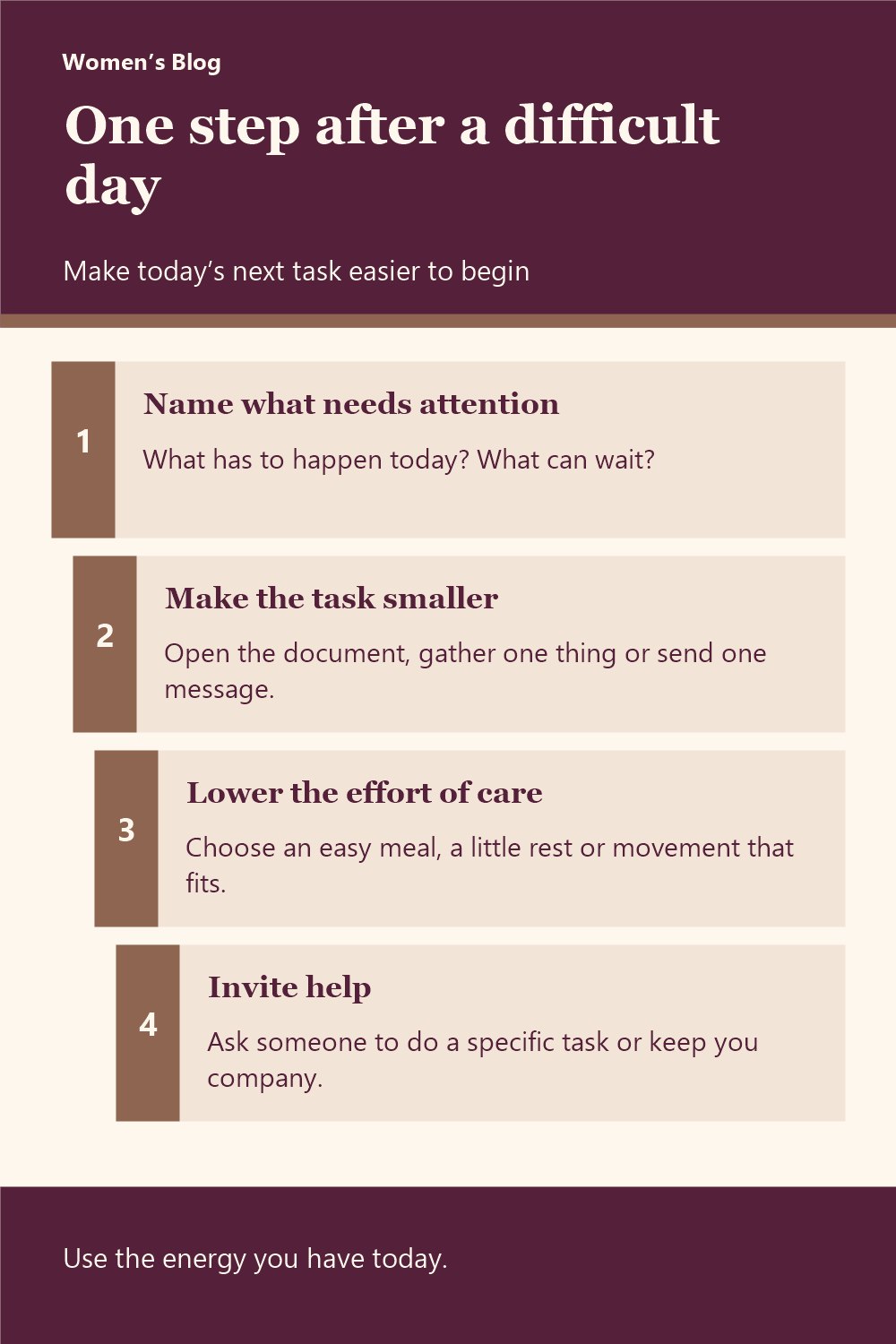
One step after a difficult day
- Name what needs attention What has to happen today? What can wait?
- Make the task smaller Open the document, gather one thing or send one message.
- Lower the effort of care Choose an easy meal, a little rest or movement that fits.
- Invite help Ask someone to do a specific task or keep you company.
Use the energy you have today.