

A career can leave room for interest, learning and a life outside work. You do not have to turn every hobby into a business or make an abrupt change to take your wishes seriously. Explore what you want from work, test an idea on a manageable scale and review the practical conditions before committing more time or money.
On this page
Describe what you want from your working life
Write down the parts of an activity you enjoy. Is it making something, solving a problem, helping someone learn or working independently? Then consider the conditions you need: reliable income, accessible tasks, predictable hours, benefits or time for caring responsibilities. A role that respects those needs may matter more than a dramatic career story.
Keep room for a hobby to remain a hobby. Enjoying an activity privately does not mean you will enjoy selling it, finding customers or repeating it to a deadline. You can explore a different role, training or a change in duties without starting a business. Interest can guide a question without requiring an immediate decision.
Test a small part of the idea
Choose a question you can investigate: what does this role involve each week, or would someone want the service you have in mind? Read actual role descriptions, talk to people doing the work or try a small project with clear limits. Ask about routine tasks and difficulties as well as the appealing parts.
Identify the skills you already use and the gaps you would need to address. Compare training requirements, time and costs before enrolling. Regular practice can build knowledge, but it does not automatically make someone an expert. Describe your current experience honestly when offering a service or applying for work.
Set a review point before the experiment begins. For example: “After two sample projects, I will review the time involved and whether I want to continue.” Keep the scale manageable and avoid promises to others that depend on skills, availability or resources you have not confirmed.

Find useful information about customers or employers
If you are considering a business, learn who might use it and what problem they want solved. Ask clear questions without pressuring friends to buy. Interest, likes and compliments can be encouraging, but they do not establish ongoing demand or reliable earnings.
Choose a way to show relevant work that you can maintain: a small portfolio, a clear service description or a focused application. You do not need to post constantly or tell everyone you meet. Respect people’s attention and permission when contacting them, and keep private work or customer information out of public examples.
The U.S. Small Business Administration’s business-planning resources include questions about demand, customers and startup costs. Use them to organise further investigation, then check information that applies to your location and proposed work. Information gathering is useful even when it leads you to postpone an idea.
Account for time, costs and support
List the activities involved, including administration, travel, preparation and finding work. Decide what time you can realistically offer alongside existing responsibilities and rest. Agree expectations with anyone helping you. Do not assume family members or friends can provide ongoing unpaid work.
Before making a commitment, identify the costs, uncertain income and support you would need. Ask an appropriately qualified local adviser about requirements you do not understand. Protect time to consider the decision without sales pressure. A plan that depends on working every evening or never taking a break deserves another look.
Consider more than one route. You might keep your current work while investigating, look for a different position, seek an adjustment to your duties or decide that the idea is not workable now. Changing direction after learning more can be a useful decision rather than evidence that you lacked determination.
Make room for reflection and a considered decision
If intuition, prayer or a psychic conversation is part of how you reflect, you can ask what values or concerns it brings to mind. Keep predictions separate from evidence about demand, costs and your ability to do the work. You retain the decision, and no conversation can guarantee that a venture will succeed.
Speak with someone who can discuss both your wishes and the practical tradeoffs without pushing a particular outcome. Notice whether advice leaves room for questions, uncertainty and your right to decline. You can take time before buying training, paying for services or making a major change.
Finish with a next step you can explain: one question to research, one person to contact or one small project to try. At the review point, ask what you learned and what needs to change. Meaningful work can develop gradually, and your interests and circumstances are allowed to change with it.
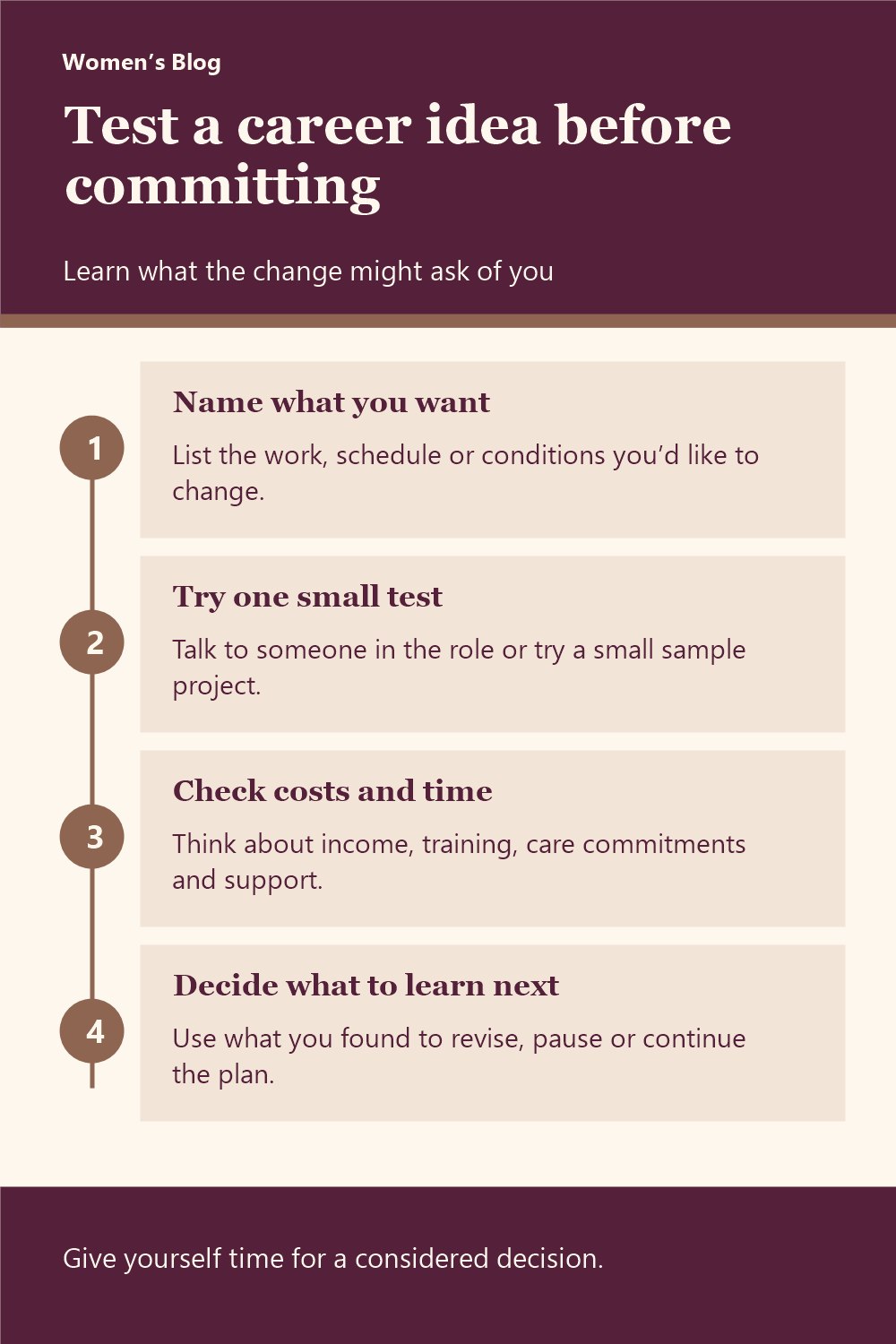
Read the infographic in text
Test a career idea before committing
- Name what you want List the work, schedule or conditions you’d like to change.
- Try one small test Talk to someone in the role or try a small sample project.
- Check costs and time Think about income, training, care commitments and support.
- Decide what to learn next Use what you found to revise, pause or continue the plan.
Give yourself time for a considered decision.