

Feeling overwhelmed can make ordinary decisions feel demanding. Start by asking what you need first: something to eat, less pressure, a little company, a change of attention or help with a problem.
This guide groups the options by need so you can choose one manageable response. You do not have to work through every suggestion or expect an immediate change in how you feel.
On this page
1. Start with the need that matters now
Ask yourself what is most pressing: a basic need, a practical demand, difficult feelings or a health concern. Choose one option below that fits. You can stop after one small action and review what you need next.
2. Reduce one demand
A little more space may be more useful than adding another activity.
- Say no or renegotiate: If you can, decline an extra task or ask which existing task should move. A clear answer such as “I can do this tomorrow” may be easier than overcommitting.
- Change one phone setting: Mute a nonessential alert or put the phone out of reach for a short break. Keep any access you need for caring duties, safety or an expected important call.
- Take a practical break: Step away from a non-urgent task, change position or ask for a pause. Choose a break that is possible in your circumstances.
3. Check food, drink and rest
Ordinary care can be worth making easier to reach, even while a bigger problem remains.
- Have a drink if you need one: Keep water or another suitable drink accessible. Follow any clinician’s guidance about fluid restrictions; you do not need a detox routine.
- Make eating easier: If you are hungry or have missed a meal, choose something available that meets your needs. Food does not have to be elaborate or “mood boosting” to be useful.
- Choose comfortable personal care: Washing your face, changing uncomfortable clothing or resting your feet may suit you. Skip harsh scrubbing and concentrated essential oils. You do not owe anyone a beauty routine.
- Consider a short rest: You might sit quietly or nap if that works for your schedule and sleep. Notice whether it helps you feel rested rather than insisting it must change your mood.
- Make bedtime less demanding: Prepare one thing that helps you settle, such as comfortable bedding or a quieter room. Persistent sleep difficulties deserve appropriate support.

4. Choose contact with clear limits
Company and privacy can both matter. Consider what kind of contact would feel welcome.
- Keep dating optional: Meet or speak with a partner if you want their company. You can also choose a friend, a group or time alone; a date is not a remedy you must arrange.
- Ask someone to listen: Check their availability and say what would help, such as a brief call or company while you complete a task. You can ask for listening without requesting a solution.
- Offer kindness within your capacity: A small helpful act may fit your values. Consider your own time, money and energy before volunteering or agreeing to take on a responsibility.
- Ask before a hug: Choose touch only when everyone involved welcomes it. Sitting nearby or exchanging a kind message can be other ways to connect.
- Leave forgiveness on your own timetable: You do not have to forgive someone, resume contact or dismiss harm to deserve some peace. Consider the boundary or support you need now.
- Spend comfortable time with a pet: If you and the animal are comfortable, quietly sharing a space may be pleasant. Follow the animal’s cues and the owner’s permission; avoid forcing touch or a hug.
5. Try a gentle change of attention
Choose something accessible and interesting. There is no need to force yourself to enjoy it.
- Notice your surroundings: Look at a flower, a pattern or a view you like. Choose a sensory detail that feels comfortable; avoid scents that irritate you.
- Choose something to watch: A comedy, a familiar programme or another story may appeal. You can turn it off if it increases discomfort or no longer interests you.
- Read a little: Try a short article, a few pages or an audiobook. You can stop without finishing a chapter or making the time productive.
- Make or look at art: Doodle, arrange colours or look at a picture you like. Skill, a finished result and sharing the work are optional.
- Pick suitable music: Choose music and a volume you find comfortable. Silence is also available if sound feels tiring or distracting.
- Sing if you enjoy it: Join in with a familiar song when the setting suits you. It does not have to improve your confidence or become a performance.
- Play something manageable: Try a puzzle or a game that fits the time and attention you have. Set a stopping point if you tend to stay longer than you want.
- Return to a hobby: Choose a small part of an activity you like, such as sorting a few materials or working for a short while. You can adapt it to your energy.
- Consider some outdoor time: A comfortable, accessible place outside may offer a change of scene. Consider weather, sun protection and your health needs; sun exposure is not a treatment to pursue.
6. Adapt movement to your circumstances
Movement can be gentle and optional. Choose a form that is suitable for your body and situation.
- Move in a comfortable way: A short walk, seated movement or changing position may fit. You can also rest. Follow relevant medical advice and stop an activity that causes concerning symptoms.
- Dance at your own pace: If music makes you want to move, choose a comfortable space and level of effort. Small movements count as a choice; you do not have to turn them into a workout.
- Build strength with suitable guidance: If strength training interests you, choose appropriate instruction and equipment. Avoid using unfamiliar heavy weights as an immediate response to feeling overwhelmed.
7. Give feelings a little room
Pick a practice that feels supportive and stop if it makes the moment harder.
- Reflect or meditate if it suits you: You might sit quietly, pray or notice the room around you. You do not have to empty your mind, and a different activity is acceptable if this feels uncomfortable.
- Use a believable sentence: Try something grounded, such as “I can ask for help with this.” A supportive sentence can acknowledge a difficulty without insisting everything is going well.
- Write a short note: Put down one concern, one need or one question you want help with. You can leave the page unfinished or stop if writing increases distress.
- Keep breathing gentle: If you want to try a breathing exercise, sit or stand somewhere safe and comfortable. The NHS breathing guide describes a gentle approach without forcing the breath. Stop if uncomfortable; never practise in a way that distracts you while driving.
8. Get help for what needs attention
A comfort activity cannot answer every difficulty. Ask for practical or professional help when it is needed.
- Take pain or illness seriously: Seek appropriate medical advice for new, persistent or worrying symptoms rather than assuming they come from stress. You do not have to change your attitude towards pain before asking for care.
If pressure is affecting daily life or your own attempts to cope are not helping, the NHS guide to stress describes options for further support. You can seek help without trying every activity here first.
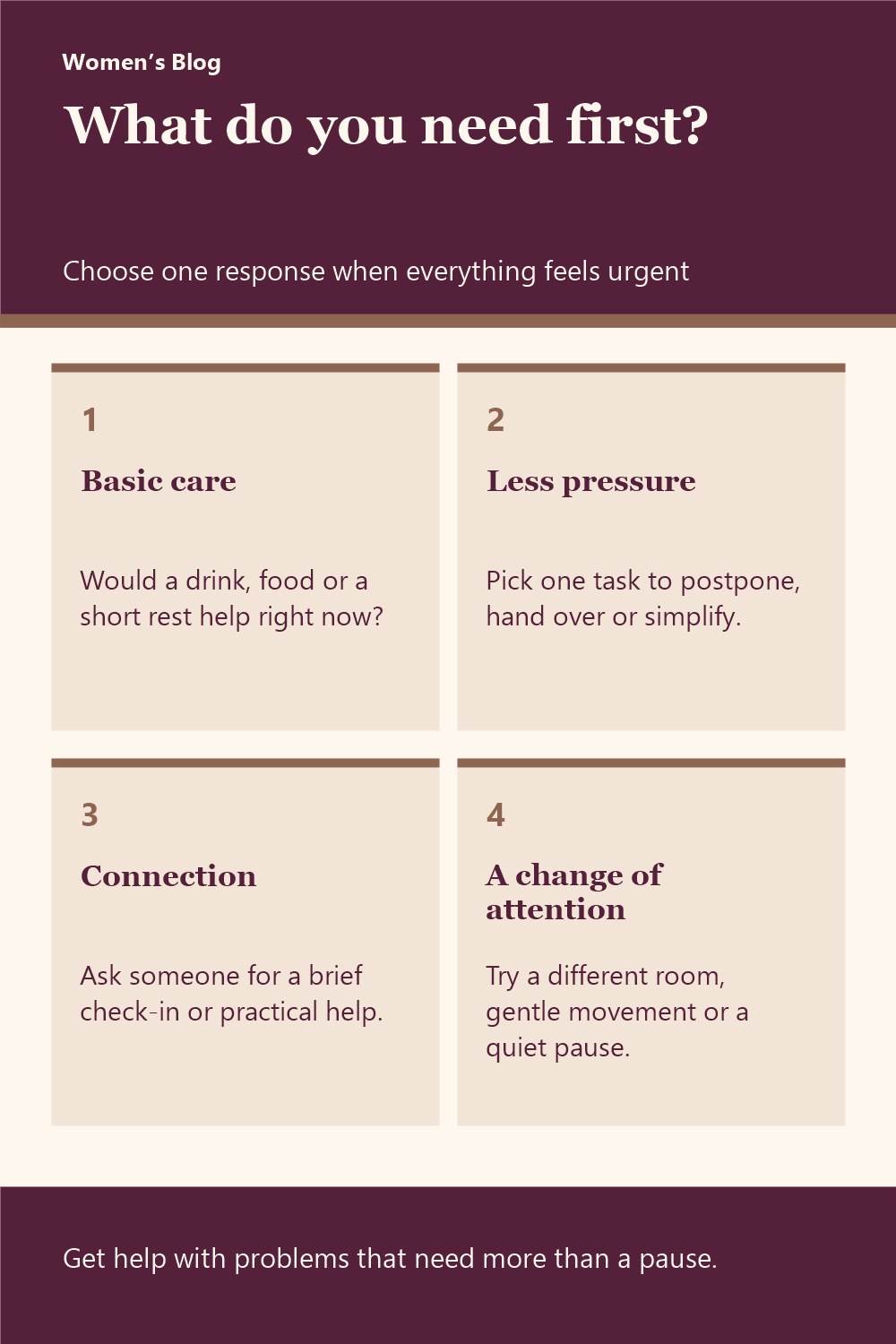
Read the infographic in text
What do you need first?
- Basic care Would a drink, food or a short rest help right now?
- Less pressure Pick one task to postpone, hand over or simplify.
- Connection Ask someone for a brief check-in or practical help.
- A change of attention Try a different room, gentle movement or a quiet pause.
Get help with problems that need more than a pause.