

A bad day can leave you tired, upset or unsure what to do next. You do not have to turn the experience into a lesson or solve every problem before the day ends. Start by identifying what needs care now and what can wait.
These ten options focus on getting through the day with less pressure. Choose one that suits what is actually happening.
On this page
1. Lower the demands for now
Identify what really needs to happen today and what can wait. You might postpone a non-urgent errand, simplify dinner or ask for more time. A difficult day does not have to become a verdict on your whole life or a deadline for fixing everything.
2. Give delayed plans some space
A setback can be frustrating even when you know progress takes time. Check whether a deadline needs adjusting or someone needs an update. Keep the next step small and specific. You can return to a larger goal when you have more room to think.
3. Name what is making today hard
Try a plain description: “I had an argument,” “I am overloaded,” or “I feel low and do not know why.” You do not have to find a lesson in the experience. Naming one difficulty may help you decide whether you need practical help, company, rest or a boundary.
4. Let one moment be one moment
If one part of the day went badly, notice whether you are predicting that everything else will follow. Ask what is actually happening now and what needs attention next. You can acknowledge a pleasant moment without using it to dismiss a painful one.
5. Allow your feelings
You may cry, feel angry, feel flat or want some quiet. There is no required emotional release. If you can, choose a private or supportive setting and give yourself a little space. You can feel upset while choosing how you want to respond to other people.
6. Turn one worry into a question
Ask whether there is something you can do now. If so, write down one action, such as checking a time or requesting information. If you are waiting on an answer, choose when you will check again. Repeated checking can wait while you attend to the next ordinary task.
7. Step back from comparison
A social feed can be a difficult place to spend a vulnerable moment. You might mute an account, close the app or choose a different activity. Someone else’s photograph gives you only part of their day. Your needs do not depend on how well other people appear to be doing.
8. Ask for a specific kind of help
A clear request can make it easier for someone to respond: “Could you listen for ten minutes?” or “Can you help me sort out this appointment?” Ask a person you trust and allow for their availability. If one person cannot help, consider another appropriate source of support.
9. Accept comfort without forcing gratitude
A familiar song, a warm drink or a message from someone you care about may feel comforting. You can accept that small comfort and still want the situation to change. You are allowed to skip a gratitude exercise that feels like pressure to minimise what happened.
10. Make tomorrow a little easier
Choose one manageable preparation, such as leaving a note about an appointment or putting something you need by the door. Then decide what can be left for tomorrow. If low mood keeps returning, affects daily life or is hard to cope with, consider professional support. The NHS low-mood guide describes when to seek help.
Read the infographic in text
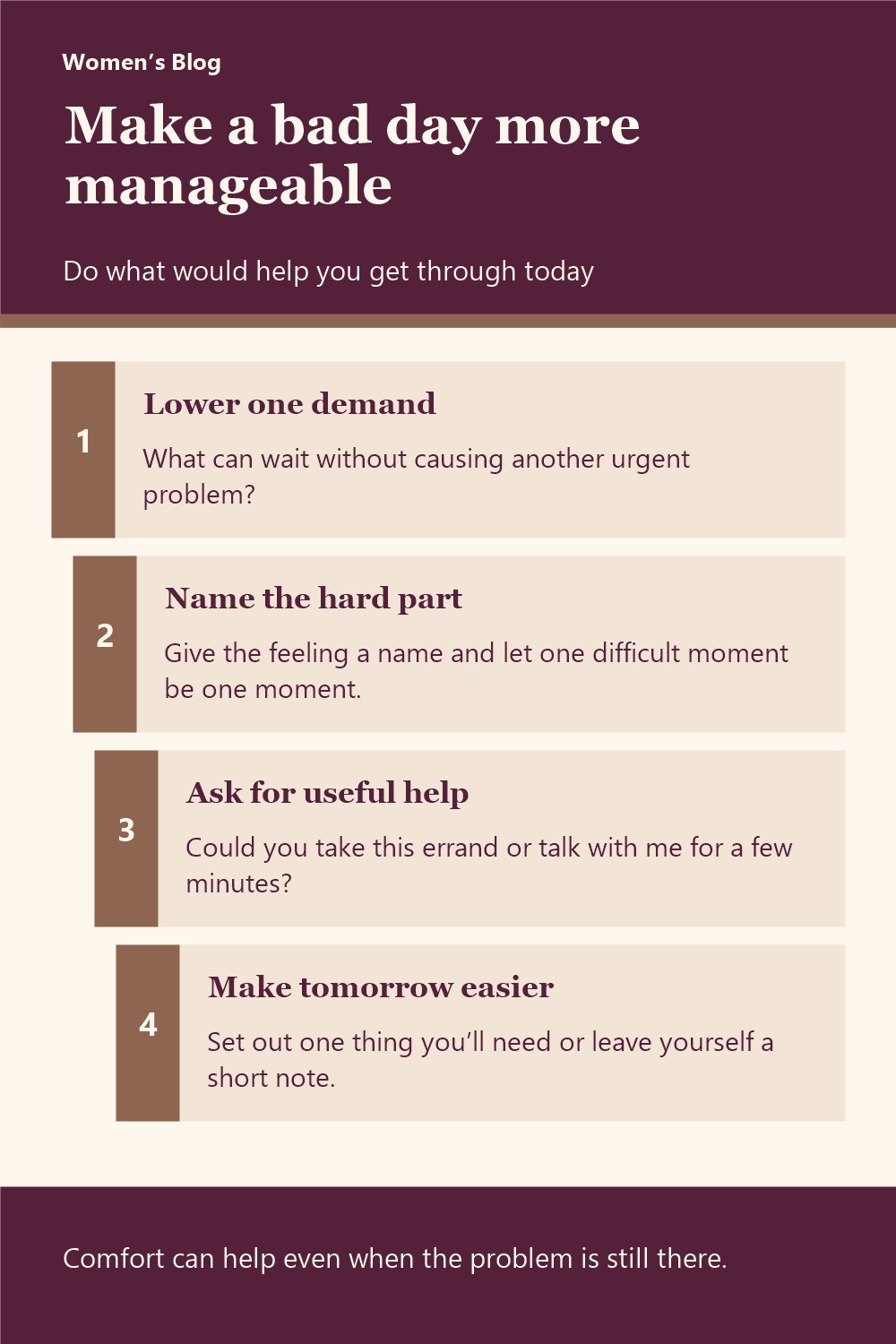
Make a bad day more manageable
- Lower one demand What can wait without causing another urgent problem?
- Name the hard part Give the feeling a name and let one difficult moment be one moment.
- Ask for useful help Could you take this errand or talk with me for a few minutes?
- Make tomorrow easier Set out one thing you’ll need or leave yourself a short note.
Comfort can help even when the problem is still there.