

Repeated arguments can make it hard to feel heard or to know what should change. A useful conversation starts with a specific issue, room for each person to speak and responsibility for how both people behave.
You can work on your own responses while expecting respect from your partner. No communication technique can make another person stop controlling or hurting you. Your safety and your ability to choose matter throughout the discussion.
On this page
1. Start with respect and room to disagree
A partner can have a different view without dismissing your feelings or controlling your choices. Check whether both of you can speak, say no and take a pause safely. Insults, threats, intimidation and retaliation need attention beyond finding a better phrase for an argument. The love is respect guide to conflict resolution distinguishes disagreements from patterns of control.
2. Listen to the feeling and check what happened
Give each other a chance to explain the specific situation. You might say, “I can see that the change of plan was upsetting. Can we go through what happened?” Acknowledging an emotion does not require agreeing with every interpretation. Ask a question before deciding what the other person intended.
3. Separate an observation from an assumption
Describe something concrete rather than making a judgement about character. “We have cancelled our last two plans” gives you something to discuss. “You never care” assumes a motive and makes the issue harder to pin down. You can ask what happened, explain the impact and say what you would like to change.
4. Take responsibility for your behaviour
You are responsible for how you speak and act, even when you feel hurt. If you shouted or made an unfair accusation, name it and apologise without adding a reason that blames your partner. Your partner is also responsible for their actions. Taking responsibility does not mean accepting blame for someone else’s threats, coercion or violence.

5. Agree how to pause and return
If a discussion is escalating and it is safe to do so, ask for a break. Explain that you want to return to the issue and agree a reasonable time to check in. A pause should allow space to settle, rather than being used to frighten, punish or leave someone uncertain indefinitely. Do not use this advice to confront someone when you fear their response.
6. Make a specific repair or agreement
Choose one change you can describe and review. For example, agree how to let each other know when plans change. Check that the arrangement is mutual, realistic and respectful of privacy and consent. An apology may matter, but repeated behaviour over time shows whether the agreement is being followed. You are allowed to decide that an ongoing pattern is unacceptable.
7. Choose support that fits the situation
When both partners can speak freely and want help, a qualified relationship counsellor may be an option. If there is fear, intimidation or control, seek individual support from an appropriate abuse service first. The National Domestic Violence Hotline explains why joint counselling with an abusive partner can be unsafe. If you are in immediate danger, contact local emergency services when it is safe to do so. You do not have to save the relationship to deserve care.
A pause that leaves a time to return
If both people are raising their voices about an unfinished task, one could say “I want to talk about how we share this. Can we take a break and come back after dinner?” On returning, ask who can take responsibility for the next specific part.
A pause can lower pressure when both people can use it freely. If stopping a conversation could bring threats, retaliation or harm, seek support before negotiating another conversation.
Read the infographic in text
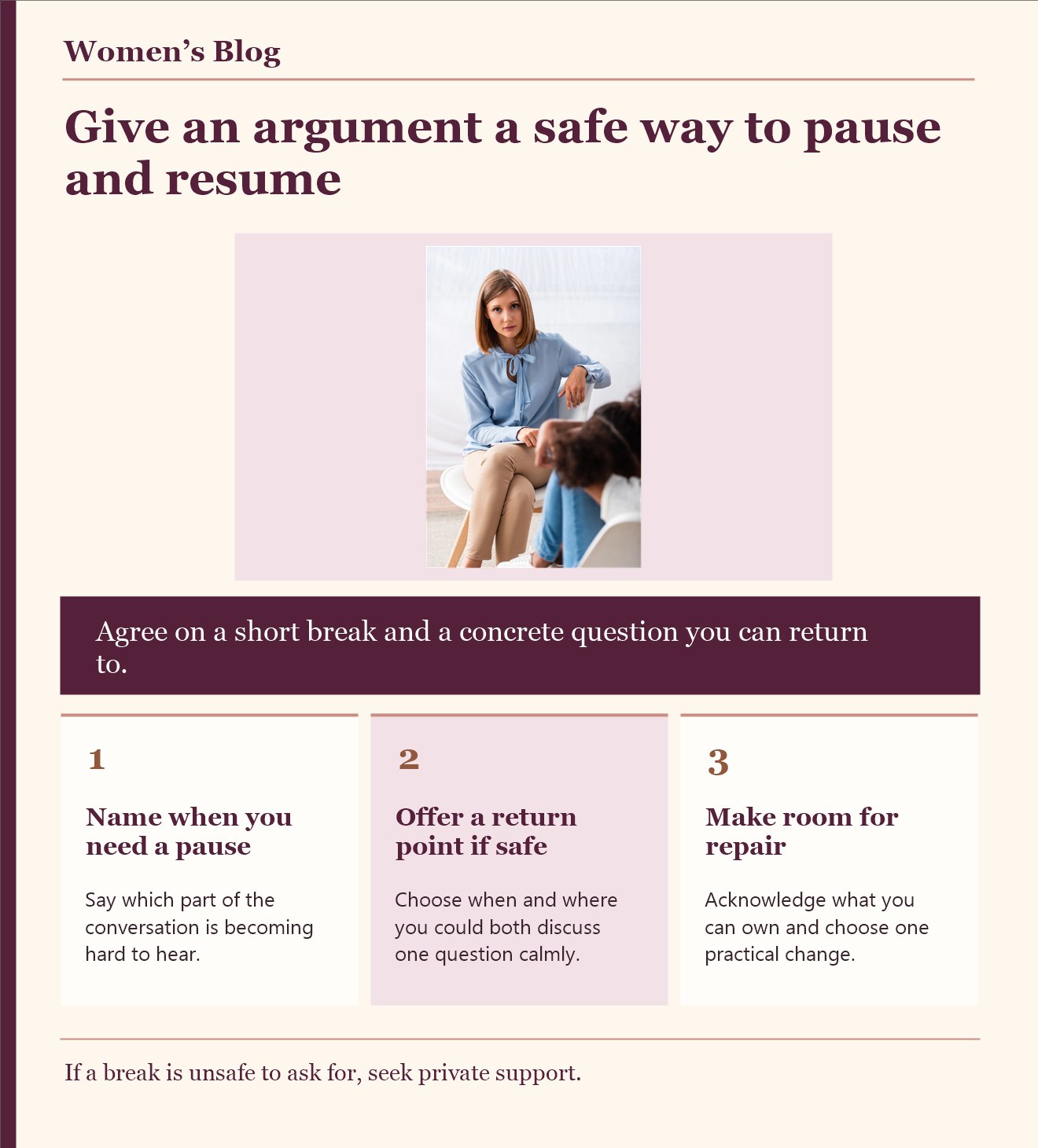
Give an argument a safe way to pause and resume
Agree on a short break and a concrete question you can return to.
- Name when you need a pause Say which part of the conversation is becoming hard to hear.
- Offer a return point if safe Choose when and where you could both discuss one question calmly.
- Make room for repair Acknowledge what you can own and choose one practical change.
If a break is unsafe to ask for, seek private support.