

A strong feeling can make the next moment seem urgent. You may want to send a message, defend yourself or withdraw before you have decided what would help. Having an emotion is different from choosing an action, and neither sensitivity nor an unsettled day makes you a failure.
The aim is to understand what is happening and give yourself room to respond. You do not have to suppress feelings, stay positive or accept unfair treatment to appear calm.
On this page
1. Describe the feeling without judging it
Use the words that fit: disappointed, angry, embarrassed, worried or unsure. “I felt hurt when the plan changed” describes an experience more clearly than “I am too emotional.” You may need time to identify what you feel, and more than one emotion may be present.
Acknowledging a feeling does not mean that every interpretation attached to it is correct. Nor does it mean you must express it immediately to the person involved. You can recognise anger without sending an insulting message.
If identifying as an empath is meaningful to you, you can use that language for personal reflection. It does not establish that you know what another person feels, explain every difficulty or make you responsible for absorbing their distress.
2. Look at the situation and the meaning you gave it
Separate the event from the story that followed. “They did not reply this afternoon” is an observation. “They do not respect me” is an interpretation that may need more information. At the same time, do not talk yourself out of recognising a repeated broken agreement or actual mistreatment.
If writing helps, make a short note of what happened, what you felt and what you need next. Keep it manageable rather than requiring a detailed journal. Protect your privacy, and stop if repeatedly recording the event is making it harder to return to your day.
You could ask a clarifying question where it is safe and useful: “Were you expecting the plan to change?” The answer may reveal a misunderstanding, a difference in expectations or a problem that still needs attention.
3. Create space before a response
If you can pause safely, put down the message draft, step away from the conversation or attend to a familiar task. You can say, “I want to respond carefully. I need a break before we continue.” A pause can have a clear return time when that is appropriate.
You do not need to wait until every feeling disappears. Look for enough space to choose words and consider the likely effect of an action. If someone is threatening you, prioritise safety rather than staying in the conversation to practise calmness.
Try self-talk you can believe: “This is difficult, and I can consider one next step.” You do not need to declare that everything is wonderful. The NHS provides further ideas for looking at unhelpful thoughts more flexibly, including when a thought is difficult to change.
4. Choose an action and take responsibility for it
Consider what you are asking for and what is within your control. You might make a specific request, decline an invitation, set a contact limit or decide that the discussion needs outside support. An action can be firm without becoming an attack.
If you insulted or frightened someone, acknowledge the behaviour and change what you do next. Feeling upset can explain the context without excusing harm. You are responsible for your actions; you are not responsible for another person’s decision to threaten, manipulate or mistreat you.
You also cannot guarantee another person’s response. A clear request may be declined. That answer gives you information for deciding what arrangement or boundary is workable for you.
5. Review what you need and seek support
Later, ask whether there is a practical need to address: rest, a changed expectation, help with a task or a conversation about a recurring pattern. Caring for yourself can include support and limits, rather than making yourself less affected by everything.
Talk with someone you trust if that would help. If distress is persistent, difficult to manage or interfering with daily life, consider a qualified professional. You can describe what you have noticed and ask for help without deciding on a label yourself.
Notice a useful choice without demanding perfect control. You can feel strongly, reconsider an interpretation and respond with care, one situation at a time.
Read the infographic in text
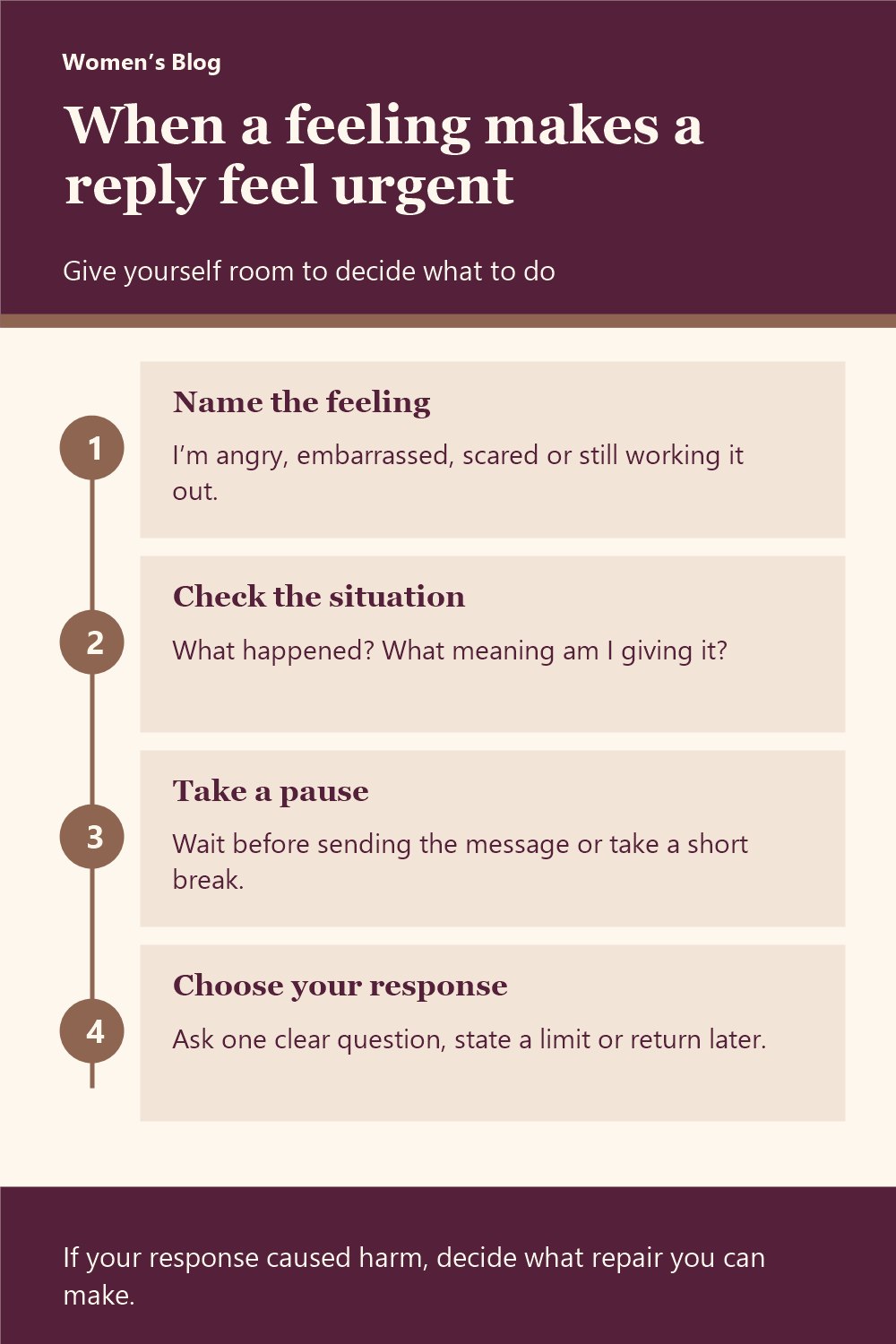
When a feeling makes a reply feel urgent
- Name the feeling I’m angry, embarrassed, scared or still working it out.
- Check the situation What happened? What meaning am I giving it?
- Take a pause Wait before sending the message or take a short break.
- Choose your response Ask one clear question, state a limit or return later.
If your response caused harm, decide what repair you can make.