

Loving yourself more can begin with how you treat yourself today. You do not need to feel confident, enjoy your appearance or have your life organised before you deserve food, rest, companionship and consideration.
If the phrase “self-love” feels too demanding, try a smaller question: what would make the next part of the day more manageable? A useful answer might involve changing a plan, asking for help or spending time on something you enjoy. It does not have to involve buying anything or becoming a different person.
In this article
Begin with a need you can name
Start with a specific situation rather than a judgment about your whole life. “I have been answering messages through my lunch break” points to a possible change. “I do not love myself enough” is harder to act on and may add blame to an already difficult day.
Choose one response that is within reach. You might put a meal beside you before a busy afternoon, ask someone to share a task or delay a nonessential decision. A step can be helpful even if it does not change your mood immediately.
You may know what you need but lack money, time, access or a safe place to do it. That is a practical barrier, not a character flaw. Look for a smaller alternative or help with the barrier itself. Personal care should not become another standard that ignores your circumstances.
Make everyday care fit your circumstances
Movement can be an option if it feels comfortable and fits your body. A short walk, stretching, moving to a different seat or spending time outdoors may suit some days. Disability, pain, fatigue or a wish to rest do not make you less deserving of care. You do not need to earn a break through exercise.
Food is a need, not a test of self-respect. Consider what is available, affordable and manageable: a prepared meal, something simple from the cupboard or help with shopping. Avoid using “good” and “bad” food labels as judgments about yourself. For individual dietary needs or ongoing eating difficulties, seek appropriate professional support.
Make room for sleep where you can, without treating a difficult night as failure. A quieter wind-down or changing an avoidable interruption may be useful, but work, caring duties, health and housing can limit your options. If sleep problems persist or affect daily life, discuss them with a healthcare professional.
Notice what actually helps you rather than collecting rules. A routine that works for a friend may be unsuitable for your schedule. You can keep an easier version, change the timing or leave it out.
Choose what gets your attention
When your thoughts become harsh, describe the event more accurately. “I forgot to reply and can send a message now” leaves room for repair. “I ruin every friendship” turns a missed reply into a verdict. You can take responsibility without insulting yourself.
If following the news leaves you overwhelmed, decide what information you need and when to check it. You might use one reliable update or switch off alerts during a meal. Staying informed does not require being available to every headline all day.
Entertainment can be ordinary enjoyment. If a programme repeatedly leaves you feeling worse, try something else or take a pause. There is no need to make a moral rule about a whole genre or prove that every leisure activity improves you.
On social media, notice particular patterns: comparing your home with carefully staged rooms, answering work messages late or checking a conversation repeatedly. Muting an account, changing notifications or keeping one period free from scrolling may be more useful than blaming yourself for using a phone.
Protect time for rest and enjoyment
Look at one demand on your time. Is it necessary today, something another person can share, or something you agreed to before understanding the effort involved? A clear request such as “Can you take care of dinner on Tuesday?” gives someone a concrete way to help.
Rest does not need a productivity justification. Sitting down, listening to music or leaving a task unfinished for now can be reasonable. If you are repeatedly exhausted, consider the load you are carrying as well as the routines you use to recover.
Enjoyment can be small and unremarkable: making something, watching a familiar film or talking with a friend. You do not need to turn a hobby into an achievement or a source of income. Trying something and deciding it is not for you is also allowed.
If a list helps, keep it short: one need, one optional pleasant activity and one request for support. Avoid making a long self-care checklist that becomes evidence against you when the day changes.
Time alone may feel restorative, lonely or both. Choose the amount and setting that suit you rather than assuming independence means needing nobody. A quiet hour and a planned call can belong in the same day.

Build support without demanding perfection
You do not have to force forgiveness to move forward. When you have harmed someone, consider an honest apology and a specific change. When someone has harmed you, caring for yourself can include distance and support. Forgiveness does not require renewed contact.
In relationships, notice whether your needs can be discussed without ridicule, threats or punishment. You cannot make another person respectful by loving yourself more. Trusted support can help you consider your options when the problem involves how you are being treated.
For a closer look at fairer self-talk and boundaries, read Self-Kindness in Everyday Life: Boundaries, Care and Room to Be Human. If the main difficulty is too much to carry, Stress and Burnout: Reduce the Load and Find Support explores practical adjustments.
Choose one act of consideration that fits today. You can reassess tomorrow without declaring success or failure in self-love. If harsh self-criticism or distress keeps interfering with your life, support from a qualified professional is another form of care you can consider.
Read the infographic in text
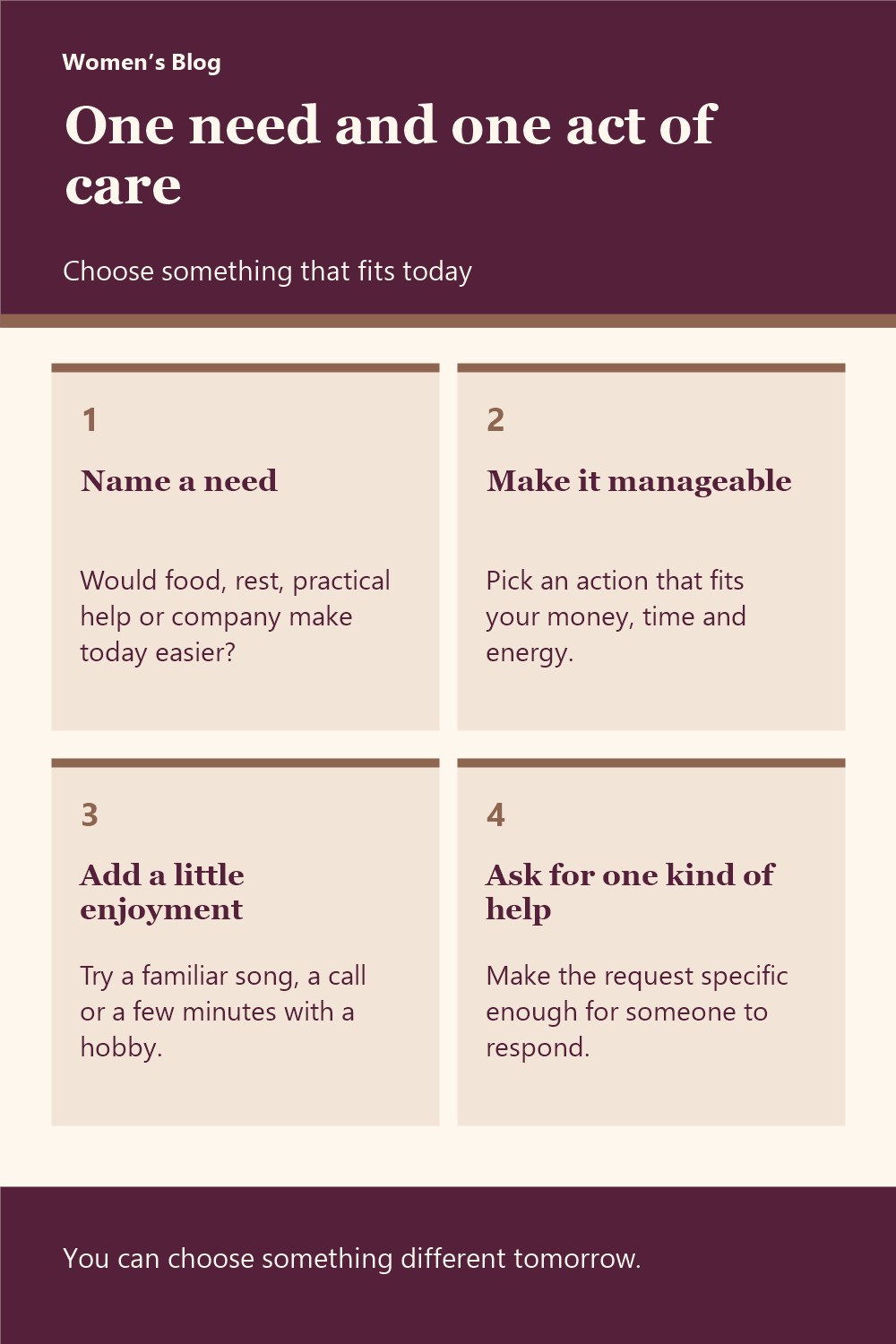
One need and one act of care
- Name a need Would food, rest, practical help or company make today easier?
- Make it manageable Pick an action that fits your money, time and energy.
- Add a little enjoyment Try a familiar song, a call or a few minutes with a hobby.
- Ask for one kind of help Make the request specific enough for someone to respond.
You can choose something different tomorrow.