

Self-love can sound like another thing you are supposed to get right. A more workable starting point is everyday self-respect: making room for a need, keeping a reasonable promise to yourself or responding to a mistake without turning it into a verdict on your worth.
You do not have to feel confident all the time, enjoy being alone or complete a list of activities before you deserve care. Choose an idea that fits your circumstances and leave the rest for another day.
On this page
Make room for something that is yours
Start with a preference you can actually include in your day. It might be a chapter of a book, music while you cook, a familiar walk or a call with someone you enjoy. The point is to notice what you want, rather than choose an activity because it looks impressive.
You do not need an annual solo trip or money for a special outing. A local library visit, a few minutes by an open window or choosing what to watch can be enough for an ordinary pause. If time alone feels unpleasant, shared company is a valid choice too.
Trying something unfamiliar is optional. Pick a small experiment with a clear way to stop or leave: a short class, a new recipe or a different route. You can decline an invitation that does not suit you. Discomfort is not an obligation to push ahead.
Respond to yourself with honesty and care
Notice when a description becomes a harsh generalisation. “I missed that message” gives you a problem to address. “I ruin everything” makes a much larger claim. Ask what is accurate, what needs repairing and what you would say to someone you care about.
You can acknowledge a mistake, apologise where appropriate and make a different plan without repeatedly punishing yourself. Self-respect does not require forgetting what happened or insisting that every decision was right.
If writing helps, keep a brief note with three prompts: “What happened?”, “What matters to me here?” and “What could I try next?” Use a private place to keep it, or choose a conversation instead. You do not need a daily streak or a positive ending to every entry.

Treat rest as a need you can plan for
A break may be hard to arrange when you work, care for others or share a busy home. Look for a specific adjustment: move one nonessential task, ask someone to cover a short period or simplify an expectation for the evening.
Try naming the obstacle without blaming yourself. “There is no one to share the school run” points to a different problem from “I am bad at self-care.” Some pressures need resources or practical help, not a better attitude.
Keep the plan modest enough to use. If an uninterrupted hour is unlikely, decide what a smaller pause could look like. Rest can be quiet, social or active according to what you prefer; it does not need to resemble a picture of perfect relaxation.
Practise a limit in everyday language
Choose one request where you have a genuine choice. You might say, “I can help for half an hour,” “I need to check my schedule,” or “I cannot take that on this week.” An honest answer gives the other person clearer information too.
Before agreeing, consider what the task will displace. Food, sleep, an existing commitment or time you need for yourself belong in that calculation. You can offer a smaller contribution if you want to, without promising it automatically.
For relationships that leave you afraid to disagree or under pressure to comply, an ordinary assertiveness exercise may not fit. Our guide to recognising control and finding support addresses that different situation.
Choose a next step without proving your worth
If you like recording progress, include efforts and choices as well as outcomes. Asking a question, changing an unworkable plan or getting through a demanding day can belong on the page. You do not have to produce achievements to justify being treated well.
Picture an ordinary detail you would like to change, then choose a small action within your control. “Make space to read” might become putting a book beside your chair. You can revise the plan when your circumstances change.
If persistent self-criticism is affecting daily life, you can talk with a qualified mental health professional. The NHS guide to raising low self-esteem includes further self-help ideas and information about talking therapies. Support is available before you feel confident about asking for it.
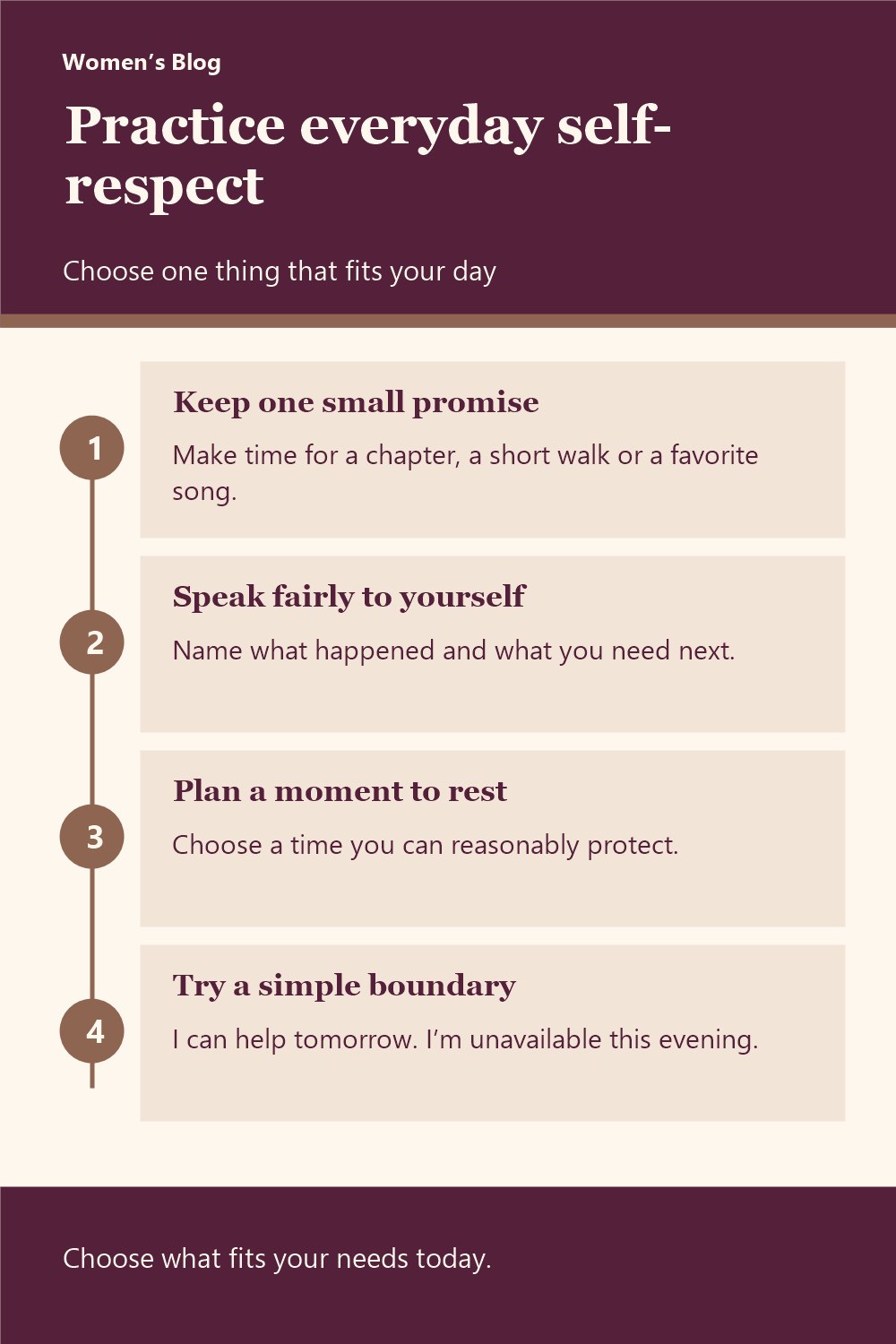
Read the infographic in text
Practice everyday self-respect
- Keep one small promise Make time for a chapter, a short walk or a favorite song.
- Speak fairly to yourself Name what happened and what you need next.
- Plan a moment to rest Choose a time you can reasonably protect.
- Try a simple boundary I can help tomorrow. I’m unavailable this evening.
Choose what fits your needs today.