

You do not have to meditate to make room for a pause. When your day feels crowded, something ordinary may be easier to try: reducing noise, stepping outside, listening to a song or asking someone to share a task.
Choose one idea that suits your surroundings, energy and responsibilities. The aim is a little breathing room, not a promise that a quick activity will remove every worry. If something adds pressure, leave it out.
In this article
Choose a quieter pause
Look for a small change you can make where you are. Lower a screen’s volume, sit somewhere more comfortable or put down a non-urgent task. You can keep your eyes open and notice the room around you. There is no requirement to empty your mind.
Let breathing stay comfortable
If paying attention to your breathing feels helpful, let it become gentle and unforced for a few moments. Skip counting or unusually deep breaths if they feel uncomfortable. You can focus on a nearby object or the feel of your feet on the floor instead.
Allow yourself to recognise the present feeling: “I am frustrated and need a break.” Acknowledging that does not mean approving of a difficult situation or deciding that nothing can change.
Use a believable sentence
Try language you can actually accept, such as “I can deal with one part of this at a time.” A neutral reminder may fit better than insisting that everything is wonderful.
If a harsh thought appears, notice what it claims. “I have not finished this task” is more specific than “I never manage anything.” You can question a sweeping judgement without trying to ban every negative feeling.
Reduce demands around you
Check whether notifications, competing conversations or an overflowing task list are asking for your attention at once. Pause non-essential alerts for a period that fits your day. Keep a way for necessary care, work or emergency contact to reach you.
Give an ordinary break your attention
If you are eating, try taking a break from another task while you do it. You do not need to turn each bite into an exercise or follow a special rule. Choose a meal break that feels comfortable for you.
A familiar drink can be part of a pleasant pause. Choose what suits you; tea is not a treatment for stress, and there is no particular drink you must buy.
If washing or taking a comfortable bath feels restful, allow time for it when practical. A demanding care routine is not necessary. A simple change into comfortable clothes might be enough.
Keep a household task small
Choose a contained job, such as washing one mug or clearing a place to sit, only if it would help. Avoid turning a short pause into a requirement to clean the whole home. Rest does not have to be earned through chores.

Pick an activity that suits your energy
A familiar short walk, a seat outdoors or a view from a window can offer a change of scene. Adapt the idea to your access needs and local conditions. Staying somewhere comfortable is also a valid choice.
Listen to something you choose. Try a song, quiet background sound or silence. Notice what suits you today rather than assuming a particular kind of music will always be calming.
Enjoy a familiar programme. A short episode or favourite scene may be an easy break. Decide whether you want to keep watching or return to another part of your day.
Try a manageable puzzle. Pick one that interests you, without making speed or completion the goal. Put it aside if it becomes another frustration.
Spend time with art. Look at an image you enjoy or make a few marks with materials you already have. Nothing needs to be good enough to display.
Write a few lines. A poem, description or unfinished thought can stay private. You can stop without explaining all your feelings or finding a positive ending.
Deal with one source of pressure
A pause may help you approach a problem, but the problem may still need practical attention. Choose one next action: clarify a deadline, share a responsibility or ask which task matters most. Some pressures require changes in your circumstances or support from other people.
Make a useful note
Write down what is demanding your attention, what can wait and what help you need. If noticing something pleasant feels useful, include it. Gratitude does not have to replace an honest account of what is hard.
Ask for a specific kind of support
Tell someone whether you want listening, company or help with a task. “Could you stay on the phone while I make dinner?” may be easier to answer than a request to solve everything.
You may want to acknowledge a kind gesture when you have the energy. A brief thank-you is enough; it does not create a duty to take on more.
You do not need to smile or appear cheerful to deserve care. Choose the amount of social contact that feels workable.
Keep animal contact considerate
If you already care for an animal, quiet time together may be enjoyable when it suits both of you. Respect the animal’s space and ask permission before approaching someone else’s pet. Adopting an animal is a lasting responsibility, so a difficult week alone is not a reason to rush that decision.
Notice what the pause changes
Afterwards, ask whether you have a little more room to choose your next step. You might need a different break, fewer demands or more support. An activity that does not help is information about what you need, not evidence that you failed to relax properly.
The NHS guide to dealing with stress includes practical ideas and routes to support. If stress is affecting daily life or feels difficult to manage, consider talking with a GP or another appropriate health professional.
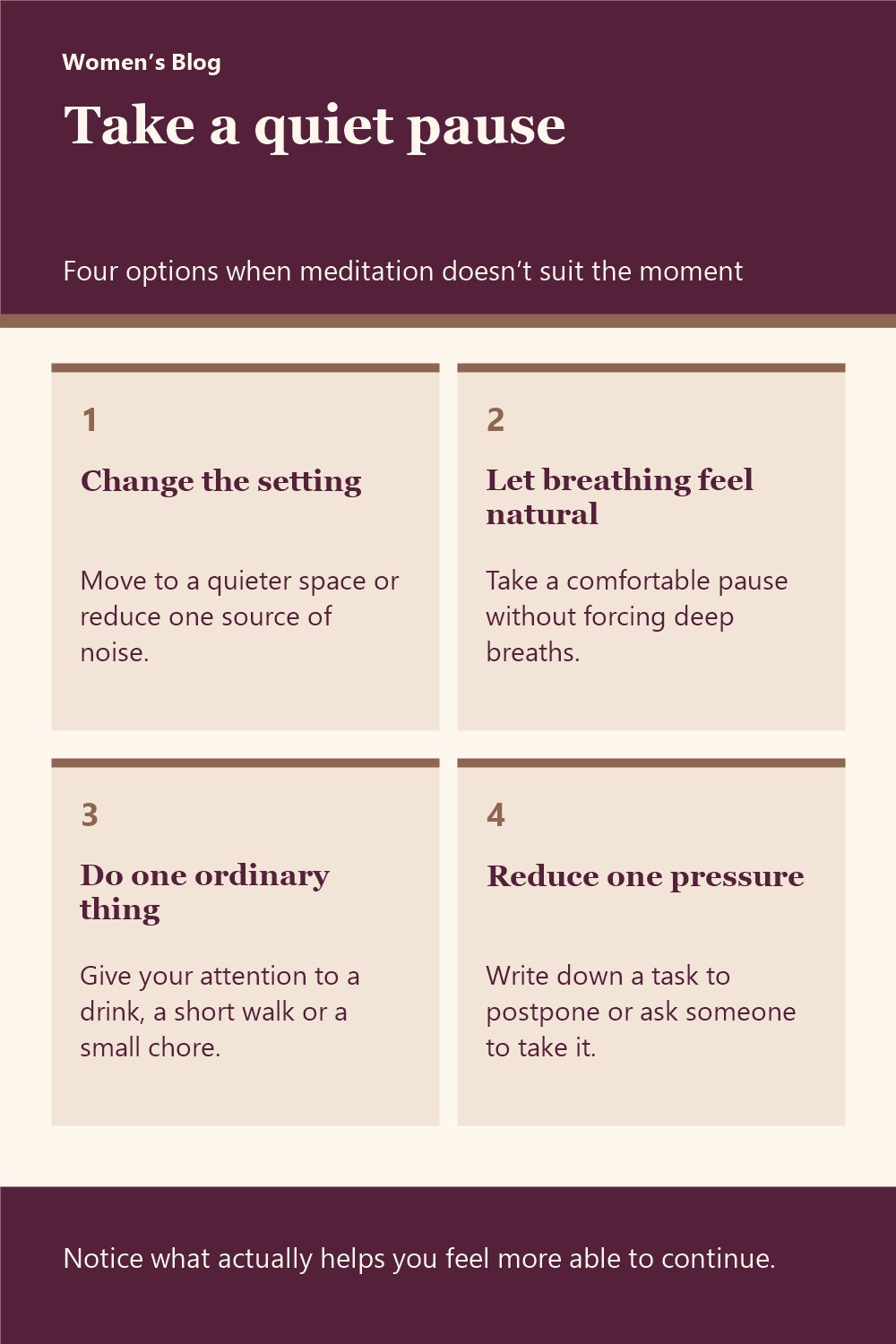
Read the infographic in text
Take a quiet pause
- Change the setting Move to a quieter space or reduce one source of noise.
- Let breathing feel natural Take a comfortable pause without forcing deep breaths.
- Do one ordinary thing Give your attention to a drink, a short walk or a small chore.
- Reduce one pressure Write down a task to postpone or ask someone to take it.
Notice what actually helps you feel more able to continue.