
A phone can help you work, stay in touch and manage daily life. When interruptions leave a partner feeling overlooked, the useful starting point is a specific conversation about attention.
It has happened to me, too: a restaurant date with a spouse, a pleasant conversation, then a work call. While waiting for the call to finish, I reached for my own phone and began scrolling. The conversation we had planned slipped away.
That experience does not make every work call a sign of indifference. Talk about the pattern, what each person needs and what is realistic before deciding on a rule.
On this page
1. Describe the interruption clearly
Choose a calm time. Try: “When our conversation stopped several times during dinner, I felt left out. Could we plan a short time to talk without routine notifications?” A specific example is easier to discuss than “You always care more about your phone.”
Ask what was happening for the other person. An urgent responsibility, an ordinary habit and avoiding a difficult conversation may call for different responses.
2. Agree on a small window of shared time
Start with something manageable, such as part of a meal or ten minutes after you get home. Decide together which interruptions can wait and where a phone can be kept without making it inaccessible.
Phones may support communication, disability access, translation, care responsibilities or safety. Make room for those uses rather than assuming that putting every device away is possible or desirable.
3. Plan for work and care calls
If you are expecting an important call, say so beforehand. You might explain: “I’m on call until eight. If work rings, I may need to step away, but I’d like to return to our conversation afterwards.”
Discuss a fallback if an interruption runs longer than expected. Replanning shared time is more respectful than leaving someone waiting without information or blaming them for being disappointed.
4. Adjust notifications by agreement
Each person can decide whether to silence nonessential alerts, use a focus setting or move a distracting app from the first screen. Preserve contact routes you need for emergencies, work or care.
A voluntary change is different from confiscating a phone, demanding passwords or monitoring messages. Shared attention does not require surrendering privacy.
5. Ask before sharing someone’s moments
Check whether a partner wants a photo taken or posted. A meal, a holiday or a private conversation can be meaningful without becoming a public update.
When you want to show something on your phone, invite the other person into it: “Would you like to see this?” They can be interested in you and still prefer to return to the conversation.
6. Review the agreement after a short trial
Try your plan for a week, then ask what worked. Did you have more uninterrupted conversation? Were important calls still manageable? Did either person feel controlled or left out?
Adjust one detail at a time. The aim is useful shared attention, not a competition over screen-time totals or a promise that fewer notifications will solve every disagreement.
7. Address the relationship issue underneath
If a phone is repeatedly used to dismiss you, punish you or avoid agreed responsibilities, discuss that behaviour directly. If you find yourself checking a partner’s device for reassurance, talk about trust and boundaries instead of expanding the checking.
When conversations keep becoming hostile or circular, individual or relationship support may help you consider your options. If you feel afraid of a partner’s response, prioritise private support and your safety. You do not have to negotiate away your privacy to earn care.
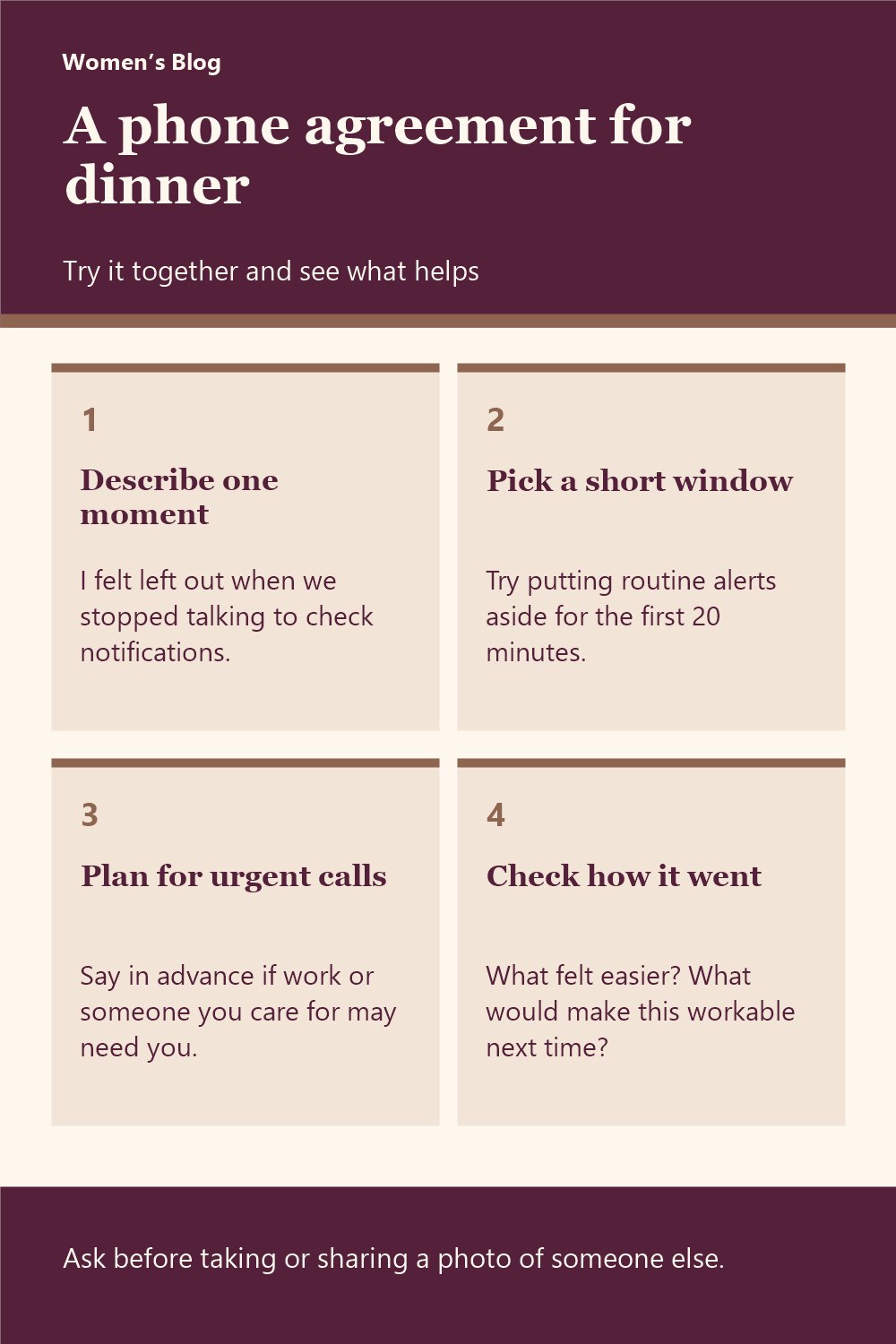
Read the infographic in text
A phone agreement for dinner
- Describe one moment I felt left out when we stopped talking to check notifications.
- Pick a short window Try putting routine alerts aside for the first 20 minutes.
- Plan for urgent calls Say in advance if work or someone you care for may need you.
- Check how it went What felt easier? What would make this workable next time?
Ask before taking or sharing a photo of someone else.