

Letting go can mean easing an expectation, stepping back from an argument or changing a plan that no longer fits. It does not require becoming carefree, forgiving on demand or pretending that a problem is harmless.
Start with one source of everyday pressure. The ideas below offer choices you can adapt, while keeping your responsibilities, needs and boundaries in view.
On this page
1. Loosen one rigid expectation
Notice an expectation that makes a day feel like a failure: everyone must approve, a plan must go exactly as imagined or a goal must be reached by a particular age. Ask which part reflects a real need and which part could be more flexible.
You might keep the goal of finding satisfying work while changing the timetable or considering another route. Letting go can mean revising a plan rather than abandoning something important.

2. Choose where your effort will help
Some problems deserve persistence; others keep you working at something you cannot control. Identify what your next effort can actually change. A clear request may help more than rehearsing an argument repeatedly.
Ask: “What do I need? What is within my influence? What would I stop doing if I accepted the limits here?” Rest, asking for help or choosing a different approach can be considered responses.
3. Notice good moments without denying hard ones
A pleasant meal, a kind message or time outdoors can matter alongside grief, frustration or financial strain. If it suits you, note one ordinary thing you appreciated today.
There is no need to turn gratitude into a demand to feel positive. Appreciating something does not cause other good events to arrive, and a difficult day does not mean you have failed at gratitude.
4. Turn an intention into an action
An intention becomes easier to use when you describe a behaviour. Instead of deciding that the whole day will be peaceful, choose to take a short pause before answering a difficult message.
“I want to be compassionate” might become “I will listen before offering advice.” You can choose an action while leaving room for unexpected events and other people’s choices.
5. Make enjoyment accessible
Pick something you like that fits your current energy, budget and responsibilities. Listen to a favourite song, make something with your hands, borrow a book or arrange a modest outing.
Stress is not simply a choice, and pleasure does not cancel a real problem. An enjoyable moment can still be worthwhile without making the whole day happy. If a plan feels like another obligation, make it smaller.
6. Accept differences and keep boundaries
You cannot make another person share your interests or respond as you wish. You can explain a need, listen to their answer and decide what arrangements you are willing to accept.
Acceptance does not require tolerating insults, pressure or harm. “I am willing to discuss this, but I will pause the conversation if you shout at me” combines a clear limit with a next step. Choose boundaries you can carry out safely.
7. Leave room to reconsider an idea
You can explore a new interest without committing to it forever. Try a small version, seek useful feedback and decide what you learned. Changing your mind can be part of making a thoughtful choice.
When thoughts become harsh or absolute, this guide to responding to recurring negative thoughts offers a more balanced approach. You do not have to suppress every doubt before trying something.
8. Allow imperfection and review what happened
Choose a reasonable standard for the task in front of you. Some things need care and accuracy; others can be good enough for today. A mistake may call for an apology, repair, practice or a revised plan rather than a judgment about your worth.
Try one of these ideas this week and notice whether it makes life more workable. Keep what helps and adjust what does not. If pressure or low mood is hard to manage, seek support rather than treating it as a failure to let go.
Give a worry a next step and a place to rest
If you keep worrying about a conversation that may happen next week, write down one question worth asking. Then decide when you want to prepare for the conversation and what you can do before that time.
When the worry returns, remind yourself that you have given it a time and a task. You could ask someone to listen if carrying it alone keeps getting in the way.
See ways to reset your attention when sitting quietly feels unhelpful.
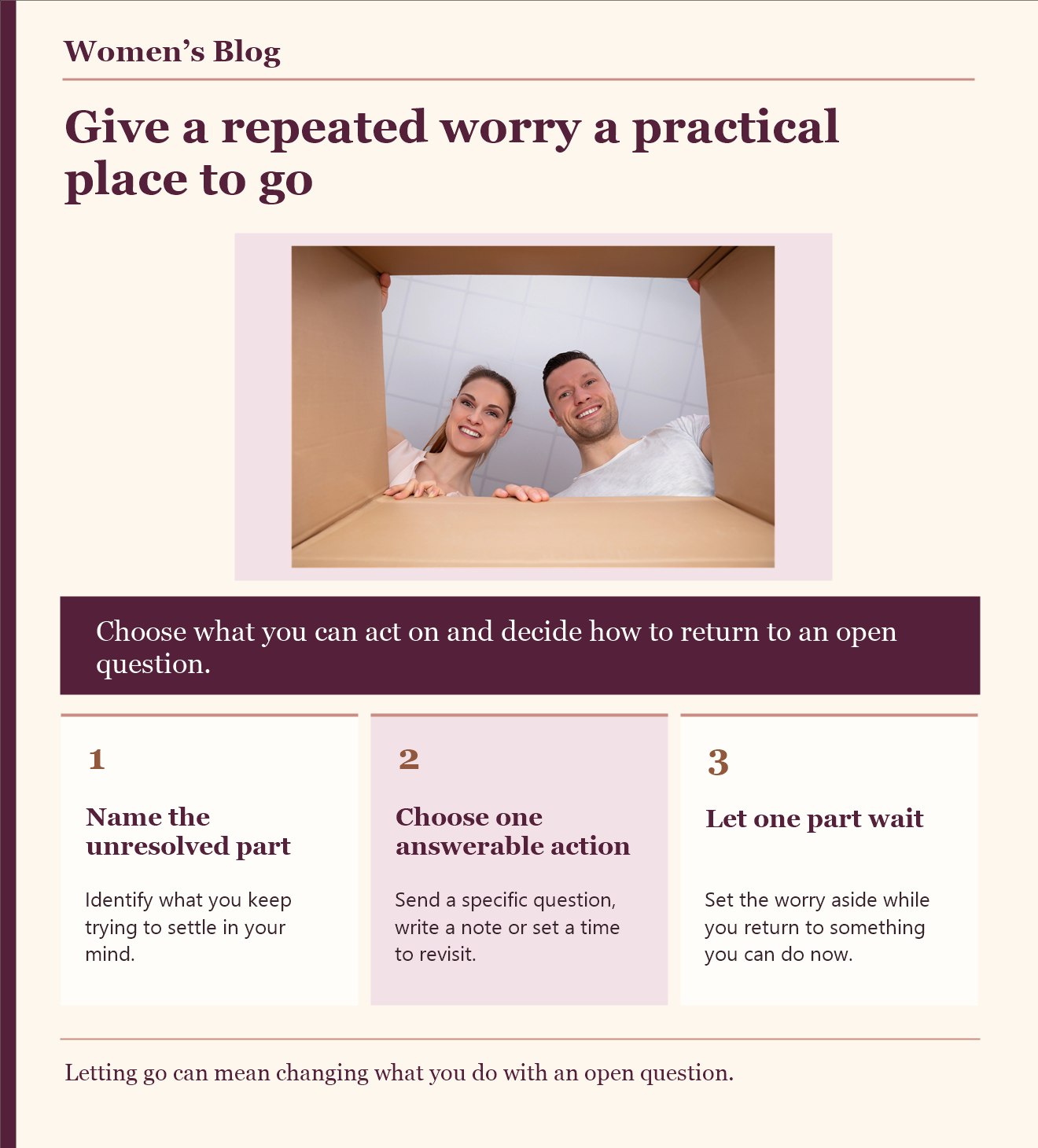
Read the infographic in text
Give a repeated worry a practical place to go
Choose what you can act on and decide how to return to an open question.
- Name the unresolved part Identify what you keep trying to settle in your mind.
- Choose one answerable action Send a specific question, write a note or set a time to revisit.
- Let one part wait Set the worry aside while you return to something you can do now.
Letting go can mean changing what you do with an open question.