

When you feel low or short of energy, a long list of things to improve can add more pressure. Start with what would make the next part of the day more manageable. A useful step can be modest, and you are allowed to ask for help.
These seven options leave room for your health, resources and preferences. Choose one that fits today.
On this page
1. Write down the immediate pressure
List just a few things that are asking for your attention. Mark anything genuinely urgent, then choose what can wait or needs someone else’s input. You can stop when the note is useful; you do not have to record everything in your head.
2. Choose one small next action
Make the action concrete and modest, such as asking about a deadline or putting out what you need for a meal. If it still feels too large, divide it again or ask for help. Completing a task is information about your capacity, not a test of your worth.
3. Adapt movement to your energy
A comfortable walk, seated movement or a change of position may suit you. Consider your health, access and surroundings, and rest when that is what you need. Movement does not have to create an instant change in mood to be a worthwhile option.
4. Make personal care easier
If washing, brushing your teeth or changing clothes has become difficult, choose one manageable part. You might prepare supplies, sit down for a task or ask for assistance. Pain, illness, disability and limited facilities can make routines harder. You deserve respect and support while those needs are being addressed.
5. Choose a manageable connection
A brief message, a quiet visit or a shared-interest group can be ways to connect. Think about whether you want company, conversation or practical help. You do not have to go out, become more sociable or help someone else before your own needs count.
6. Use music or quiet deliberately
Pick a familiar song, an audiobook, a comfortable sound or silence. Notice how the choice fits the moment and change it if it feels tiring. You can enjoy music without expecting it to fix a problem or make you ready for every task.
7. Say what kind of support would help
You might ask a trusted person to listen, help with one task or check in later. If feeling low or overwhelmed keeps interfering with daily life, consider qualified support. The NHS guide to stress explains when further help may be appropriate. You can seek help before trying every suggestion on a list.
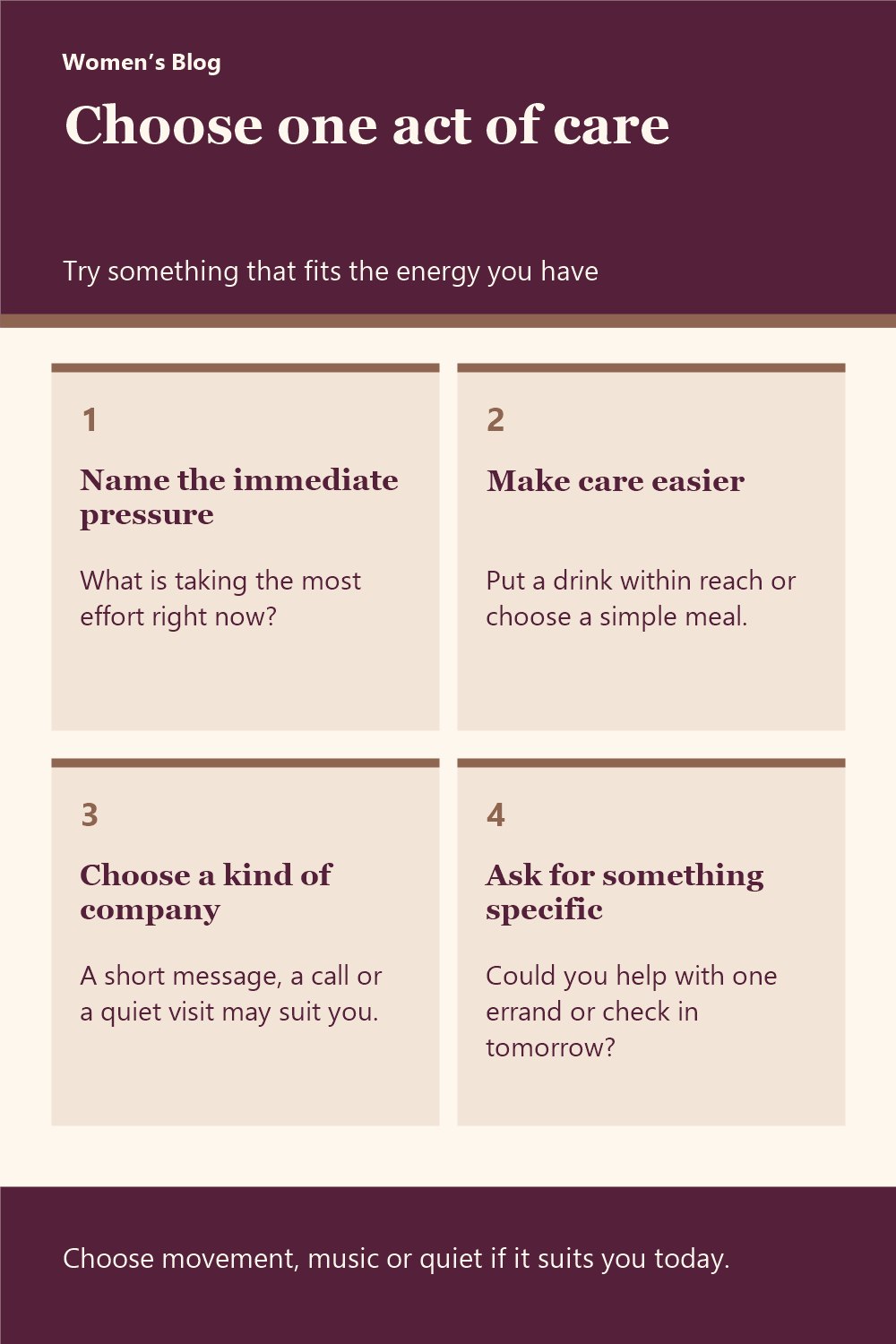
Read the infographic in text
Choose one act of care
- Name the immediate pressure What is taking the most effort right now?
- Make care easier Put a drink within reach or choose a simple meal.
- Choose a kind of company A short message, a call or a quiet visit may suit you.
- Ask for something specific Could you help with one errand or check in tomorrow?
Choose movement, music or quiet if it suits you today.