

Repeated criticism, broken agreements or pressure can leave you unsure whether to keep trying or step back. You do not have to decide that someone is a “toxic person” to take the effect of their behavior seriously.
Begin with what has happened, what you need and which choices are available. A boundary might involve changing a conversation, limiting contact or ending a relationship. The right next step depends on the pattern and your circumstances.
On this page
1. Describe the pattern in concrete terms
Separate an isolated mistake from behavior that keeps recurring. What was said or done? How often has it happened? What followed when you raised it? You can make private notes if it is safe, rather than relying on a broad label.
“They cancelled three plans without telling me” gives you something to consider. “They must hate my confidence” assumes a motive you cannot know. You can respond to a pattern without proving the reason behind it.
2. Decide what you need to protect
You may need respectful language, reliable arrangements, privacy, rest or freedom to spend time with others. Identify the part of the situation that is taking the greatest toll and one limit that would help.
A limit describes what you are willing to do. For example: “If you begin insulting me, I will end this call.” It cannot guarantee cooperation or force someone else to change.
3. Choose whether a conversation is useful and safe
When you feel safe, keep the conversation specific: name the behavior, explain its effect and state your request. You do not need a perfect explanation or the other person’s agreement that you are hurt.
If saying no has led to intimidation, threats, stalking or violence, a direct confrontation may create more risk. You can seek confidential support before announcing a boundary or a plan to leave.

4. Consider the amount of contact that fits your situation
Options can include shorter visits, a pause in contact, avoiding certain topics, written communication about practical matters or ending contact. You do not have to choose the most dramatic option to take your needs seriously.
Shared parenting, housing, work or care responsibilities can limit what is immediately possible. Consider appropriate professional advice for those arrangements. Avoid making promises about contact that you cannot safely or realistically keep.
5. Plan practical support before a major change
Think about transport, a place to stay, important documents, access to money and someone you can contact if needed. Choose only the steps relevant to you. If someone monitors your devices, consider how to seek help safely.
For abuse-related concerns, the National Domestic Violence Hotline’s safety-planning guidance recognises that leaving may be difficult and planning needs to fit the person’s situation. You do not have to leave immediately to deserve support.
6. Look at follow-through rather than promises alone
If you are considering continued contact, decide what you would need to see change. Notice whether the person respects limits without punishment, acknowledges specific actions and sustains a different pattern over time.
You do not owe another chance because someone apologises. You can also miss the person or remember good moments while recognising that the current relationship is hurting you.
7. Give yourself room to adjust
Creating distance can bring relief, grief, doubt or practical complications. Those feelings do not by themselves prove that your decision was wrong. Keep supportive connections and review what is helping.
If someone ignores a request for distance or escalates their behavior, seek help appropriate to the risk. You are responsible for the choices you can make; responsibility for harmful behavior remains with the person doing it.
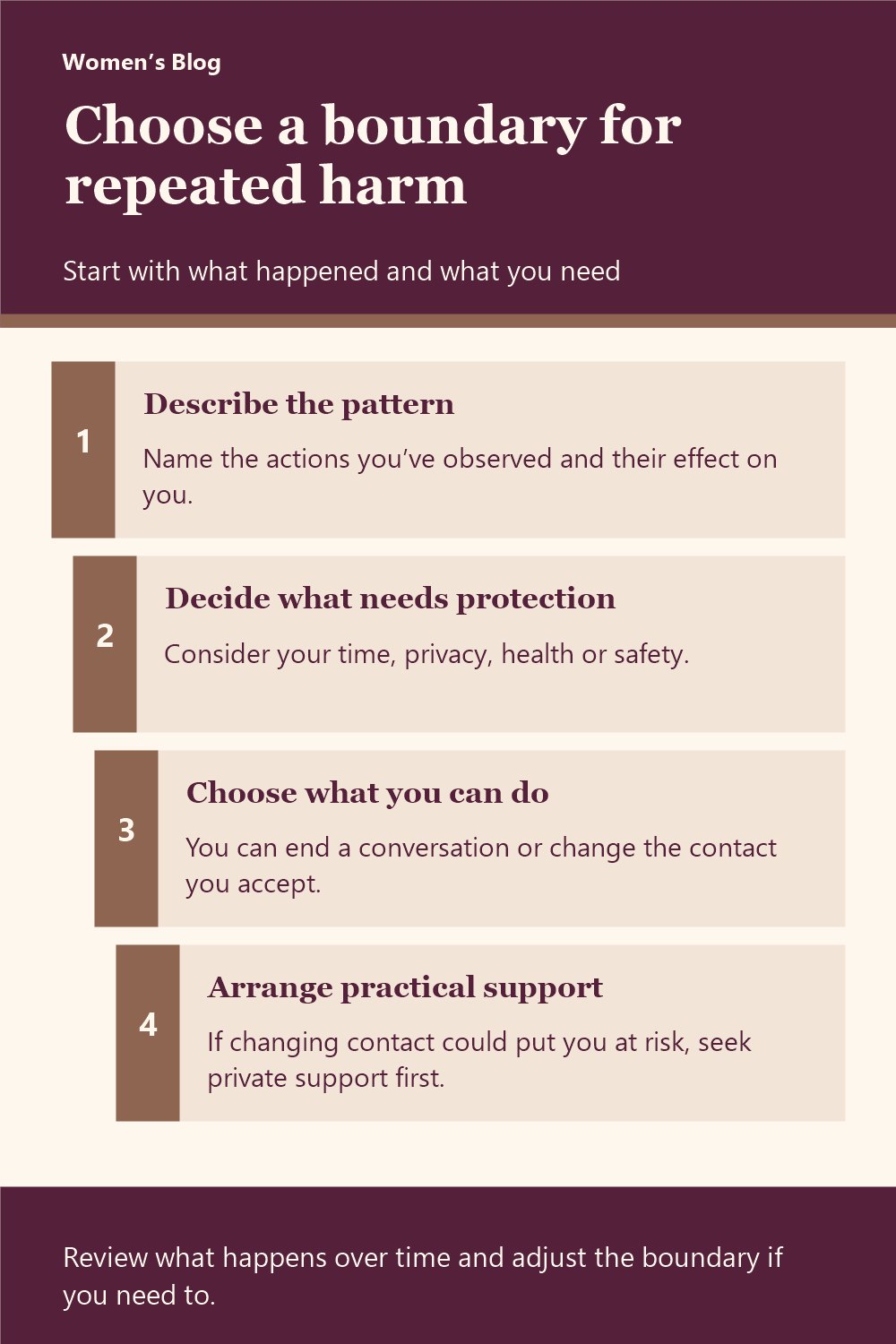
Read the infographic in text
Choose a boundary for repeated harm
- Describe the pattern Name the actions you’ve observed and their effect on you.
- Decide what needs protection Consider your time, privacy, health or safety.
- Choose what you can do You can end a conversation or change the contact you accept.
- Arrange practical support If changing contact could put you at risk, seek private support first.
Review what happens over time and adjust the boundary if you need to.