

A comfortable relationship can be a good thing. Familiar routines, trust and the freedom to relax around someone do not make love less real. You do not need constant butterflies, fear of losing a partner or a wish for continual physical contact to prove that you care.
If something feels missing, consider what is happening in the relationship rather than deciding that comfort itself is the problem. These questions can help you name a need and think about a next step.
On this page
1. Notice what comfort means in your everyday life
Do you feel able to be yourself, rest, disagree and ask for help? A calm relationship may offer room for all of those things. Excitement can be enjoyable, but it is only one part of a shared life.
Compare your own experience over time, rather than measuring it against another couple’s public moments. You can value stability and still want more affection, playfulness or shared attention.
2. Name the part that feels absent
“We have become too comfortable” can hide different concerns. You might miss conversation, physical affection, time together, fairness in daily tasks or interest in each other’s plans. Try describing one recent example.
For instance: “We spend evenings in the same room, but rarely talk beyond chores.” A specific observation gives you more to discuss than a verdict about whether the relationship counts as happy.
3. Consider circumstances as well as feelings
Work, caring responsibilities, illness, grief or fatigue can change how much energy you have for connection. These circumstances do not automatically explain everything, but they may help you understand what is difficult right now.
You may feel warmth, boredom, worry and gratitude at different times. A difficult week does not settle the relationship’s future. Equally, repeated loneliness or an ignored need deserves attention even when the practical circumstances are understandable.
4. Ask whether independence and respect remain possible
You can love a partner and imagine coping with life on your own. Friendships, interests and a sense of yourself outside the relationship can remain important. Dependence or distress at the idea of separation is not a test of how deeply you love.
Notice whether each of you can say no, have privacy and make ordinary choices without punishment. If there are threats, control or fear, seek support suited to the situation rather than treating the problem as a lack of romantic excitement.

5. Make a clear request when it feels safe
Choose a manageable conversation about what you miss. “Could we put aside half an hour this weekend to talk without other tasks?” or “I would like us to plan something enjoyable together” gives the other person a request they can understand.
Listen to their needs too. An activity can be simple and low cost. Neither person should be pressured into affection or sex as a way to prove commitment or restore a spark.
6. Review the response and what you want next
If you agree on a change, give yourselves a realistic time to try it and discuss how it went. Look for mutual interest, effort and respect, not a promise that you will feel happy all the time.
If important needs remain unmet or your wishes for the future differ, consider your options and appropriate support. You can appreciate what has been good while deciding that something needs to change. There is no single feeling that makes that decision for you.
Read the infographic in text
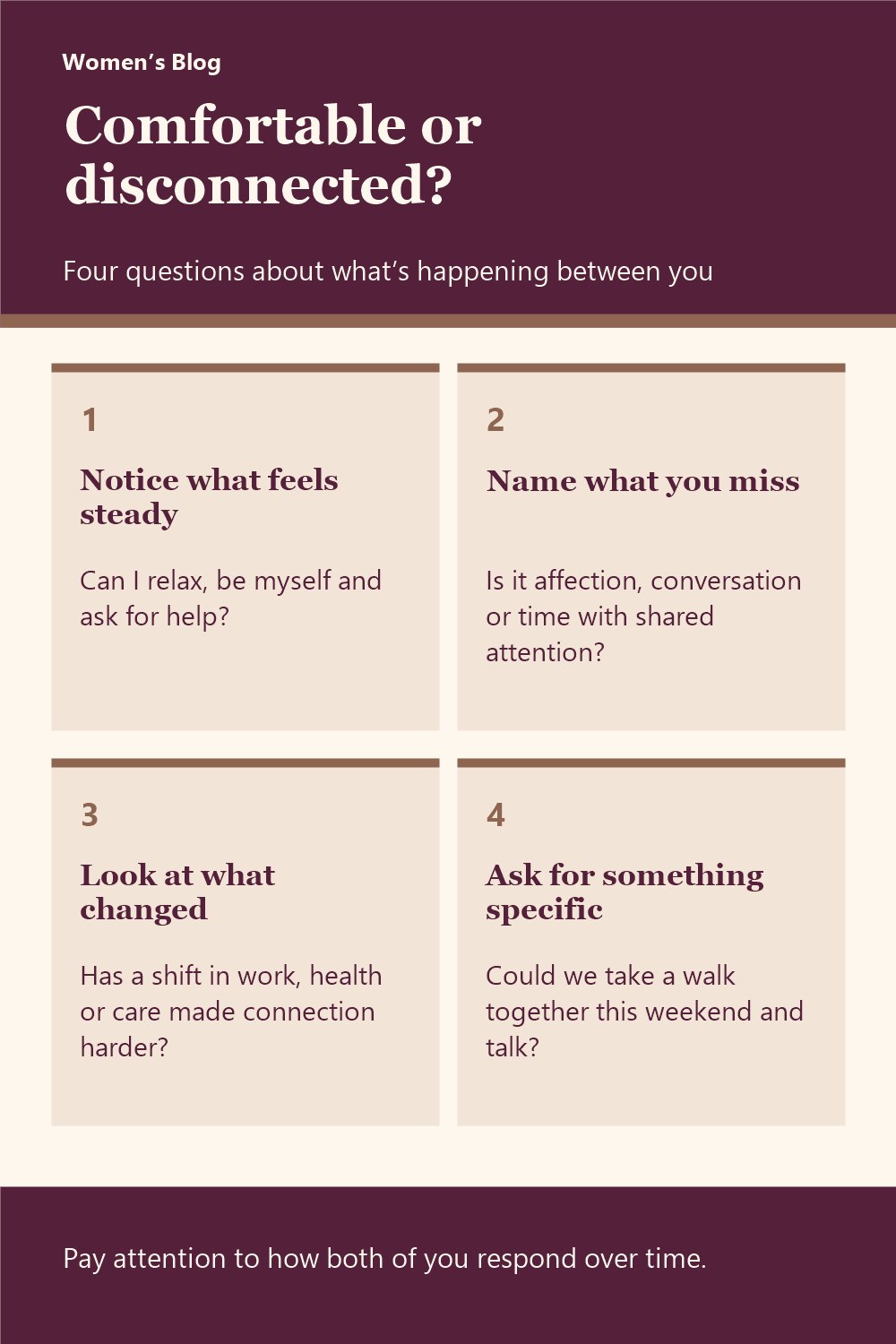
Comfortable or disconnected?
- Notice what feels steady Can I relax, be myself and ask for help?
- Name what you miss Is it affection, conversation or time with shared attention?
- Look at what changed Has a shift in work, health or care made connection harder?
- Ask for something specific Could we take a walk together this weekend and talk?
Pay attention to how both of you respond over time.