
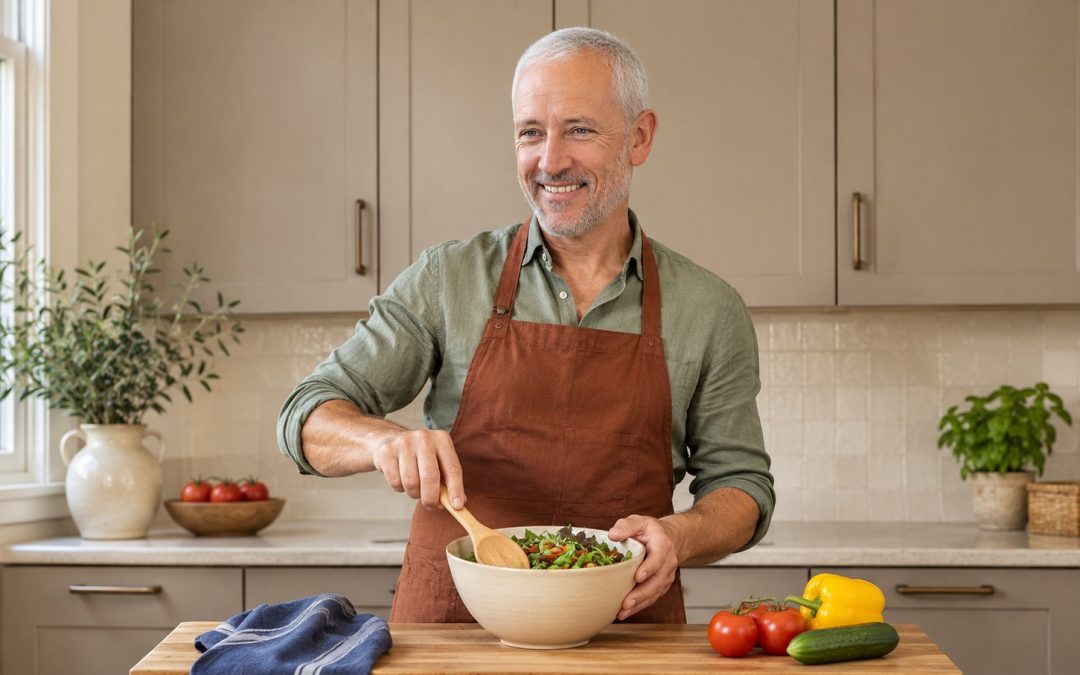
Cooking together can give you a shared activity and a chance to talk. It can also become stressful if one person does all the planning, the recipe is too ambitious or a meal comes with unspoken expectations.
Aim for something you both want to do. A simple lunch, assembling sandwiches or making a favourite evening meal can be enough. You do not need wine, candles or an expensive menu to enjoy time together.
On this page
1. Choose a meal that fits the day
Consider your energy, cooking experience, available equipment and how much time you actually have. Choose a familiar recipe or one manageable new element rather than turning the whole evening into a demanding project.
Ask about food preferences, allergies and other dietary needs before shopping. Avoid treating a partner’s needs as an inconvenience or assuming that particular foods will create desire or guarantee romance.
2. Agree on costs and ingredients
Check what is already in the kitchen and write a short list. Decide on a comfortable budget and substitutions before buying expensive ingredients.
Shop together if that is enjoyable and accessible. Delivery, collection or one person picking things up can work just as well if that is the arrangement you both prefer. The practical goal is a meal you can manage.
3. Share the whole job
Divide choosing the recipe, preparing ingredients, cooking, setting the table and cleaning up. Agree on tasks rather than expecting one person to supervise while the other waits for instructions.
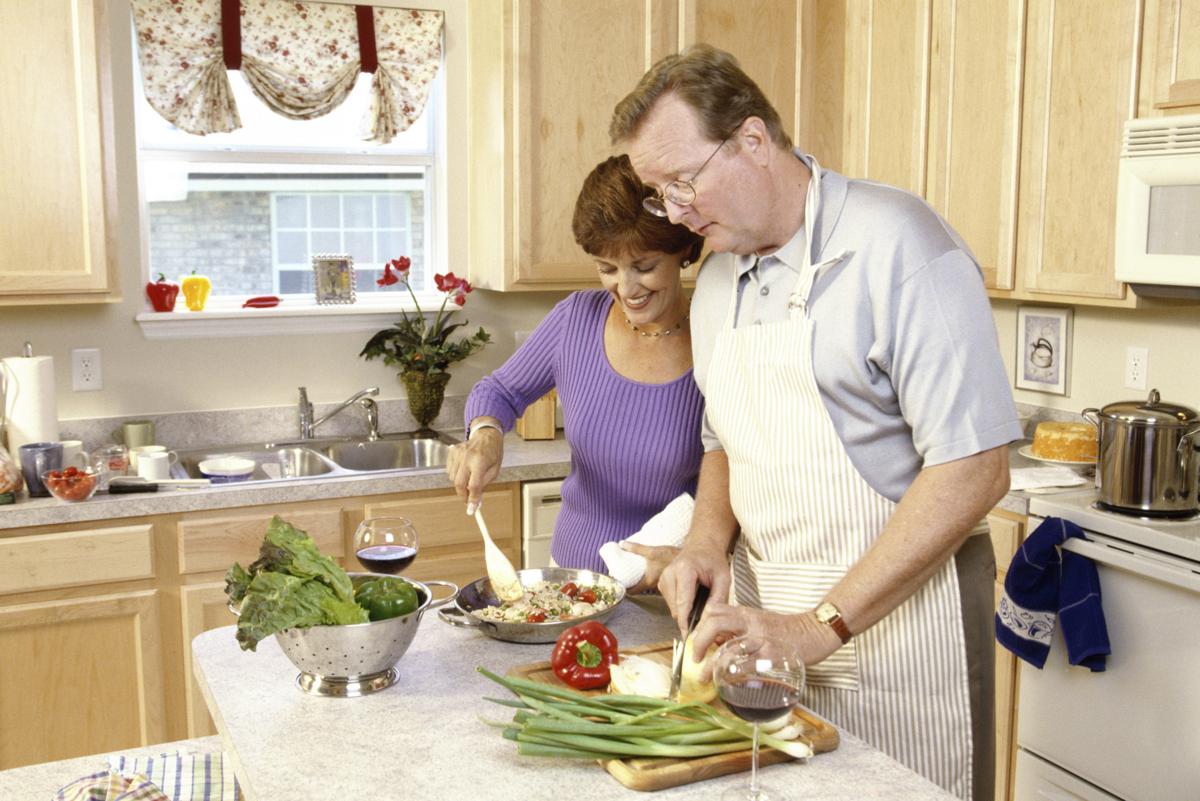
Different skills can be useful: one person might prepare vegetables while the other mixes a dressing. Let each person work without constant correction, and ask before taking over. Include seated preparation or other adjustments if they make the activity more comfortable.
4. Make the workspace comfortable and safe
Clear enough space, keep the recipe easy to follow and avoid rushing around hot pans or sharp utensils. Choose music only if both of you want it and can still communicate comfortably.
FoodSafety.gov’s four steps to food safety explain cleaning, keeping raw and ready-to-eat foods separate, cooking safely and chilling food appropriately. A relaxed meal still needs sensible food handling.
5. Enjoy the company without a performance
Talk, taste and notice what you enjoy. If something goes wrong, simplify the meal rather than blaming each other. Preparing food together is not a test of someone’s worth as a partner.
Agree on any phone interruptions that need to remain possible for work, care or access needs. Affection is optional, and making a meal does not create an obligation to have sex or continue the evening in a particular way.
6. Keep the parts that work for you
After eating, share the cleanup and ask what you would repeat or change. Perhaps a shorter recipe, an earlier meal or making one dish together would suit you better.
If cooking together is not enjoyable, another shared activity may fit your relationship more comfortably. A meal can offer time together; the care, respect and communication you bring to it matter beyond the kitchen.
Love and relationship readings at PsychicOz
Read the infographic in text
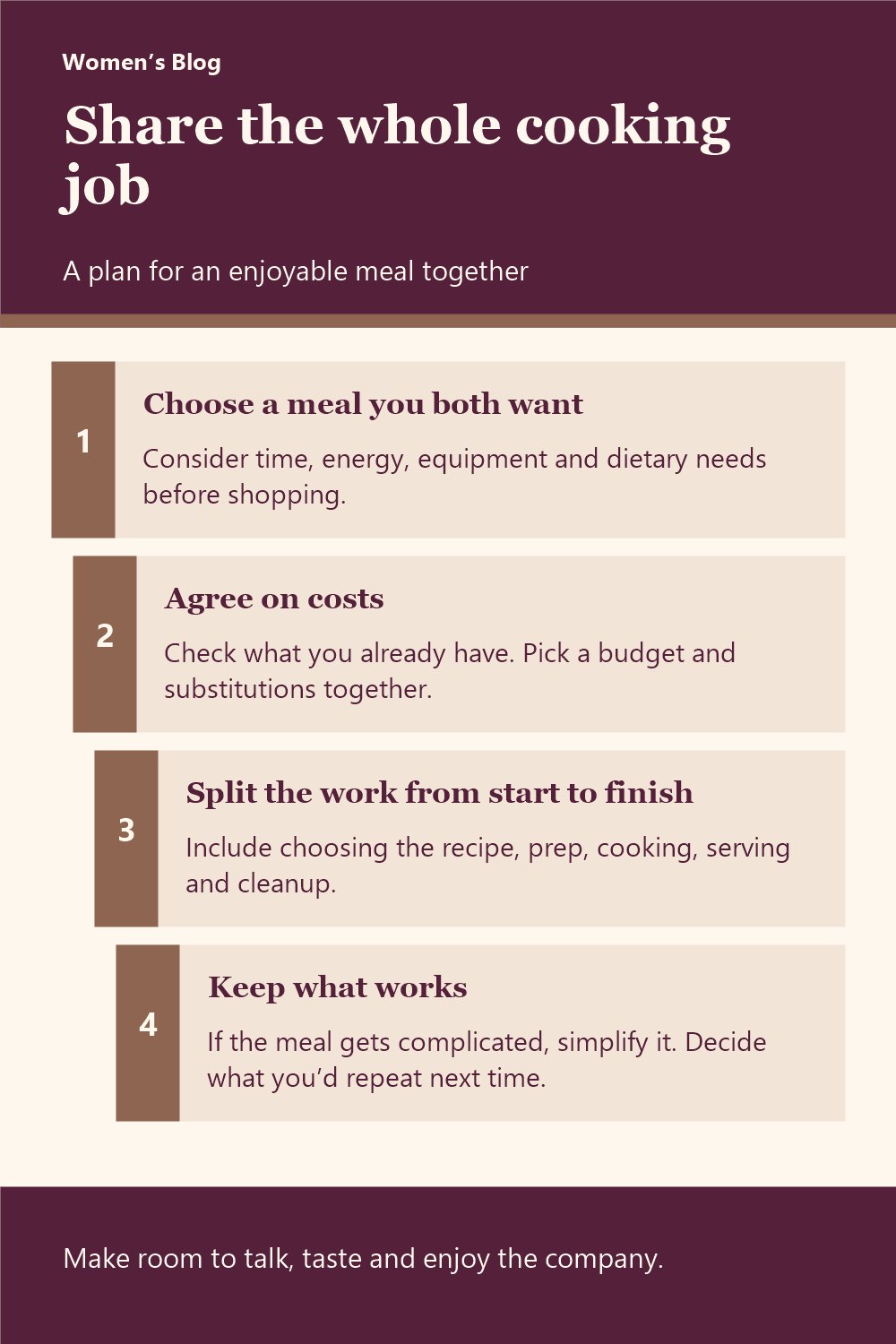
Share the whole cooking job
- Choose a meal you both want Consider time, energy, equipment and dietary needs before shopping.
- Agree on costs Check what you already have. Pick a budget and substitutions together.
- Split the work from start to finish Include choosing the recipe, prep, cooking, serving and cleanup.
- Keep what works If the meal gets complicated, simplify it. Decide what you’d repeat next time.
Make room to talk, taste and enjoy the company.