

Feeling stuck does not always mean you lack motivation or need a better attitude. You may be facing a practical barrier, uncertainty, exhaustion or a decision with consequences you want to understand.
Start with one part of the situation. The eight steps below help you describe the problem, consider options and choose a manageable next action.
On this page
1. Name the part that feels stuck
Try to describe one situation rather than judging your whole life. You might be unsure about a work decision, unable to finish a task or unhappy with a repeated pattern. Write what is happening, what you want to be different and what you do not yet know.
2. Separate a barrier from a harsh judgement
Time, money, health, access and other people’s choices can limit your options. Those circumstances deserve attention. If a thought such as “I am useless” is adding pressure, replace it with a more precise description of the problem. A fairer account can include both a real obstacle and an action available to you.
3. Give the past room where it still matters
A loss, an unfair experience or a previous mistake may still affect what you can do now. You do not have to dismiss it or decide that it taught you a lesson. Consider whether you need a repair, a boundary, information or support. You can take a present-day step while still having feelings about the past.
4. Choose an action small enough to begin
Turn a broad aim into an observable action. “Find out which documents the application needs” is easier to begin than “Sort out my future.” Decide what a reasonable first attempt looks like and where you can stop. If it remains too difficult, make it smaller or ask someone appropriate to help.

5. Sketch more than one option
Write down a few possible routes and the main cost or uncertainty for each. Staying with a situation for now, asking for a change and preparing to leave may all involve different needs. You can gather information before choosing. Avoid rushing a major decision just to prove you are moving forward.
6. Make a flexible plan
Choose a realistic time or prompt for the next action, such as after breakfast or when a particular person is available. Leave room for existing responsibilities and rest. If the plan does not happen, review what got in the way instead of filling every spare moment with extra demands.
7. Notice useful information and progress
A reply, a clearer question or discovering that one option will not work can help you decide what to do next. You do not have to feel grateful for a hard situation. Notice what you learned about the task and what support or adjustment would make another attempt more workable.
8. Ask for help and review your direction
Be specific about what you need: someone to read a draft, explain a process or discuss your options. You can support others while keeping your own limits. After a small step, check whether the original aim still fits. Continuing, changing the plan and taking time to recover can each be reasonable choices.
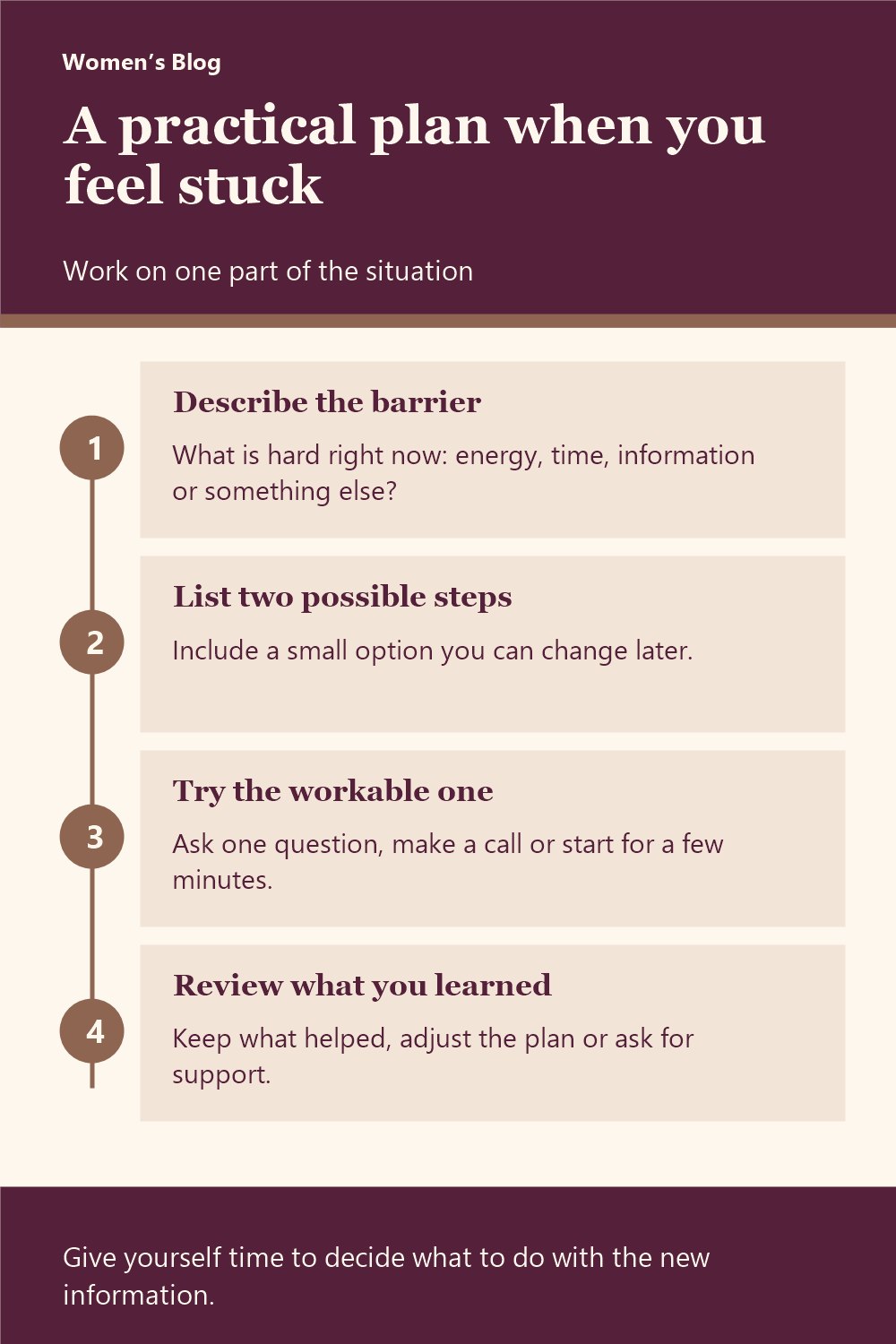
Read the infographic in text
A practical plan when you feel stuck
- Describe the barrier What is hard right now: energy, time, information or something else?
- List two possible steps Include a small option you can change later.
- Try the workable one Ask one question, make a call or start for a few minutes.
- Review what you learned Keep what helped, adjust the plan or ask for support.
Give yourself time to decide what to do with the new information.