

A meaningful life can include sexual relationships, and it can also include periods or a lifetime without them. The important questions are what you want, what your values mean to you and whether your choices are respected.
For me, this question is personal. I am an unmarried Christian and have never experienced sexual intercourse. The pity I receive and frequently feel is always exhausting. At times, that pity has made me feel less than fully human. My Christian faith shapes my commitment to chastity; I would like single life to be treated with dignity.
That is my experience, rather than a rule for everyone’s life. You can respect a person’s faith and also respect people whose beliefs, sexual histories or relationship choices differ.
On this page
1. Name what this means for you
People live without sex for different reasons. It may be a religious commitment, a personal preference, a period after a breakup, a lack of a suitable partner or an experience they did not choose. You do not need to use a label that does not fit.
Ask yourself: “Is this a choice I want to continue? What feels meaningful, and what feels difficult?” Wanting sex and deciding against it can coexist. So can feeling content on some days and lonely on others.
2. Make room for faith without ranking people
For Christians exploring celibacy, 1 Corinthians 7 includes Paul’s discussion of both unmarried and married life. Reading the chapter in context, perhaps with a trusted faith leader, can support reflection on your own convictions.
You do not need to present married people as less devoted or unmarried people as incomplete. Sexual history is not a measure of someone’s capacity for kindness, commitment or belonging.

3. Build connection in several parts of life
Give friendship, family relationships where welcome, community, interests and rest a place in your week. A recurring conversation, a shared meal or a group you enjoy may be more useful than waiting for one future relationship to provide every kind of connection.
Affection can include conversation, companionship or touch that everyone involved wants. A hug is optional. Friendship does not have to become romantic or sexual to matter.
4. Prepare a boundary for intrusive questions
You can decide how much to share. Try: “This is a personal choice, and I’m comfortable keeping the details private,” or “I’d rather talk about something else.” You do not owe someone an account of your sexual experience to make your boundary valid.
If you date, explain a relevant boundary before expectations become confusing: “I’m interested in getting to know you, and I’m not choosing a sexual relationship.” The other person may want a different kind of relationship. Neither person has to agree to a relationship that does not suit them.
5. Keep consent separate from obligation
Nobody owes another person sexual contact, including within a marriage or committed relationship. Faith, affection, gifts, waiting and previous consent do not replace a freely made choice in the present.
Likewise, choosing celibacy does not give someone the right to shame another person. A respectful relationship leaves room for honest discussion, different needs and a clear no.
6. Ask for the kind of support you need
If the difficult part is loneliness, seek companionship. If it is spiritual uncertainty, choose someone who can discuss faith without humiliating or pressuring you. If distress is affecting everyday life, a qualified counsellor can help you explore it without deciding your values for you.
You can build a worthwhile life now while remaining open about what the future may hold. There is no deadline for proving that life, love or adulthood has begun.
A conversation about celibacy while dating
If you want to discuss a faith-informed decision, you might say “I’m choosing to date without sex, and I want to make sure that’s clear before we make more plans.” Share more about your reasons if you want to. Ask what the other person is looking for as well.
You can leave a conversation that becomes pressuring or disrespectful. The author’s own experience is one account of what this choice can mean. Each person has room to decide what fits their values and relationships.
Read the infographic in text
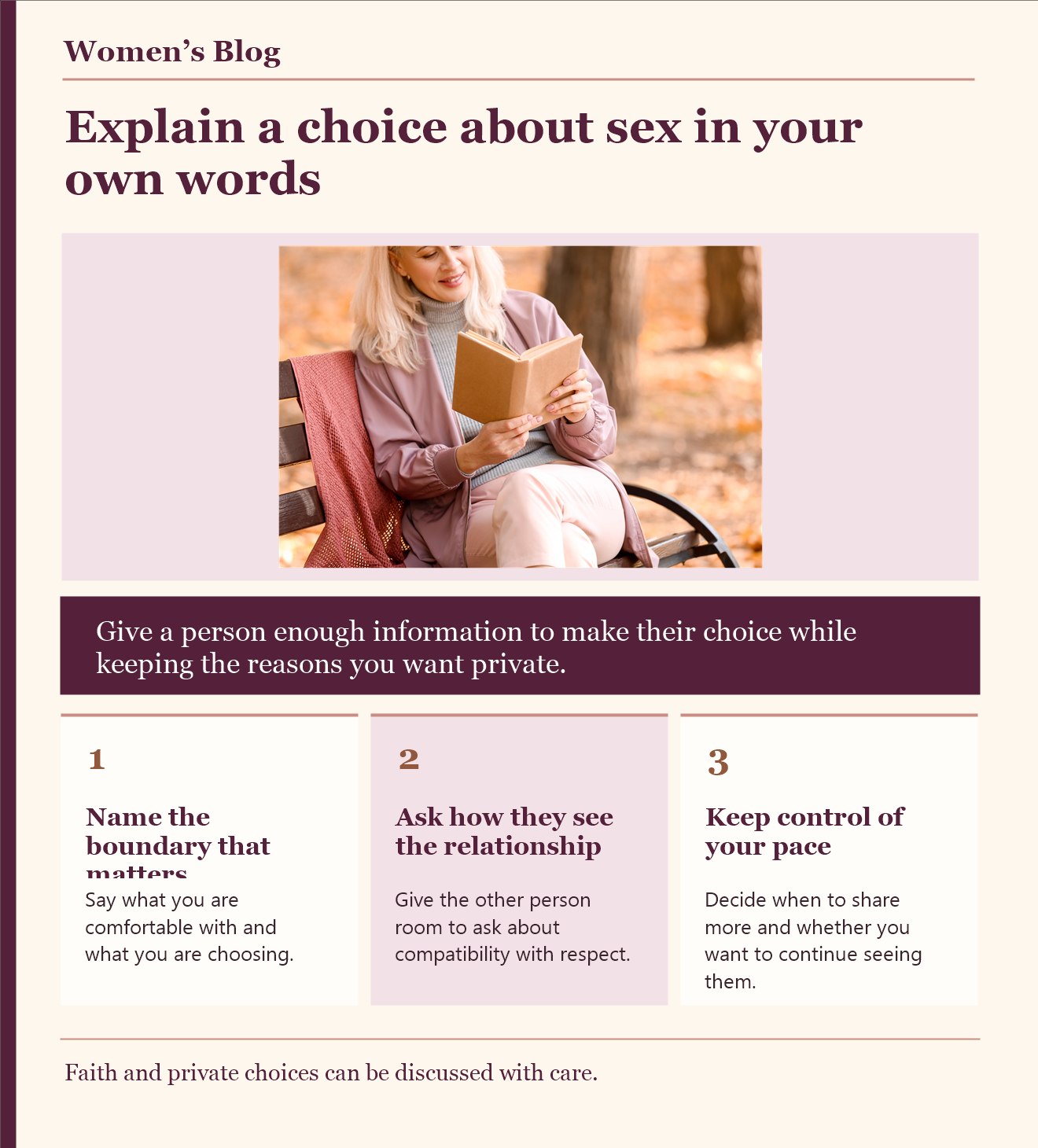
Explain a choice about sex in your own words
Give a person enough information to make their choice while keeping the reasons you want private.
- Name the boundary that matters Say what you are comfortable with and what you are choosing.
- Ask how they see the relationship Give the other person room to ask about compatibility with respect.
- Keep control of your pace Decide when to share more and whether you want to continue seeing them.
Faith and private choices can be discussed with care.