

When you feel anxious, advice about “calming foods” can make an ordinary meal seem like another treatment decision. Eating can be part of caring for yourself, but a shopping list does not diagnose anxiety or provide a reliable treatment plan.
Start with regular opportunities to eat, foods you can manage and support for whatever is making that difficult. Keep prescribed care separate from promises about a food or supplement. You do not need to buy special ingredients or follow a perfect routine before asking for help.
On this page
1. Include salmon if it fits a meal you want
Salmon can be one option for a meal if you enjoy it and it fits your budget, dietary needs and preferences. It does not need to become a scheduled anxiety remedy. Another familiar meal may be more useful when cooking feels demanding.
Be cautious about turning a claim about a nutrient or a laboratory finding into a promise about your own symptoms. It does not establish that a particular serving, frequency or number of months will make you calm.
Think about the practical question instead: what food is available, and what could make preparing or eating it easier today? You can choose convenience and familiarity without treating the meal as a failure.
2. Separate chamomile tea from claims about extracts
You may enjoy the taste of chamomile tea or the pause involved in making it. That is different from expecting a drink to treat an anxiety disorder.
The National Center for Complementary and Integrative Health’s chamomile overview describes some preliminary findings for chamomile supplements and says there is not enough reliable evidence to rate its usefulness for specific conditions. A study of a concentrated product does not tell you what an ordinary cup will do.
Chamomile can cause allergic reactions and may interact with medicines. Check with a healthcare professional before using an herbal product if you take medication or need advice about whether it is appropriate for you. “Natural” does not settle that question.
3. Treat turmeric seasoning and supplements as different choices
Using turmeric for flavour in food is a different decision from taking concentrated curcumin products. There is no reason to turn a recipe into a supplement dose or assume that a higher-strength product is better for anxiety.
NCCIH’s turmeric guidance says the evidence is not sufficient for definite conclusions about its health benefits. It also notes reports of liver injury with some formulations designed to increase absorption.
If you are considering a supplement, discuss the actual product with a clinician or pharmacist, including other medicines or supplements you use. Do not use a general food article to choose a dose or replace prescribed treatment.
4. Leave room to enjoy dark chocolate as food
You can enjoy chocolate because you like it. It does not have to earn a place in your day by promising a change in serotonin, mood or stress.
A rigid schedule of eating a particular chocolate to control anxiety can add another expectation to manage. Choose according to your preferences and any individual dietary guidance you follow. You do not need to force yourself to eat something you dislike or feel guilty for enjoying something else.
5. Keep yogurt and probiotic claims specific
Yogurt may be a convenient food you enjoy. Choose an option that suits your needs rather than assuming that every product with live cultures has the same effect.
NCCIH explains that different probiotic microorganisms can have different effects. A finding about a particular strain or preparation cannot establish what a different yogurt or supplement will do for anxiety. Broad claims about “healthy bacteria” leave out those distinctions.
If you are interested in a probiotic for a health concern, ask a suitable healthcare professional about the specific product and purpose. A food preference and a treatment decision do not need to become the same thing.
6. Notice caffeine in green tea and other drinks
Green tea contains caffeine, as NCCIH’s green tea information confirms. A tea marketed for relaxation is not automatically caffeine-free, and an extract is not interchangeable with the drink.
The NHS anxiety guidance recommends limiting large amounts of caffeinated drinks because caffeine can affect sleep and make anxiety harder to manage. Coffee, tea, cola and energy drinks can all contribute to what you have across the day.
If reviewing caffeine would be useful, begin with a rough list of your usual drinks and when you have them. Ask for individual guidance if you are unsure what change is appropriate. You do not need to interpret every feeling after a drink as evidence that you did something wrong.
7. Make everyday eating easier to manage
The NHS also recommends a healthy diet with regular meals to support steady energy. Translate that into the day you actually have, including your access to food, health needs, time and money.
- Keep one easy option available. A familiar meal or snack may be more manageable than a new recipe when your attention is stretched.
- Ask for specific practical help. Someone might collect groceries, share a meal or handle one part of the preparation.
- Address the barrier. If cost, swallowing, nausea, food fears or another difficulty keeps getting in the way, seek appropriate support rather than adding stricter food rules.
Our guide to taking care of your everyday needs offers further ways to make care more workable. If the wider problem is an unmanageable load, see practical support for stress and burnout.
8. Ask for help when anxiety or eating difficulties affect daily life
You do not have to find the ideal diet before speaking to a health professional. Describe what is happening: persistent worry, disrupted sleep, difficulty eating or avoiding ordinary activities. These concerns deserve an assessment rather than a judgment about your willpower.
The National Institute of Mental Health’s anxiety information describes treatment such as psychotherapy, medication or both, chosen with a healthcare professional. Everyday habits can support care; they do not replace an appropriate treatment plan.
A useful next step might be arranging an appointment, asking about a supplement you already take or getting help with tomorrow’s meal. If you cannot eat or drink adequately or have an urgent health concern, seek prompt medical advice. You deserve support even when food changes have not made anxiety easier.
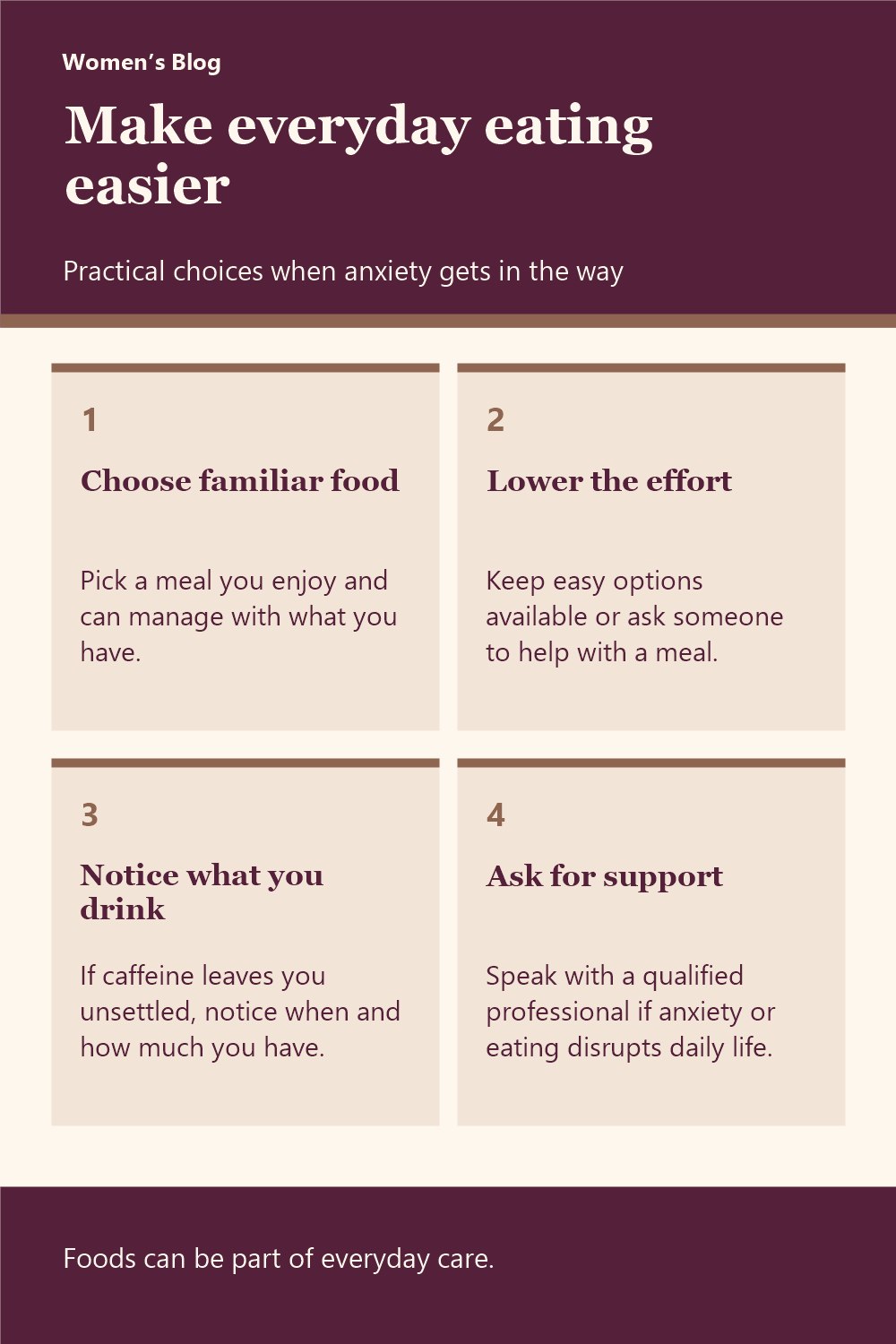
Read the infographic in text
Make everyday eating easier
- Choose familiar food Pick a meal you enjoy and can manage with what you have.
- Lower the effort Keep easy options available or ask someone to help with a meal.
- Notice what you drink If caffeine leaves you unsettled, notice when and how much you have.
- Ask for support Speak with a qualified professional if anxiety or eating disrupts daily life.
Foods can be part of everyday care.