

After a harmful relationship, you may feel cautious about trusting someone new, eager for connection, uncertain about dating or several of these things at once. There is no single way you are supposed to feel.
A new partner is not responsible for healing every past hurt, and you do not need a new relationship to prove you have moved on. You can make choices about closeness, privacy and support at a pace that suits you.
On this page
1. Decide what you want now
You might want company, a date, a committed relationship or time without dating. Your preference can change. You do not owe anyone a romantic opportunity because they seem kind or have been patient.
Consider what would make an early step manageable: a short meeting, a public place, your own transport or simply more time before deciding. These choices can support your comfort without guaranteeing another person’s behavior.

2. Take safety concerns seriously after a breakup
If a former partner is threatening, monitoring or pursuing you, consider support specific to that situation. You do not have to wait until you are ready to date before seeking help, and a new partner cannot be your whole safety plan.
In the United States, the National Domestic Violence Hotline’s guidance after leaving offers issues to discuss with an advocate. Choose support suited to your location and circumstances, including how to contact it safely if your devices are monitored.
3. Build trust through observable behavior
Notice whether a person follows through, accepts a no, respects your time and takes responsibility for mistakes. Trust can develop through repeated experiences; it does not have to be granted all at once.
You are allowed to ask questions and notice a concern. Avoid automatically calling your caution paranoia or assuming that someone is safe because they promise to be different from your former partner.
4. Keep boundaries clear and notice the response
You could say, “I would like to take this slowly,” “I am not ready to discuss that,” or “I need some time on my own.” A respectful response allows you to choose, rather than pursuing you until you give in.
Someone following you when you ask for space is not proof of devotion. Pressure, monitoring or punishment for a boundary deserves attention even when the person also shows affection.
5. Share your history by choice
You can decide what to share, when and with whom. You do not have to tell every detail of a past relationship to explain a present limit or earn someone’s care.
If you choose to talk, consider what response would help: being listened to, a practical adjustment or simply knowing the other person will not press for more. Their care can be valuable alongside friendships, community and appropriate professional support.
6. Review the relationship without judging your worth
Ask whether you feel able to be yourself, disagree and keep connections outside the relationship. Notice both the good moments and the unresolved concerns. You can slow down or leave even if the other person has good qualities.
What happened to you does not make you broken or require you to feel grateful for mistreatment. You deserve respect now, whether you date, remain single or are still deciding what you want next.
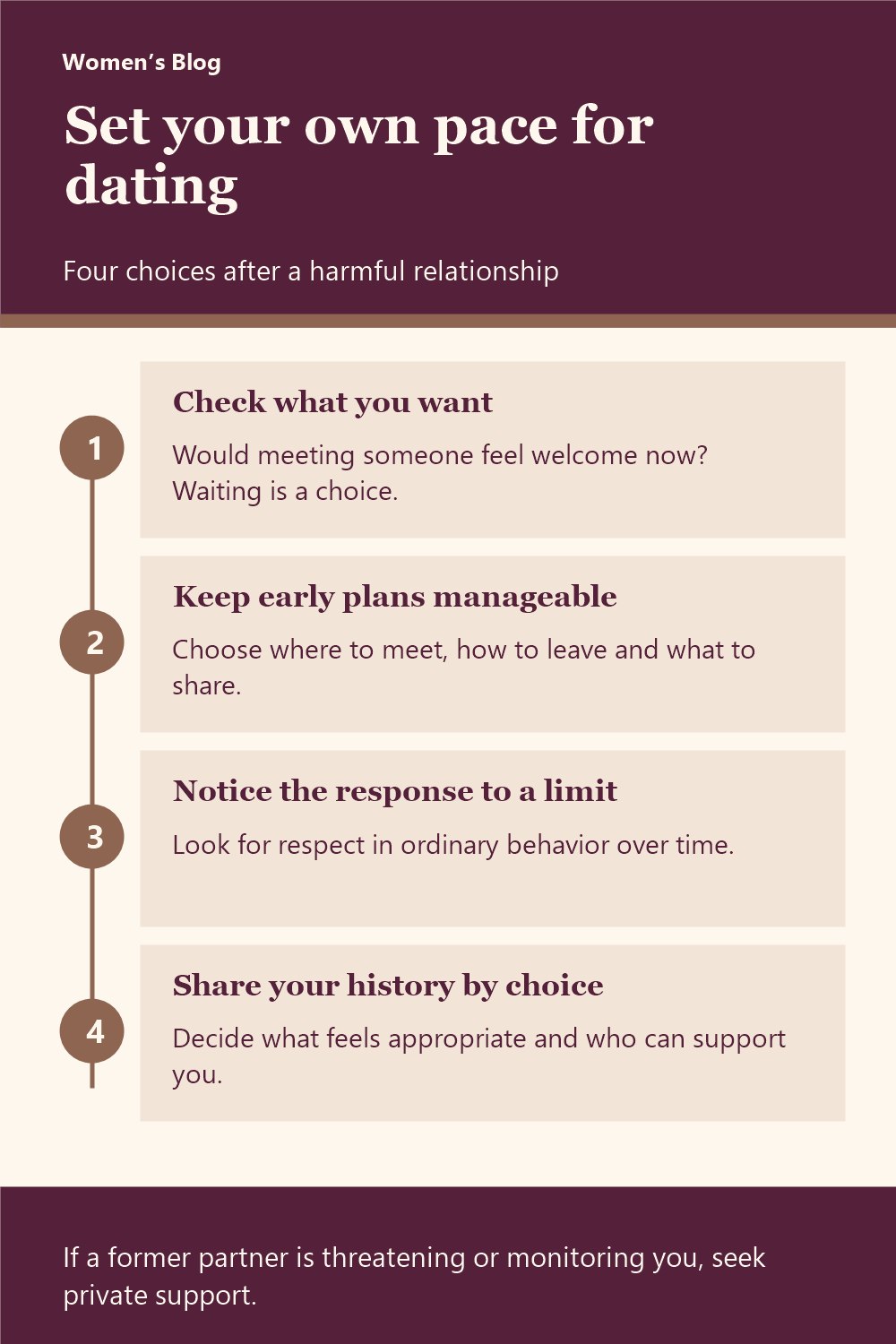
Read the infographic in text
Set your own pace for dating
- Check what you want Would meeting someone feel welcome now? Waiting is a choice.
- Keep early plans manageable Choose where to meet, how to leave and what to share.
- Notice the response to a limit Look for respect in ordinary behavior over time.
- Share your history by choice Decide what feels appropriate and who can support you.
If a former partner is threatening or monitoring you, seek private support.