

Feeling empty can be difficult to describe. You might feel distant from people, uninterested in familiar activities or unsure what you need. You may notice it after a loss or change, or without a clear explanation.
This feeling does not establish a diagnosis, and it is not proof that you have neglected yourself or need a romantic relationship. Start with what you can notice now and consider support if it persists, worsens or makes daily life difficult.
On this page
1. Describe the feeling without judging it
Use words that come closest to your experience: lonely, numb, sad, restless, disconnected or simply unsure. You do not have to find the perfect explanation. You might tell someone, “I have been feeling disconnected lately, and I do not know what would help.”
If a loss or change matters to you, allow it to matter. You do not need to dismiss grief or compare it with someone else’s experience before asking for company or support.
2. Choose one manageable act of care
Check immediate needs such as a meal, water, rest or a more comfortable place. If something ordinary feels difficult, simplify it or ask for help. Care can be useful even when it does not produce an immediate change in your mood.
You might choose quiet time or a small amount of contact, depending on what feels manageable. Try to avoid relying on alcohol or drugs to get through the feeling; if that has become difficult, a health professional can help you discuss support.
3. Notice patterns gently
If it helps, make a brief note of when the feeling appears, what was happening and how it affects your day. Keep it simple enough that it does not become another demand.
You can notice something around you, such as the feel of a chair or the sound outside, without forcing an exercise. If paying attention to feelings becomes uncomfortable, pause and choose another activity or contact someone supportive.
4. Ask questions that open options
Choose one question rather than trying to solve your whole life at once:
- Would I prefer company, practical help or quiet right now?
- Has a relationship, responsibility or recent change been taking a lot of energy?
- Is there something small I used to value that I would like to try again?
- What would make asking for help easier?
An answer does not need to be positive or complete. If you cannot identify a need, you can still ask someone to spend a little time with you or help you arrange an appointment.

5. Recognise effort and reach for support
Give yourself credit for a manageable action, such as eating something, replying to a message or asking for company. You do not have to praise yourself into feeling better, and a difficult day does not mean you have failed.
Persistent low mood, loss of interest, changes in sleep or difficulty managing daily life are reasons to speak with a health professional. The NHS guide to depression symptoms explains signs that deserve assessment. You can seek help even when you are unsure how to describe what is happening.
If emptiness comes with thoughts of suicide or self-harm, seek immediate support. In the United States, call or text 988. Elsewhere, contact a local crisis service; if there is immediate danger, call your local emergency number.
Read the infographic in text
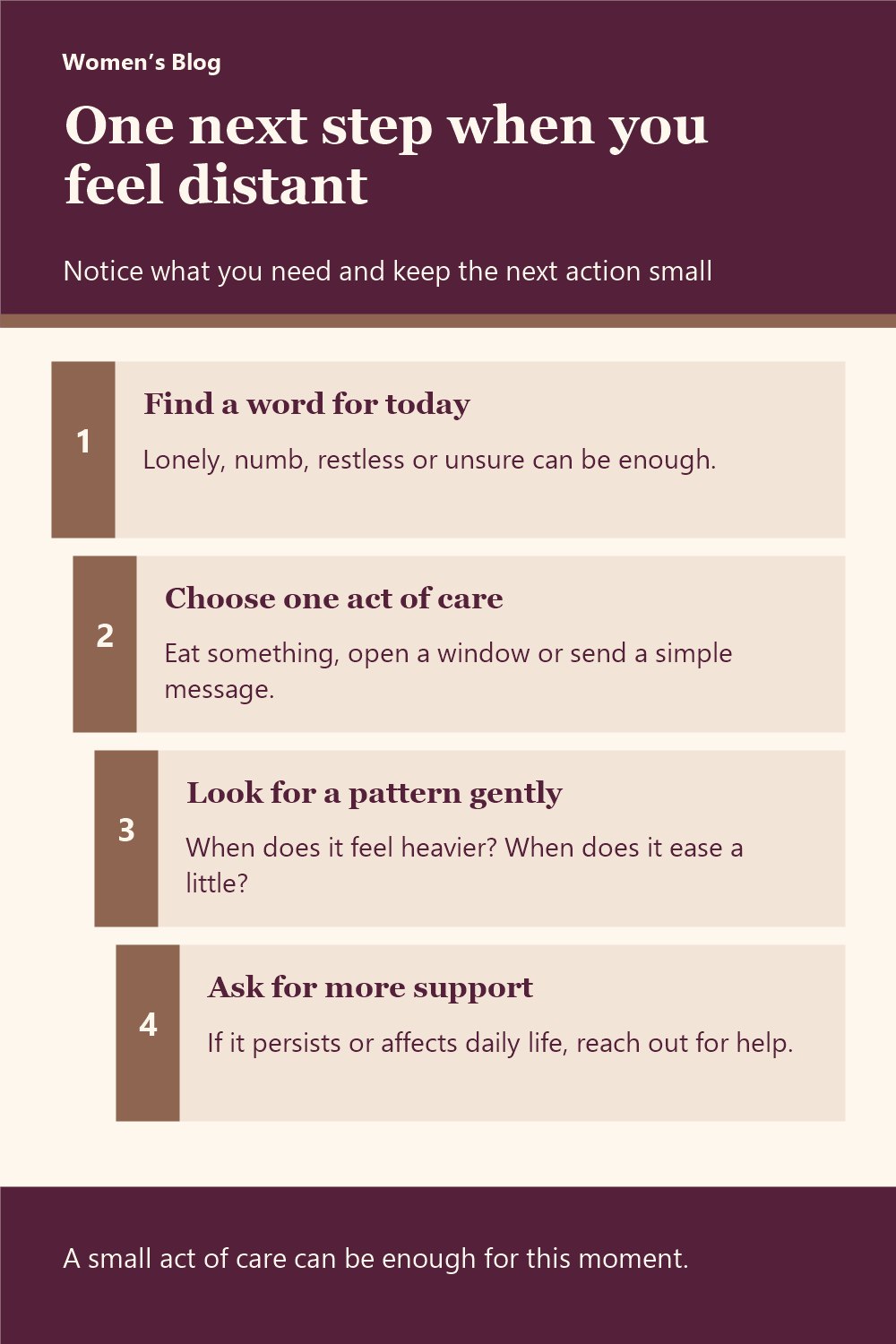
One next step when you feel distant
- Find a word for today Lonely, numb, restless or unsure can be enough.
- Choose one act of care Eat something, open a window or send a simple message.
- Look for a pattern gently When does it feel heavier? When does it ease a little?
- Ask for more support If it persists or affects daily life, reach out for help.
A small act of care can be enough for this moment.