

Choosing what matters to you can help you decide how to use the time, attention and resources you have. Your choices can reflect your values while leaving room for work, responsibilities, rest and enjoyment.
People understand fate, luck and spiritual meaning in different ways. You can leave room for your beliefs while considering how you want to act today.
On this page
1. Name a value in everyday words
Consider qualities you want to practise, such as connection, care, curiosity, stability, creativity or fairness. A value can guide how you act without becoming a test you must pass. Choose one that matters to you now, rather than trying to describe your entire purpose.
2. Look honestly at the day you have
Work, caring duties, finances, health and access shape how you can use your time. Include those demands before choosing an extra activity. A meaningful day can contain necessary tasks, rest and small pleasures. You do not have to fill every available moment with improvement.

3. Choose a small action that expresses the value
Make the action specific enough to recognise. If connection matters, you might arrange a short conversation. If curiosity matters, explore one question or try part of a new skill. If care matters, tend a plant or prepare something that helps your household. Adapt the effort to what you can reasonably manage.
4. Notice where your attention is going
Ask whether a habit is giving you something you want or crowding out something else. Photos, messages and social media can support memories, work and relationships. If a particular pattern is frustrating you, try one modest limit, such as silencing a nonessential alert while you complete a chosen activity.
5. Let other people have different priorities
Someone else may value an activity you would not choose. You can learn from a conversation without adopting their goals or treating their way of spending time as inferior. Ask about their perspective, respect their availability and keep room for your own preferences.
6. Question the expectations you have inherited
Notice whether a goal comes from your own interests or from pressure to appear successful, attractive or constantly productive. Clothing, makeup, hobbies and leisure can all have meaning or simply be enjoyable. Consider what fits your needs, resources and freedom to choose, without shaming yourself or someone else for a different choice.
7. Review the choice and adjust
After trying an activity, consider whether it expressed the value you had in mind and what made it easier or harder. You can repeat it, change its scale or choose something else. Your circumstances and priorities may change. A deliberate next choice is enough; you do not have to prove that every hour was perfectly used.
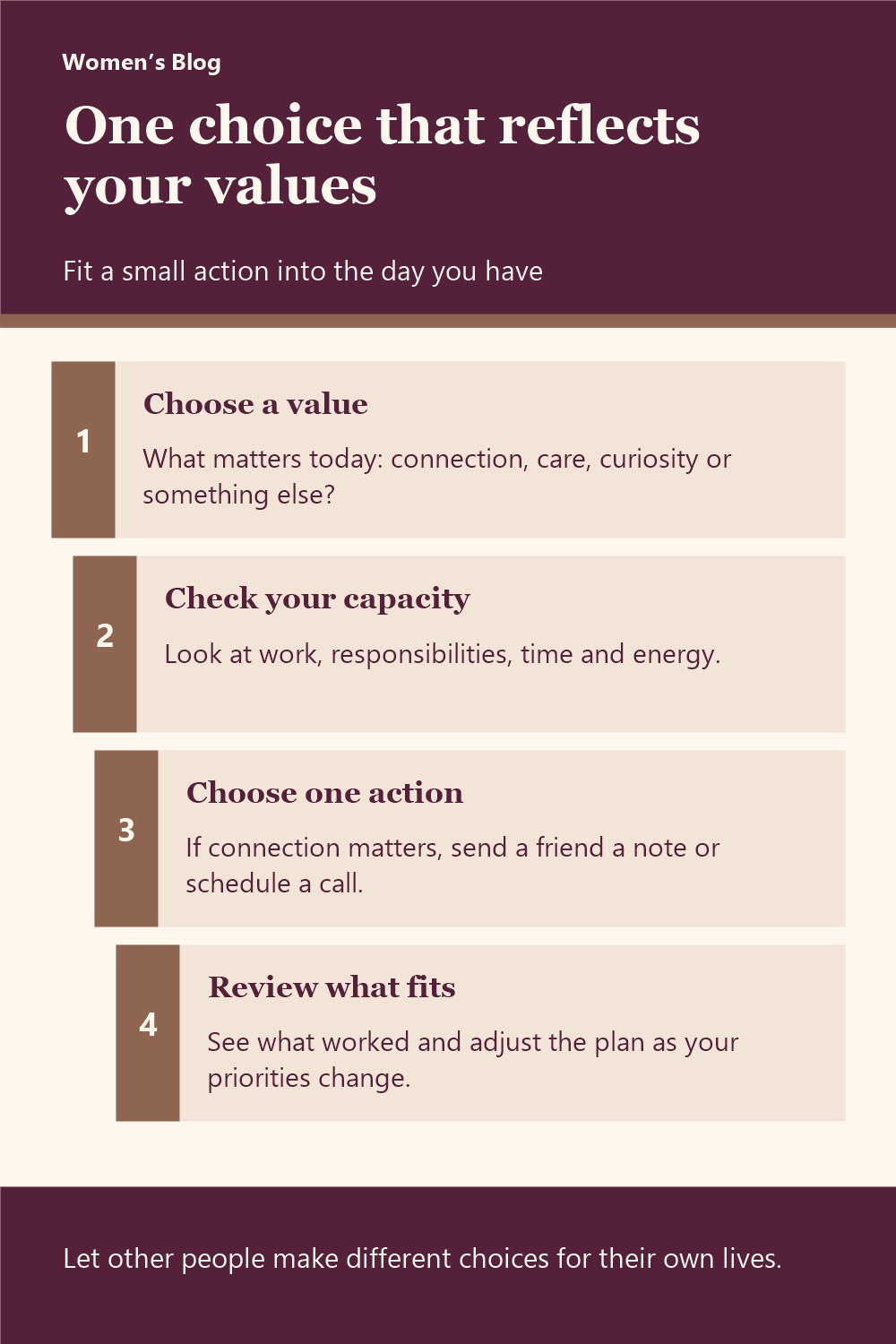
Read the infographic in text
One choice that reflects your values
- Choose a value What matters today: connection, care, curiosity or something else?
- Check your capacity Look at work, responsibilities, time and energy.
- Choose one action If connection matters, send a friend a note or schedule a call.
- Review what fits See what worked and adjust the plan as your priorities change.
Let other people make different choices for their own lives.