

Being present can mean giving a little more attention to what is happening now: a conversation, a task or a moment you want to enjoy. It does not require an empty mind, constant calm or a life without responsibilities.
Use these six reminders as options. You might notice one detail, finish one small part of an activity or ask for fewer competing demands. Planning for tomorrow and remembering the past still have a place in your life.
On this page
1. Begin with one ordinary detail
Choose a moment when it is safe to pause. You could notice the colour of a nearby object, the sound of rain or the support of the chair beneath you. Stay with one detail briefly, without needing to make the experience special.
If your attention wanders, you can return to the detail or move on. Wandering thoughts do not mean you have failed. You also do not need to close your eyes, focus on your breathing or pay attention to a body sensation that feels uncomfortable.
The NHS guide to mindfulness describes noticing everyday experience and thoughts. It also explains that mindfulness is not helpful for everyone and can make some people feel worse. Choose a different activity or stop if this kind of attention does not suit you.
2. Give a future concern a practical next step
Thinking about the next appointment or an unfinished task can serve a purpose. Ask whether there is something you need to record, check or arrange. “Call to confirm the appointment tomorrow” gives the concern a place to return to.
If it helps, keep a short reminder in a format you can use: a note, calendar entry or private voice message. Then choose whether the concern needs attention now. You do not have to keep rehearsing it to prove that you take it seriously.
Some uncertainty will remain after planning. Our guide to facing the fear of change offers questions for separating confirmed information from what is still unknown. A moment of attention to the present does not need to settle the whole future.
If something genuinely needs immediate action, attend to it. Being present can include making a necessary call, finding information or getting help. It does not require ignoring a practical problem to preserve a peaceful mood.
3. Choose one part of a conversation to attend to
When you want to feel more connected, begin with the exchange you are having. Listen for the person’s main point, ask a question or check whether you have understood. You might say, “Would you like me to listen, help you think through options or help with a task?”
Attention does not require constant eye contact or a particular posture. People listen in different ways, and looking away can be comfortable or useful. If you have missed something, it is reasonable to ask for it again.
Choose an arrangement that fits both people. A conversation while preparing a meal may suit one topic; another may need a quieter time. If you are tired or dealing with an urgent responsibility, say what attention you can offer and discuss when to return.
You can also name a limit around the conversation. Being attentive does not mean agreeing with everything, sharing information you want private or staying in an exchange that has become threatening or hurtful.
4. Make technology choices that fit the moment
A phone can interrupt an activity, but it can also provide accessibility tools, directions, contact with a carer or a useful connection. The question is whether its use supports what you need now. You do not have to treat every screen as an obstacle to a meaningful life.
For an activity you want to enjoy, try one manageable adjustment. You might close an unrelated app, put non-urgent messages aside for a short period or keep the phone within reach while turning it face down. Keep necessary contact available.
With a partner or friend, discuss the arrangement instead of silently testing whether they put their device away. “Could we have a few minutes to talk before checking messages?” is a request the other person can answer. They may have a responsibility or access need you have not considered.
You can keep part of an experience for yourself without photographing or posting it. You can also choose to take a picture because the memory matters to you. There is no single correct way to enjoy a moment.
5. Protect time with realistic arrangements
A busy life is not always the result of freely chosen activities. Work, money, health and caring responsibilities can limit what you can change. Notice those conditions before deciding that you simply need to value your time more.
Look for one demand you can simplify, share, move or decline. A clear arrangement might be, “I can help for half an hour on Saturday,” or “I need someone else to handle the evening errand.” Check that another person has agreed before planning around their help.
Where a change affects shared responsibilities, discuss what will happen next. You can have a boundary without leaving an essential task unaccounted for. If the conversation feels unsafe, seek appropriate support before announcing a change.
Our guide to reducing the load when stress builds explores specific requests, rest and support. A quieter moment may become more possible when the demands around it change.
6. Review the experience and choose what helps
After a brief pause or a different arrangement, ask what you noticed. Did the conversation become clearer? Did you enjoy one part of the activity? Did you discover that you needed rest, more information or practical help?
An uneventful attempt can still tell you something about what fits. You can shorten the exercise, choose an ordinary shared activity or stop trying it. You do not have to turn presence into another daily standard you are measured against.
If reflection repeatedly increases distress, or worries are making everyday life difficult, consider speaking with a qualified health professional. You can ask for support without first learning to quiet every thought.
For today, choose one moment you would like to give a little more attention. Let that choice fit your responsibilities, comfort and interests. The aim is room for the life you are living, including its plans, interruptions and ordinary pleasures.
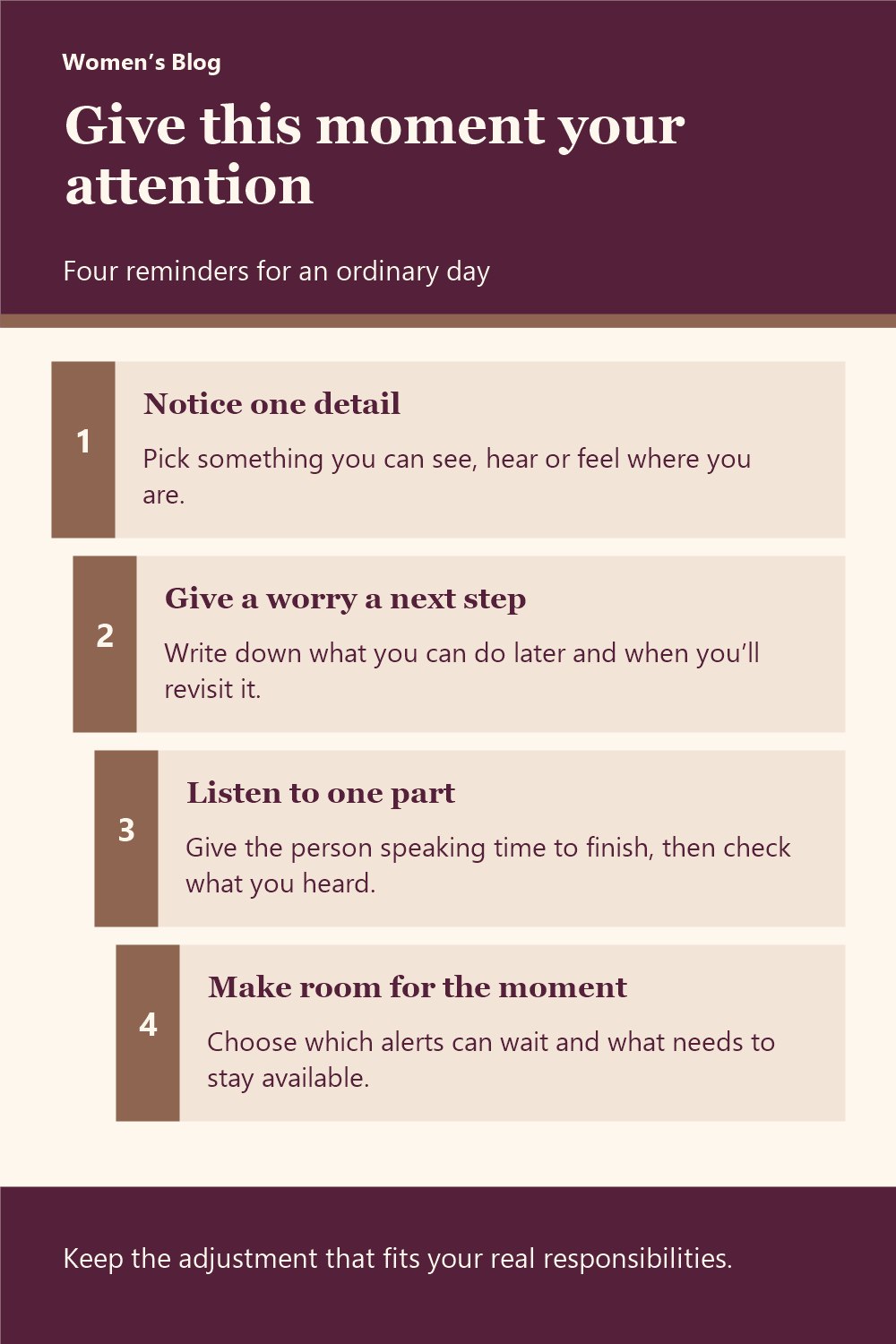
Read the infographic in text
Give this moment your attention
- Notice one detail Pick something you can see, hear or feel where you are.
- Give a worry a next step Write down what you can do later and when you’ll revisit it.
- Listen to one part Give the person speaking time to finish, then check what you heard.
- Make room for the moment Choose which alerts can wait and what needs to stay available.
Keep the adjustment that fits your real responsibilities.