

Not feeling okay can mean many things, especially after heartbreak, bereavement or a major change. You may need time, practical help, privacy, company or professional support. You do not have to know exactly what you need before asking someone to listen.
These five ideas focus on making care easier to reach while you are having a difficult time.
On this page
1. Allow what you feel
After a loss or a difficult change, you may feel upset, numb, angry, relieved, uncertain or several things at once. You do not have to produce a particular reaction. The NHS guide to grief and loss describes how varied these experiences can be. You can take your needs seriously while you are still making sense of what happened.
2. Use a small routine as a support
Choose one predictable part of the day that is manageable, such as having breakfast, checking an appointment time or preparing a simple evening meal. Let the routine make something easier to reach. You can change its size or ask for help when your energy, health or circumstances make it difficult.
3. Practise care without proving happiness
Care can mean making a task easier, allowing a rest or accepting company. You do not have to practise being cheerful. If an activity such as reading, prayer, gentle movement or yoga is comfortable and meaningful to you, it can have a place in your day. It is an option you can adapt, rather than a promise that your pain will disappear.
4. Choose a setting that feels manageable
A quiet room, a view from a window or an accessible place outdoors may offer a change of scene. Consider what feels comfortable and safe for you. You can choose company or privacy and keep any phone access you need. There is no requirement to hike, go barefoot or disconnect from other people.
5. Reach for support at your own pace
You might ask a trusted person to listen, help with a practical task or check in later. If distress is affecting daily life, becoming harder to cope with or not easing with the support you have, consider speaking with a qualified health professional. You can ask about the kind of help available and decide what feels appropriate.
If you are thinking about harming yourself or are not sure you can stay safe, seek crisis support now. In the United States, call or text 988; elsewhere, contact a local crisis service. For immediate danger, contact local emergency services when it is safe to do so.
Read the infographic in text
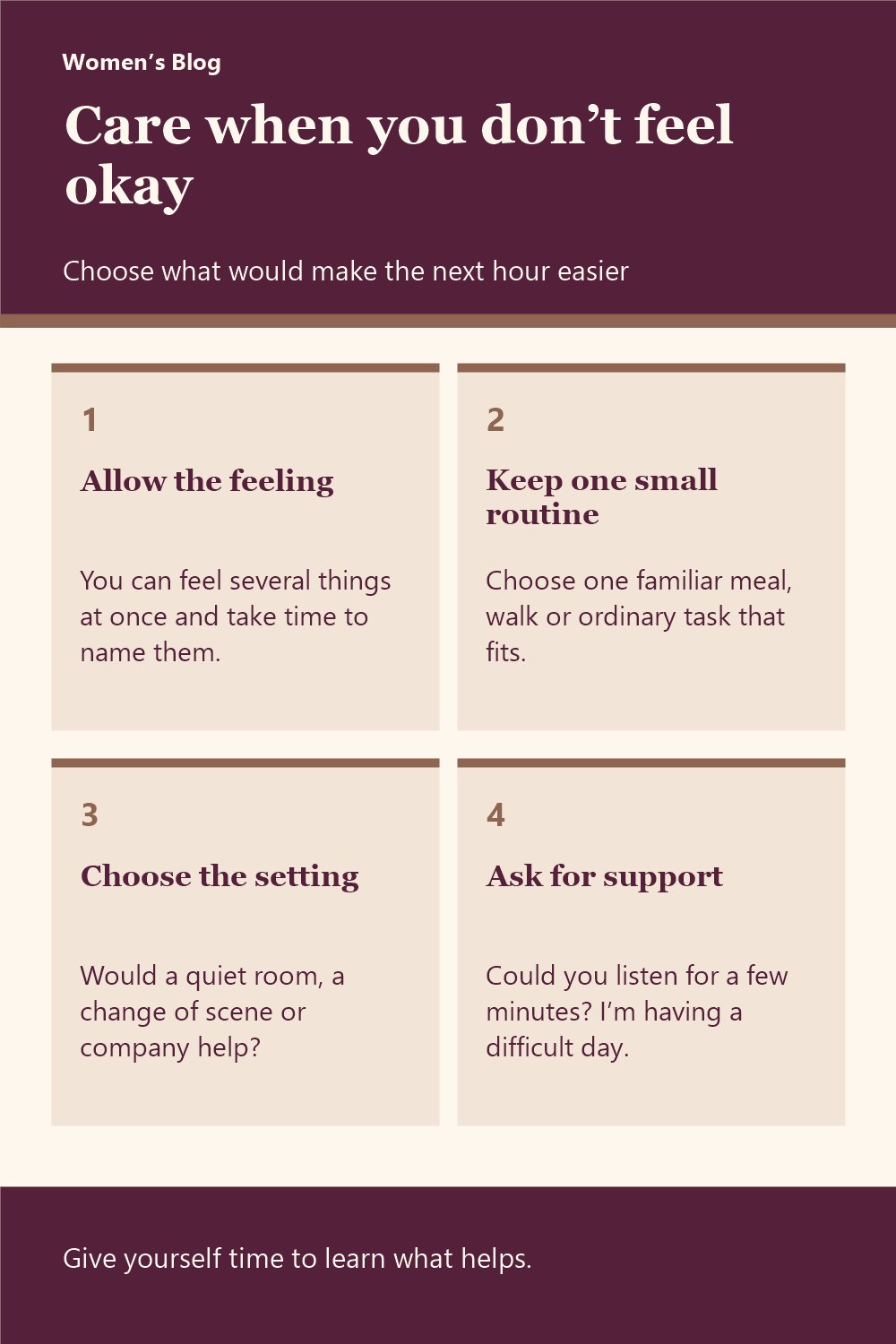
Care when you don’t feel okay
- Allow the feeling You can feel several things at once and take time to name them.
- Keep one small routine Choose one familiar meal, walk or ordinary task that fits.
- Choose the setting Would a quiet room, a change of scene or company help?
- Ask for support Could you listen for a few minutes? I’m having a difficult day.
Give yourself time to learn what helps.