

If you want to marry, it is reasonable to date with that intention. Being single is not a defect to fix, and marriage is not a deadline you owe to family or friends. You can take an active role in meeting people while keeping your own needs and choices.
These ideas can help you make decisions about dating. They cannot guarantee a partner, a timetable or a lasting marriage. Choose what fits your circumstances and leave room to change your mind.
On this page
- Decide whether marriage is your goal now
- Identify the qualities that matter in daily life
- Choose ways to meet people that fit your life
- Use dating services with realistic expectations
- Make early meetings easier to leave
- Talk about your intentions without demanding a promise
- Discuss compatibility over time
- Keep your interests and support network
- Express interest in a way that feels like you
- Build trust through ordinary actions
- Review the relationship and allow yourself to stop
1. Decide whether marriage is your goal now
Ask what you want from a relationship and why it matters to you. Separate your interest in marriage from pressure about age, children or what other people are doing. You can want commitment and still take time to decide whether a particular relationship suits you.
2. Identify the qualities that matter in daily life
Focus on how you want to treat each other: honesty, kindness, reliability, respect and room for independence. Consider practical questions such as where you might live or whether you want children. Distinguish preferences you can discuss from needs you are unwilling to give up.
3. Choose ways to meet people that fit your life
You might try an introduction, a recurring activity, a community group or a dating app. Pick settings you can afford and actually enjoy. Interests such as pottery, sport or music do not belong to one gender, and you do not need to pretend to like something to meet a partner.
4. Use dating services with realistic expectations
Before paying for an app or matchmaker, read the price, renewal and cancellation terms and what the service actually provides. A fee, a long history or a personal consultation does not establish that someone will find a compatible spouse for you. Set a budget you can comfortably manage.
5. Make early meetings easier to leave
For a first meeting, choose a public place, keep control of your transport and let someone you trust know your plans. Share personal information gradually. You can decline, shorten or leave a date without proving the other person is dangerous.
Do not send money or gifts to someone you have not met in person. Be cautious about urgent requests and investment pitches from a romantic contact. The FTC’s romance scam guide explains common patterns.
6. Talk about your intentions without demanding a promise
When it feels appropriate, say what you are looking for: “I would like a long-term relationship and hope to marry if we are right for each other. What are you looking for?” Listen to the answer. An honest difference in goals is useful information, even if the date went well.
7. Discuss compatibility over time
As trust develops, talk about children, money, faith, work, living arrangements and responsibilities. Notice how you handle a difference of opinion as well as where you agree. A particular job title or number of years with one employer cannot establish someone’s character.
8. Keep your interests and support network
Continue friendships, rest and activities that matter to you. You do not need to complete a self-improvement programme before you deserve a relationship. A developing connection should leave room for both people’s lives, rather than requiring one person to become smaller.
9. Express interest in a way that feels like you
You can suggest a conversation, ask for another date or say that you enjoyed meeting someone. Wear clothes that suit the setting and feel comfortable to you. Neither clothing nor friendliness creates an obligation to continue dating or become physically intimate.
10. Build trust through ordinary actions
Notice whether someone respects a no, keeps agreements, listens and takes responsibility for mistakes. Share vulnerability at your own pace; you do not need to act helpless or invent a problem to be cared for. Each person can offer and receive help without fixed gender roles.
11. Review the relationship and allow yourself to stop
Consider whether interest, effort and respect are mutual. You can end an unsuitable connection, take a dating break or seek support after a difficult experience. Wanting marriage does not require accepting pressure, intimidation or a relationship that repeatedly disregards your needs.
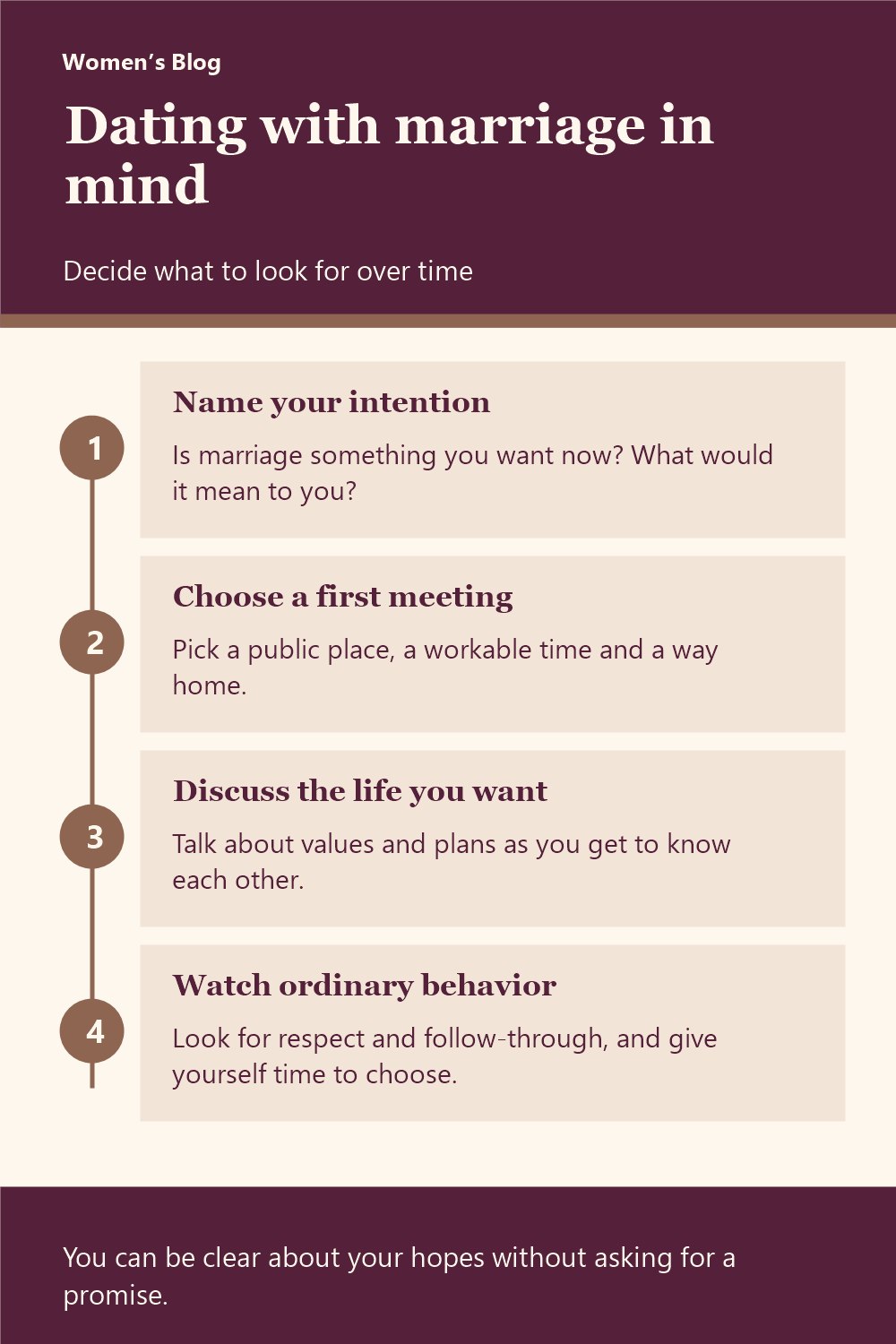
Read the infographic in text
Dating with marriage in mind
- Name your intention Is marriage something you want now? What would it mean to you?
- Choose a first meeting Pick a public place, a workable time and a way home.
- Discuss the life you want Talk about values and plans as you get to know each other.
- Watch ordinary behavior Look for respect and follow-through, and give yourself time to choose.
You can be clear about your hopes without asking for a promise.