

When a relationship takes up more of your time and attention, it can become harder to notice what you want for yourself. Look for a pattern. Are you still able to disagree, see your friends, make plans and pursue things that matter to you?
1. You keep quiet to avoid a reaction
Think about the last time you had a different preference. Could you say what you thought without being mocked or punished? For a small decision, try a specific request such as “I’d like to spend Saturday morning on my own. Can we make plans for later?” Pay attention to how your partner responds over time.
2. Your interests are always the first to go
Sharing your partner’s interests can be fun. Check whether there’s also room for the things you enjoy independently. Put one activity back on the calendar, even if it’s an hour of reading or a short class you’ve been putting off.
3. Their problems take over your day
You can care about a difficult situation and still have limits on what you can do. Ask whether your partner wants you to listen or help with something specific. If you’re stretched thin, say what you can realistically offer and keep time for your own rest and responsibilities.

4. You repeatedly give up important opportunities
Look at which plans you’ve canceled or declined lately and why. A relationship can involve giving something up occasionally, especially when you’re caring for each other. If friends, work or education always come last, choose one commitment to keep and talk about how to make room for both people’s plans.
Start with one choice you want back
I’ve lost sight of myself in a relationship and found my way back. If you recognize that feeling, choose one thing you want to reclaim and make a specific plan for this week. You might call a friend, resume a hobby or set aside a morning for yourself.
If a partner monitors you, threatens you or interferes with your friendships or work, prioritize safety. A trusted person or a local domestic violence support service can help you think through your options. In the U.S., the National Domestic Violence Hotline can connect you with an advocate.
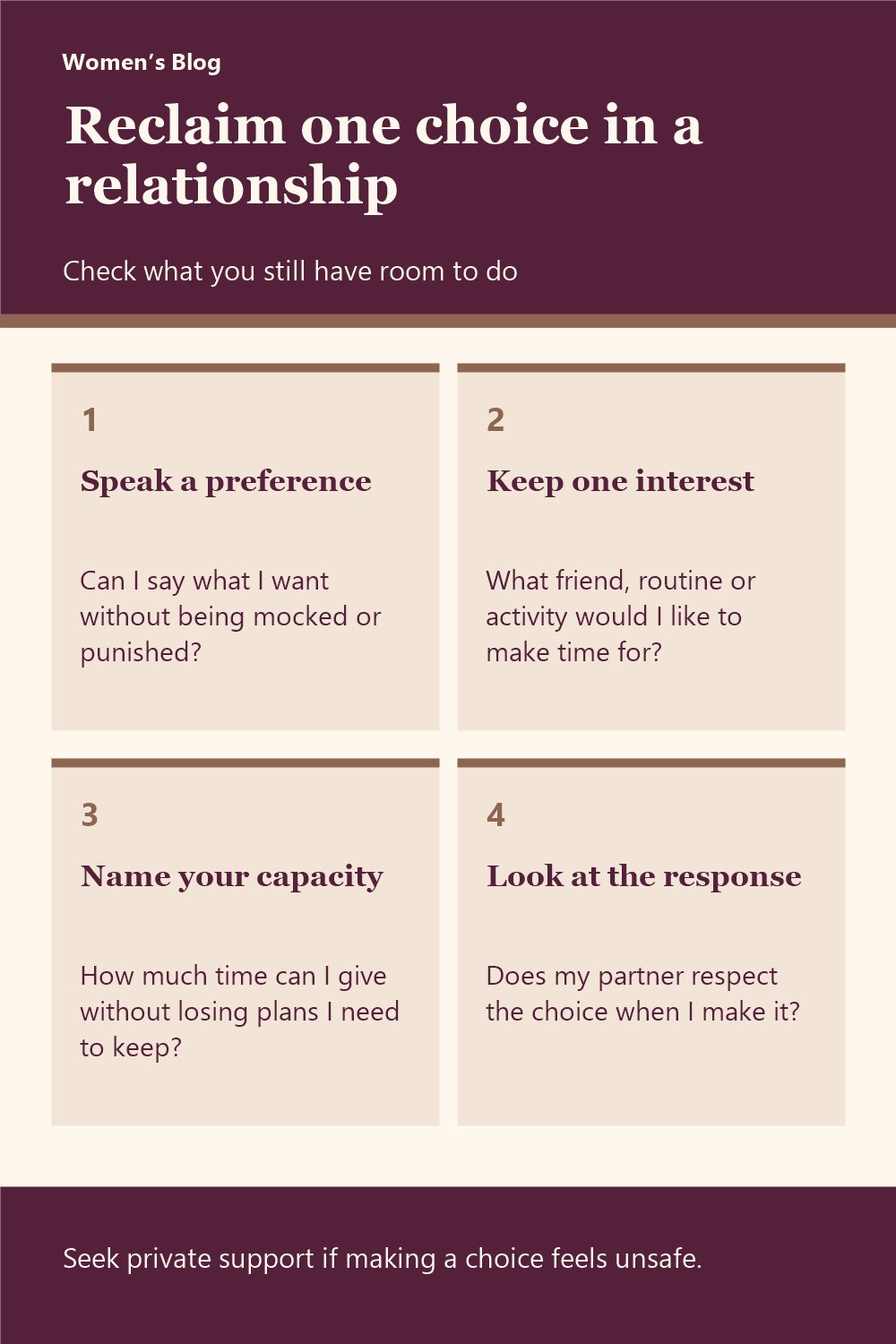
Read the infographic in text
Reclaim one choice in a relationship
- Speak a preference Can I say what I want without being mocked or punished?
- Keep one interest What friend, routine or activity would I like to make time for?
- Name your capacity How much time can I give without losing plans I need to keep?
- Look at the response Does my partner respect the choice when I make it?
Seek private support if making a choice feels unsafe.