

A missed goal, rejected application or mistake can leave you disappointed and unsure of yourself. The consequences may be small or significant, and you do not have to feel confident immediately. Begin by understanding what happened and what you need now.
A setback can inform a decision without becoming a description of who you are. Your next step might involve repair, another attempt, a different goal or time to recover.
On this page
Describe what happened without defining yourself
Separate the event from a global judgment. “The application was unsuccessful” describes an outcome. “I am useless” turns it into a claim about your whole life. You can take a real problem seriously without accepting that larger verdict.
Write down what you know, what remains uncertain and what requires action. A missed deadline may need a conversation with the people affected. An unsuccessful audition may leave you disappointed without proving that you chose the wrong interest.
Some results depend on circumstances, other people’s decisions or limited opportunities. Look for the part you can influence while leaving room for what was outside your control.
Leave room for disappointment
You may feel embarrassed, angry, sad or relieved. There is no requirement to find a lesson before you have had time to respond to the experience. A quiet evening, familiar company or less pressure for a while may be more useful than an immediate plan to try again.
Notice whether self-criticism is helping you address anything specific. If it repeats the same insult, try returning to a factual description and one practical question: “What needs attention now?” You deserve care even when you have made a mistake or cannot do more today.
If the thoughts keep circling, you may find the ideas in responding to recurring negative thoughts useful. Choose what helps you think more clearly, rather than demanding that you feel positive.
Choose support and useful feedback
Ask for the kind of conversation you want. You might say, “Could you listen for a few minutes before suggesting solutions?” or “Can you help me understand which part of this needs work?” A trusted person can support you without promising that the next attempt will succeed.
Feedback is more useful when it is specific and relevant to the task. Ask for an example or a priority if a comment is vague. Consider whether the person has enough context to advise you, and whether their suggestion fits your resources and goals.
If your action harmed someone, support can help you take responsibility rather than avoid it. Acknowledge what happened, listen to the impact and work out a realistic repair. You cannot require someone to forgive you in return.
Decide what to change, pause or stop
Before another attempt, consider what would be different. You might need clearer instructions, practice, an adjustment, a smaller project or a different opportunity. Simply adding more effort to the same conditions may not address the problem.
Check the cost as well as the possible benefit. What time, money or energy would another attempt require? What would it take away from rest, care or other commitments? You are allowed to decide that a goal no longer fits.
When the setback is part of a pattern of unfair treatment or expectations you cannot meet with the resources provided, consider who could help you address those conditions. Confidence alone does not make an unreasonable demand workable.

Take one step you can review
Choose an action with a clear end: ask one question, make one correction or set a date to reconsider the decision. You can take a small action while still feeling uncertain. You can also decide that today is for rest and return to the question later.
Review what the step tells you. Did you get information, resolve part of the problem or discover a need for more help? Use that information to choose the next action rather than treating the day as another pass-or-fail test.
Confidence does not have to mean certainty about an outcome. For now, it may mean giving yourself a fair description of the situation, taking your needs seriously and choosing a response you can manage.
Read the infographic in text
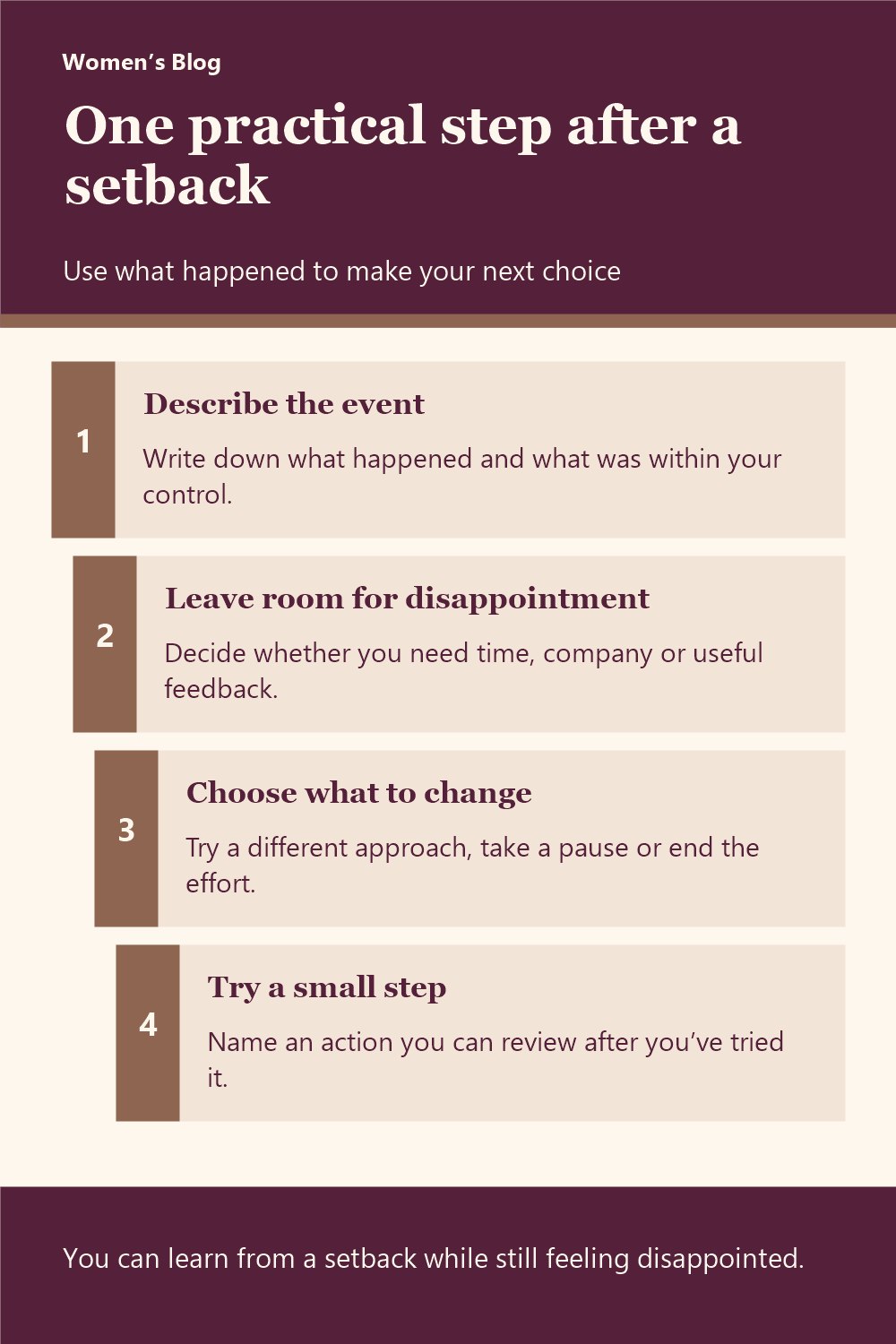
One practical step after a setback
- Describe the event Write down what happened and what was within your control.
- Leave room for disappointment Decide whether you need time, company or useful feedback.
- Choose what to change Try a different approach, take a pause or end the effort.
- Try a small step Name an action you can review after you’ve tried it.
You can learn from a setback while still feeling disappointed.