

Being comfortable with yourself can begin with how you treat your needs, limits and ordinary preferences. You can want changes in your life while giving yourself fair treatment today. Choose a useful act of care that fits your circumstances.
The ideas below are invitations to make daily life more workable. You can keep what helps, adapt the scale and leave the rest.
On this page
- Money and practical pressure
- Choose what a better day would mean
- Try an experience that fits your life
- Pause without forcing calm
- Keep gratitude optional
- Choose company with room for honesty
- Help within your capacity
- Use a fairer voice with yourself
- Move in a way that suits you
- Protect a little ordinary enjoyment
- Take work conditions seriously
- Make rest easier to reach
- Choose one kind action
1. Money and practical pressure
Financial strain can take up much of your attention. Being kinder to yourself includes recognising those pressures, whether you need a bill explained, a manageable budget or help finding support. You do not have to solve a material problem by changing your attitude. Choose one practical question you can address.
2. Choose what a better day would mean
Ask what you need more of today: rest, company, privacy, interest or a little order. A useful answer might be having lunch away from your desk or declining an extra task. Give that need a place in your plans instead of setting a target to feel happy all day.
3. Try an experience that fits your life
An outing can be as modest as visiting a nearby garden or browsing the library. Consider the cost, travel, accessibility and energy involved. You can enjoy familiar places and leave an event early. Excitement and adventure are options; neither is a requirement for a worthwhile day.
4. Pause without forcing calm
Sit comfortably, look around or notice your feet on the floor. If meditation or prayer matters to you, make room for it in a way that feels supportive. You can stop a practice that increases discomfort. Taking a pause does not require emptying your mind or producing a particular feeling.
5. Keep gratitude optional
You might appreciate a kind message and still feel upset about something else. If listing good things feels helpful, try one specific observation. If it feels like an obligation to deny your problems, leave it for another day. Appreciation does not cancel a need for change.
6. Choose company with room for honesty
Contact someone with whom you can be yourself. You could ask for a brief call, a quiet walk or company while you do an ordinary task. A smaller social circle can be meaningful. Notice whether you feel heard and whether each person has room to set limits.
7. Help within your capacity
Offering support can matter to you, but you are allowed to consider your time, health and responsibilities. Offer something specific that you can manage, or say when you are unavailable. You can care about someone without becoming responsible for every problem they face.
8. Use a fairer voice with yourself
When you catch a harsh judgement, describe the event more precisely. “I missed a deadline and need to discuss the next step” gives you more to work with than “I ruin everything.” Responsibility can include an apology or a repair while leaving your whole character out of the verdict.
9. Move in a way that suits you
Choose movement that fits your body and circumstances, such as a short walk, seated movement or a stretch you find comfortable. Rest may be the appropriate choice on some days. Avoid making exercise a punishment for eating, missing a goal or having difficult feelings.
10. Protect a little ordinary enjoyment
Keep a small activity available simply because you like it: music, a puzzle, a familiar recipe or a few pages of a book. You do not have to turn it into a skill, a side business or proof of productivity. Allow the activity to remain small.
11. Take work conditions seriously
A difficult job can affect how you feel, and changing it may take time. Consider one condition you could discuss, document or plan around, such as workload, breaks or predictable hours. If changing jobs is your aim, an initial step might be reviewing your options rather than making a rushed decision.
12. Make rest easier to reach
Look for one avoidable demand near bedtime or one part of your day where you could pause. Shift work, caring duties, pain and noisy housing can make rest difficult. Treat those circumstances honestly. Ask for appropriate help when sleep problems persist or affect daily life.
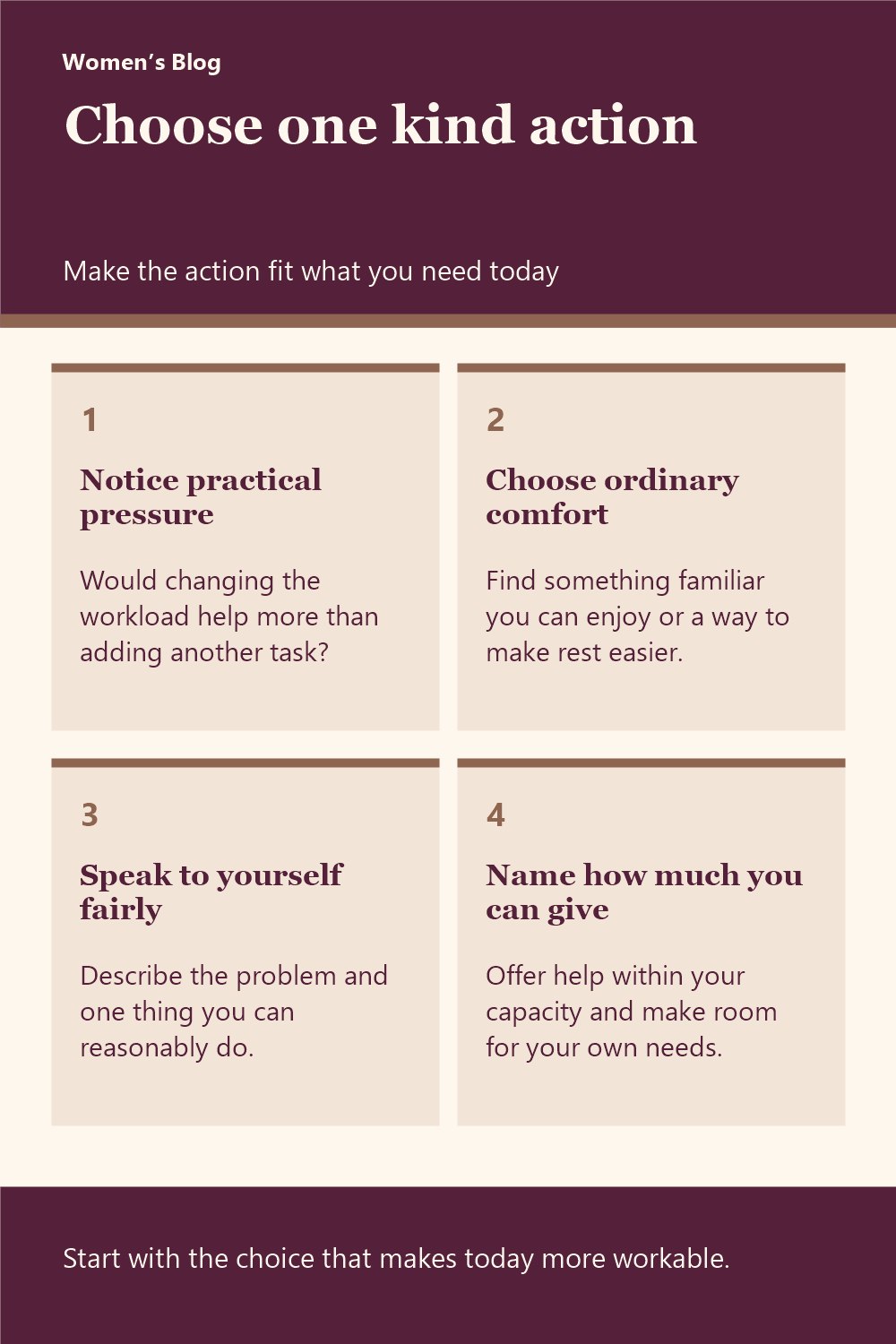
13. Choose one kind action
Pick one action from this page and make it small enough for today. Afterwards, ask whether it met the need you identified. Adjusting the plan is part of caring for yourself. If feeling low is persistent or coping is becoming difficult, the NHS guide to low mood explains when to seek further support.
Read the infographic in text
Choose one kind action
- Notice practical pressure Would changing the workload help more than adding another task?
- Choose ordinary comfort Find something familiar you can enjoy or a way to make rest easier.
- Speak to yourself fairly Describe the problem and one thing you can reasonably do.
- Name how much you can give Offer help within your capacity and make room for your own needs.
Start with the choice that makes today more workable.